
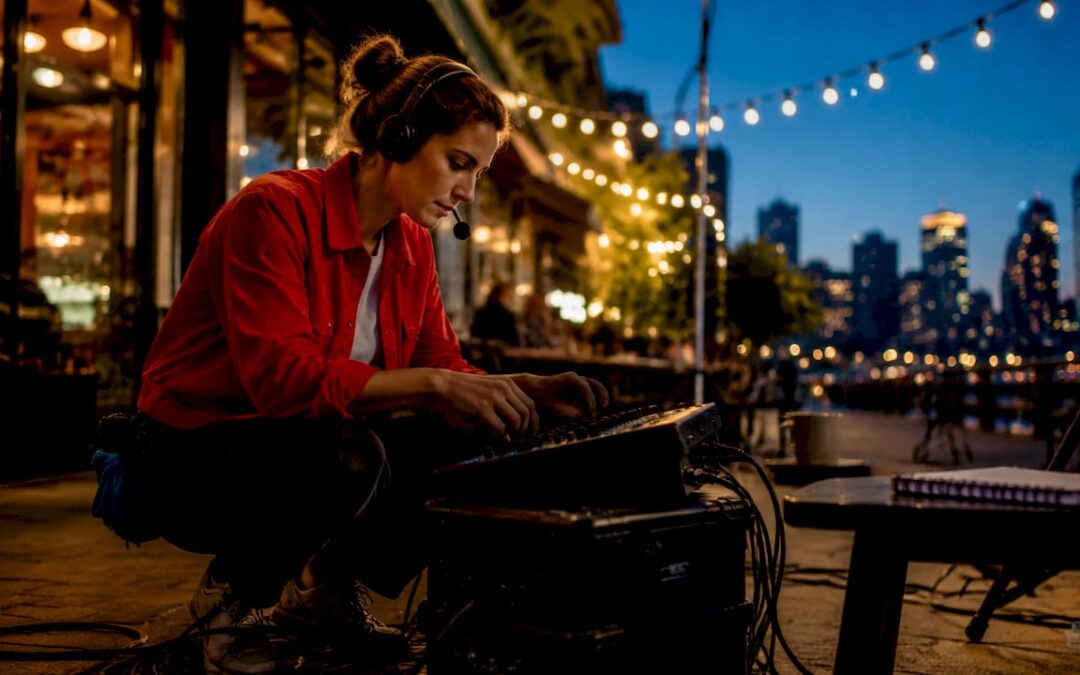
Lighting control systems are defined as technologies that enable precise, real-time management of lighting fixtures, intensity, colour, and effects across an event space. The role of lighting control systems in events extends far beyond switching lights on and off. These systems integrate with audio, video, and spatial design to shape atmosphere, direct audience attention, and create experiences that feel intentional rather than accidental. Event planners who understand this technology gain a genuine advantage. They can deliver events that are not only visually striking but also operationally efficient and consistent.
How do lighting control systems shape event atmosphere?
Lighting control is a storytelling tool. The way light falls on a stage, a speaker, or a dancefloor tells the audience what to feel and where to look. A well-programmed system shifts the mood from formal to celebratory in seconds, without a single word from the host.
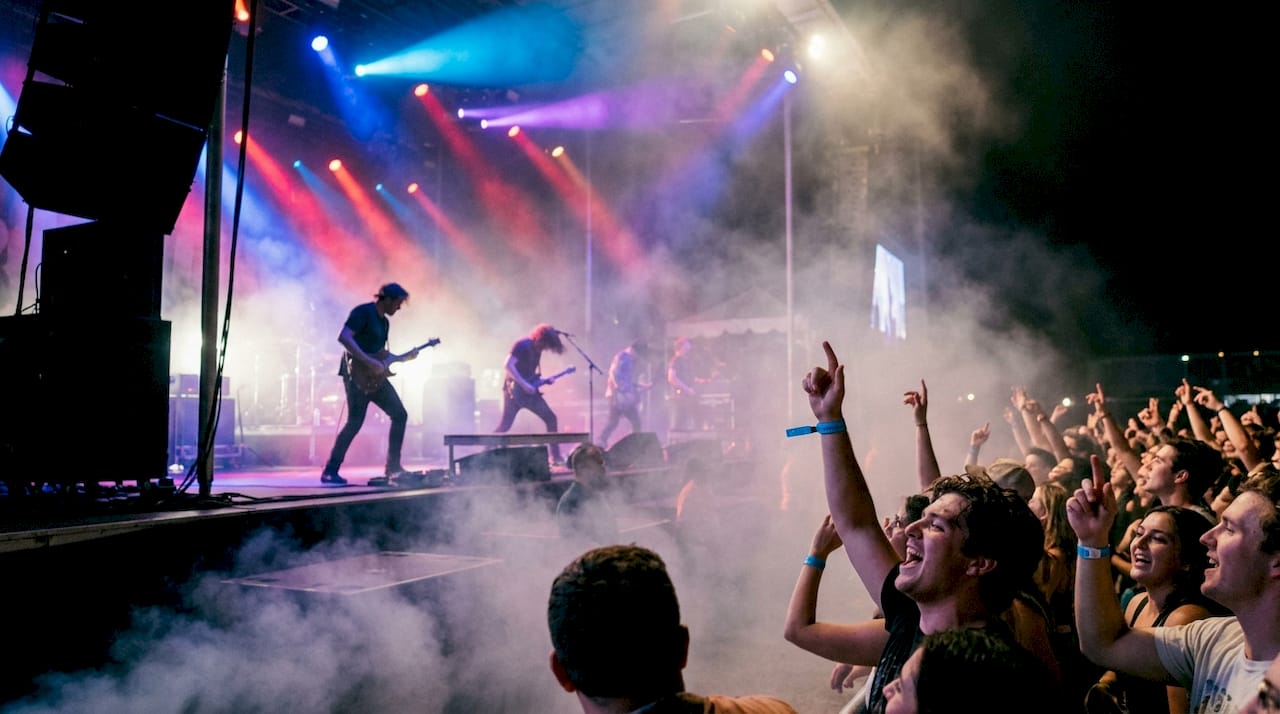
Colour temperature plays a central role in this. Warm tones around 2,700–3,000 Kelvin create intimacy and comfort, making them ideal for wedding receptions and gala dinners. Cooler tones above 5,000 Kelvin signal energy and focus, which suits product launches and conference keynotes. Intensity control adds another layer. Dimming a room gradually signals a transition, such as moving from a drinks reception into a seated dinner, without any announcement needed.
Scene sequencing is where control systems prove their real value. A lighting console stores pre-programmed scenes that a single operator can trigger at precisely the right moment. Lighting integrated with video and audio adapts in real time, matching a musical crescendo or a video reveal with a corresponding shift in light. This synchronisation is what separates a memorable event from a forgettable one.
- Spotlighting draws the eye to a speaker or performer and eliminates visual distraction. Narrow-beam spotlights are standard practice at corporate events and fashion shows for exactly this reason.
- Wash lighting covers large areas with colour and is effective for brand reinforcement when set to a company’s palette.
- Scene transitions allow a single operator to shift the entire room’s atmosphere between programme segments.
- Dynamic effects synchronised with music create the physical sensation of being inside the performance rather than watching it.
Pro Tip: Pre-programme your scene transitions before the event day. A lighting console with saved cues means your operator responds to the programme, not the other way around.
What are the operational and economic benefits of lighting control?
The financial case for proper lighting control is straightforward. Advanced networked lighting controls can reduce lighting-related energy consumption by up to 80% over 12 years in institutional settings. That figure reflects what happens when lighting runs only at the intensity and duration actually required, rather than at full power throughout an event.
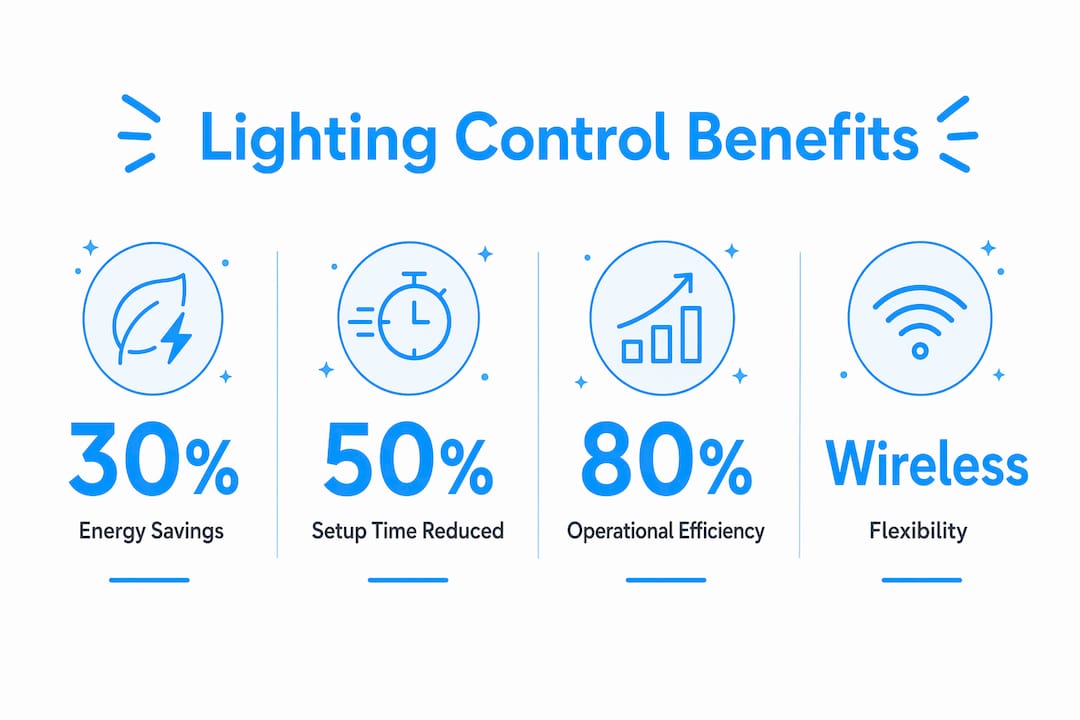
Wireless control systems deliver a second category of savings. They eliminate the need for complex electrical panel programming and reduce the volume of physical cabling required across a venue. Less cabling means faster installation, lower labour costs, and a cleaner venue floor that reduces trip hazards for guests and crew alike.
The operational benefits extend to staffing. A well-programmed lighting rig requires fewer operators on the night. One experienced technician with a console can manage scenes that would previously have needed three or four crew members adjusting fixtures manually. That reduction in staffing requirements directly lowers event production costs.
Sustainability is a growing priority for event planners, and lighting control supports it directly. Running fixtures at lower intensities when full power is unnecessary, and switching off unused zones automatically, reduces both energy draw and carbon output. These are measurable gains that planners can report to clients and venues.
- Energy reduction through intensity scheduling and zone control cuts unnecessary power draw.
- Wireless protocols lower installation complexity and reduce cabling costs.
- Pre-programmed scenes reduce the number of operators required on event day.
- Automated controls correlate with reduced attendee fatigue and better cognitive performance throughout long events.
- Reusable scene libraries allow planners to carry programming across multiple events at the same venue.
Which lighting control protocols are used in event settings?
The technical backbone of any event lighting system is its communication protocol. DMX512, commonly called DMX, is the industry standard for sending control data from a console to individual fixtures. Each fixture receives a channel address, and the console sends values to those addresses in real time. DMX is reliable, widely supported, and understood by virtually every professional lighting fixture on the market.
Art-Net and sACN (Streaming ACN) extend DMX over standard ethernet networks. This matters for large events where a single DMX cable cannot carry enough data to control hundreds of fixtures across a wide venue. Key protocols including DMX, Art-Net, and sACN allow networked distribution of lighting data, meaning a single console can address thousands of parameters simultaneously.
Timecode synchronisation adds a further layer of precision. SMPTE timecode acts as a global show clock, triggering lighting cues at exact moments aligned with audio and video playback. Major tours and festivals rely on SMPTE to coordinate lighting, video, pyrotechnics, and special effects without human error in the timing.
| Protocol | Primary use | Key advantage |
|---|---|---|
| DMX512 | Fixture control | Universal compatibility |
| Art-Net | Networked distribution | High fixture count over ethernet |
| sACN | Networked distribution | Priority-based data streaming |
| SMPTE timecode | Show synchronisation | Frame-accurate cue triggering |
Wireless control systems sit on top of these protocols, transmitting DMX or Art-Net data without physical cables. They are particularly useful for temporary event setups where running cables across a venue is impractical. The trade-off is signal reliability. Industry-grade wireless protocols are built to prevent signal dropouts during live events, but lower-grade consumer systems carry real risk in crowded radio frequency environments.
Pro Tip: Always test wireless control systems in the actual venue before the event day. Radio frequency interference from Wi-Fi networks, radios, and other wireless equipment can disrupt cues at the worst possible moment.
What should event planners consider when integrating lighting control?
Venue assessment is the starting point for any lighting control plan. Ceiling height, rigging points, and power locations all dictate what is physically possible before a single fixture is chosen. A venue with low ceilings and no rigging infrastructure limits the angles and distances available for spotlighting. Identifying these constraints early prevents expensive redesigns on the day.
Timing matters as much as venue knowledge. Integrating lighting control planning early in the event design process prevents the awkward cabling runs and limited programming options that result from late decisions. A lighting designer brought in after the stage layout is fixed has fewer options and higher costs than one involved from the start.
- Assess ceiling height and rigging before specifying fixtures. Low ceilings require short-throw optics; high ceilings need long-throw units.
- Map power locations across the venue to plan cable routes and identify where wireless systems offer the most practical advantage.
- Choose wireless protocols carefully. Robust wireless systems are critical for temporary events where cabling is impractical but signal integrity cannot be compromised.
- Build a scene library. Pre-programming reusable scenes across recurring events at the same venue saves significant time and cost.
- Collaborate early with lighting designers and technical operators. Their input on fixture selection and control system compatibility prevents mismatches that only appear during setup.
Selecting fixtures without considering control systems wastes both budget and creative opportunity. A fixture’s output is only as good as the control system directing it. Planners who treat lighting control as an afterthought consistently spend more on the day to fix problems that early planning would have avoided entirely.
Pro Tip: Ask your lighting supplier whether their fixtures are pre-addressed and tested before delivery. Arriving on site with factory-reset fixtures costs hours of setup time you rarely have to spare.
Key takeaways
Lighting control systems are the single most effective tool event planners have for shaping atmosphere, directing attention, and reducing operational costs simultaneously.
| Point | Details |
|---|---|
| Lighting control shapes atmosphere | Colour temperature, intensity, and scene sequencing directly influence audience mood and attention. |
| Energy savings are substantial | Networked controls can cut lighting energy consumption by up to 80% over time in managed settings. |
| Protocol knowledge matters | DMX, Art-Net, sACN, and SMPTE timecode each serve distinct roles in a professional event lighting system. |
| Venue assessment comes first | Ceiling height, rigging, and power locations must be evaluated before any fixture or control system is specified. |
| Early planning prevents costly errors | Integrating lighting control decisions at the start of event design avoids expensive last-minute changes. |
Lighting control is a creative discipline, not just kit
After working across events of every scale, the pattern I see most often is this: lighting control gets treated as a technical afterthought rather than a creative decision made at the design stage. Planners spend months on catering, décor, and entertainment, then allocate two days before the event to sort the lighting. The results show it.
The technology has advanced to a point where the gap between a basic setup and a genuinely immersive one is not primarily about budget. It is about planning. A modest rig with a well-programmed console and a competent operator will outperform an expensive fixture list with no control strategy every single time. Balancing creative freedom with control reliability is the real skill, and the best systems make that balance achievable for operators who are not specialists.
What excites me about where this is heading is the accessibility of the technology. Wireless systems, pre-programmed scene libraries, and intuitive consoles mean that events which previously required a large technical crew can now be delivered by a smaller, better-prepared team. The creative ceiling has risen while the operational complexity has reduced. That is a genuinely good development for event planners who want to deliver more without spending more.
The uncomfortable truth is that most lighting failures at events are not equipment failures. They are planning failures. Get the control system into the conversation early, assess the venue properly, and work with people who understand both the creative and technical sides. The equipment will do the rest.
— Rob
How Jakspartypower supports your event lighting needs
Jakspartypower brings over 40 years of electrical contracting experience to event lighting in Sussex, supplying professional equipment that works with the control systems planners already use.

From linkable box uplighters that daisy-chain for consistent colour across large spaces, to battery-powered IP-rated uplighters that work without fixed power runs, the hire range is built for flexible control integration. Jakspartypower also supplies generators and distribution equipment to power the full lighting rig reliably. Browse the full lighting hire range or visit jakspartypower.com to speak with the team about your event requirements.
FAQ
What is a lighting control system in events?
A lighting control system is a technology that manages the intensity, colour, and timing of lighting fixtures across an event space in real time. It typically uses protocols such as DMX, Art-Net, or sACN to communicate between a control console and individual fixtures.
How does lighting affect the audience experience at events?
Lighting directly influences mood, attention, and energy levels throughout an event. Automated and optimised lighting reduces attendee fatigue and improves cognitive performance, making it a well-being tool as much as a visual one.
What is SMPTE timecode used for in event lighting?
SMPTE timecode is a global show clock that triggers lighting, audio, and video cues at frame-accurate moments. It is standard practice on large tours and festivals where multiple systems must fire simultaneously without human error.
How early should lighting control be planned for an event?
Lighting control planning should begin at the same time as venue selection. Early integration of control planning prevents costly cabling problems and limited programming options that arise when lighting is specified too late in the process.
Are wireless lighting control systems reliable for live events?
Industry-grade wireless systems are reliable when specified and tested correctly. Consumer-grade wireless carries interference risk in venues with dense Wi-Fi and radio frequency traffic, so professional-grade protocols are the only appropriate choice for live event use.