
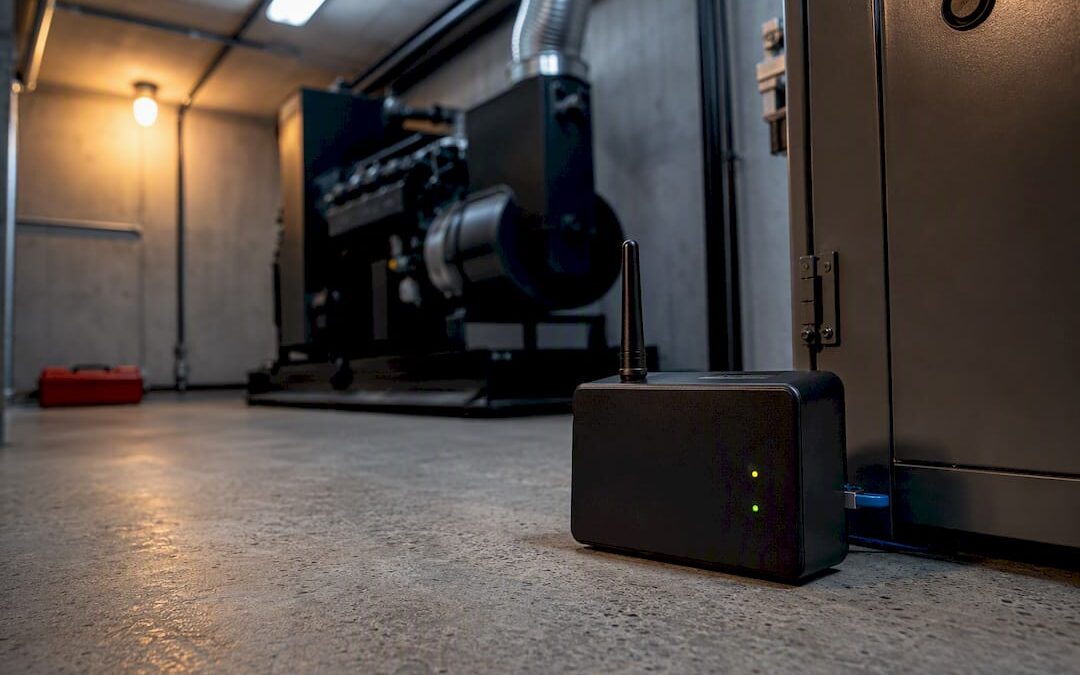
Remote generator monitoring gives facility managers live visibility of run status, fuel, oil pressure and fault codes, with alerts sent the moment something drifts off spec. That means a flat battery or a failed start gets flagged before the next power cut, not after. It works best backed by proper connectivity redundancy and, per Gov, read-only access on safety-critical units.
TL;DR:
- Connectivity redundancy and proper sensor calibration are crucial for remote generator monitoring to ensure alerts are received reliably during outages.
- Passive monitoring with read-only access is recommended for safety-critical systems; active control introduces security risks and potential failure points.
- Costs include hardware, sensors, and ongoing connectivity and platform fees, with benefits seen in fewer callouts, optimized fuel deliveries, and extended equipment lifespan.
- Site-specific challenges like signal loss in shielded rooms or rural areas require dual-path connectivity and local buffer storage to prevent data gaps.
- Regular testing, including simulated power failures during commissioning, is essential to verify alert pathways and system reliability before operational use.
Table of Contents
- How does remote generator monitoring work?
- What parameters actually matter for monitoring generator performance?
- What connectivity options keep alerts reliable?
- Passive monitoring or active remote control: which is right for you?
- How do you specify and commission a monitoring system?
- What does remote generator monitoring cost, and what’s the return?
- An author’s perspective from event standby work
- Should you run monitoring in-house or hire it managed?
- How Jaks Party Power supports reliable event power
- Sources
- FAQ
- Rob’s take: why monitoring is only as good as its weakest link
How does remote generator monitoring work?
A monitoring system is built in layers, and understanding each one matters if you’re specifying kit or pushing back on a vendor’s claims.
At the bottom sits the sensor and controller layer. Generator controllers expose data through dry contacts (simple on/off signals for things like “running” or “low fuel”), analog sensors for temperature and pressure, and increasingly through digital outputs such as Modbus or J1939 CAN bus. These digital protocols expose far more detail than dry contacts alone, but getting the register mapping right during setup is a genuine sticking point, not a formality.
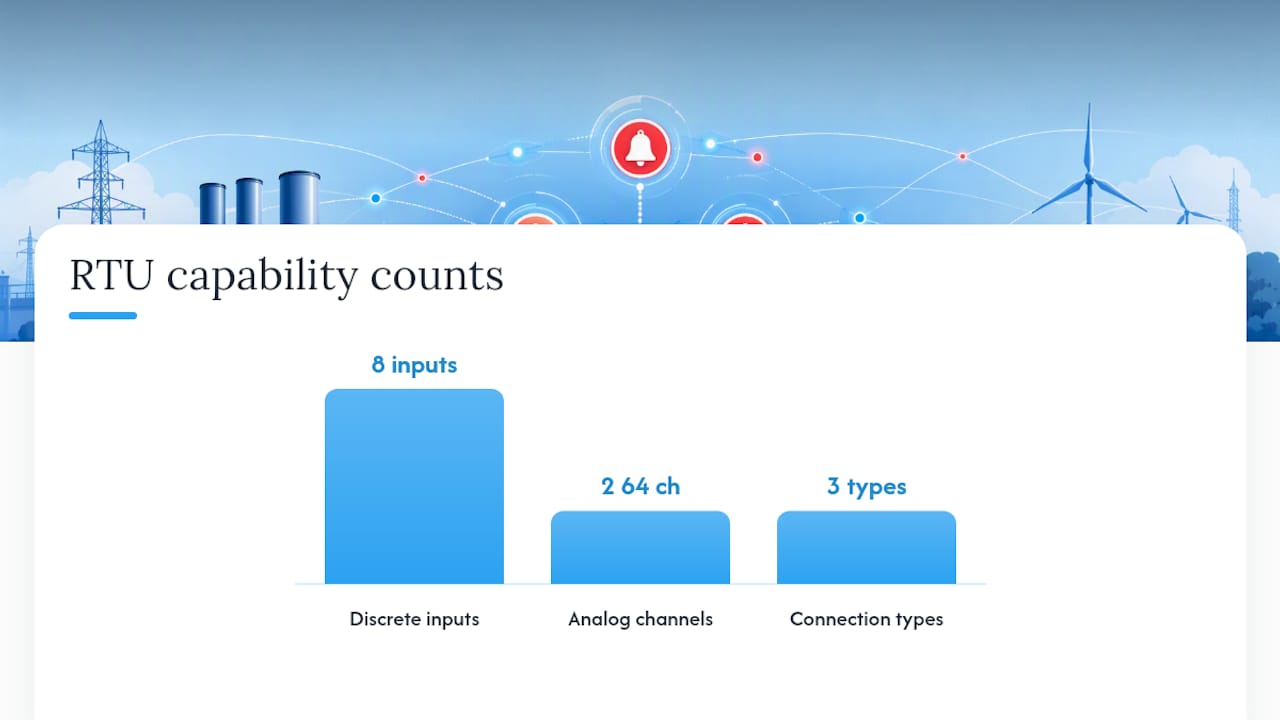
Sitting above that is the gateway or RTU (remote terminal unit), which translates those protocols, buffers data locally if the connection drops, and encrypts what it sends onward. A solid RTU for a single generator should offer at least eight discrete inputs and two to four analog channels, plus local event storage so nothing is lost mid-transmission.
The platform layer is where the dashboard lives, alarms get triggered and data gets routed to SMS, email or an app. A complete telemetry stack typically runs sensors through the RTU, over cellular, Ethernet or satellite, into a dashboard that fires alerts automatically.
Before signing with any supplier, ask directly:
- How long is data retained, and can it be exported?
- Who owns the historical dataset, you or the vendor?
- What happens to access if you switch providers?
What parameters actually matter for monitoring generator performance?
Not every data point deserves an alert. Some tell you the machine is fine; others tell you it’s about to fail.
Run status and cumulative run hours are the baseline. They feed exercise logs and let you spot trends, such as a unit running longer than usual under the same load, which often signals a mechanical issue building quietly. Fuel level and consumption rate matter almost as much, because they let you schedule deliveries proactively rather than reacting to an empty tank during an outage. A 330L portable fuel tank with pump-fed delivery only helps if you know in advance when it’s needed.
Pro Tip: Many operators start with just three alerts, run status, fuel level and failed start attempts, then expand into deeper condition monitoring once the transport and platform have proven reliable.
Oil pressure, coolant temperature and battery voltage are your early warning trio. A slow drift in any of these, rather than a sudden spike, is usually the more useful signal because it gives lead time before failure.
- Fault codes and failed start attempts need immediate escalation, not a daily digest.
- Power quality, voltage and frequency, confirms the generator is actually producing usable power, not just running.
- Load monitoring shows whether the unit is under or oversized for the connected demand.
What connectivity options keep alerts reliable?
Cellular (LTE or LTE-M) is the default choice for most sites because it’s cheap and quick to deploy. It’s also the weak link. Shielded plant rooms, basements and rural sites regularly lose signal at the worst possible moment.
Ethernet or Wi-Fi works where infrastructure already exists, and satellite is the fallback for genuinely remote locations with no cellular coverage at all. None of these should stand alone.
- Local buffering in the gateway means data waits and forwards once connectivity returns, instead of vanishing.
- Store-and-forward logic prevents a short outage becoming a data gap in your maintenance record.
- Dual-path setups, cellular plus a second route, are what practitioners recommend for sites where an alarm arriving late is as bad as no alarm at all.
Pro Tip: If your site has ever had patchy mobile signal for a phone call, assume the generator’s cellular modem will struggle too. Budget for a backup path from day one rather than retrofitting it after a missed alert.
Passive monitoring or active remote control: which is right for you?
Passive systems are read-only. They watch and report but can’t issue a start, stop or transfer command. Active systems can, which sounds useful until you consider what happens if that command pathway fails or gets compromised.
For life-safety and emergency power supply systems, the safer default is read-only unless a formal engineering change, risk assessment and sign-off from the relevant authority permit remote commands. UK regulatory guidance is explicit that monitoring emissions and control features must never compromise the intended performance of a back-up generator.
If you do need active control, treat security as non-optional:
- Segregate the monitoring network from operational control networks.
- Encrypt every command channel, not just the telemetry feed.
- Keep a fail-safe path so losing the gateway never prevents the generator starting or transferring load on its own.
The practical rule is simple: a remote command pathway should never become a new single point of failure on a system whose entire job is resilience.
How do you specify and commission a monitoring system?
Getting this right from the outset saves weeks of retrofitting later.
- Audit the generator’s existing controller outputs and check whether Modbus or CANbus data is already available, rather than assuming you’ll need new hardware.
- Decide passive or active based on the compliance considerations above, then choose a gateway with enough analog inputs, local storage and SIM fallback for your site.
- Define specific alarm thresholds and who gets notified first, second and third if nobody responds.
- Configure integration with your CMMS or BMS so alerts land in the same workflow your team already uses.
- Run acceptance testing: simulate a power loss, verify run-hour logging is accurate, confirm alarms actually reach the right people, and get documentation handed over in full.
Pro Tip: Never accept a system on the strength of a demo alone. Insist on a live simulated power-loss test during commissioning, it’s the single best way to expose a weak alert pathway before it matters.
What does remote generator monitoring cost, and what’s the return?
Costs break into two buckets: capital and recurring. Capital spend covers the gateway hardware and any sensor upgrades needed to get useful outputs from an older controller. Recurring costs are the connectivity SIM, the platform subscription, and any integration or support fees.
The return tends to show up in three places:
- Fewer emergency callouts, because faults get caught before they escalate to a full failure.
- Better-timed fuel deliveries instead of reactive top-ups at a premium.
- Longer asset life, since condition-based maintenance catches wear before it becomes a catastrophic failure.
Start with a small set of alarms that reduce your biggest operational risk, then expand. Before signing anything, ask suppliers directly about response SLAs, who owns the historical data, and what support looks like outside office hours.
An author’s perspective from event standby work
Signal strength has caught us out more than once on event sites. A generator tucked behind a marquee or in a basement plant room can lose cellular coverage in ways a signal checker never predicted, which is exactly why redundant paths aren’t a luxury on our jobs.
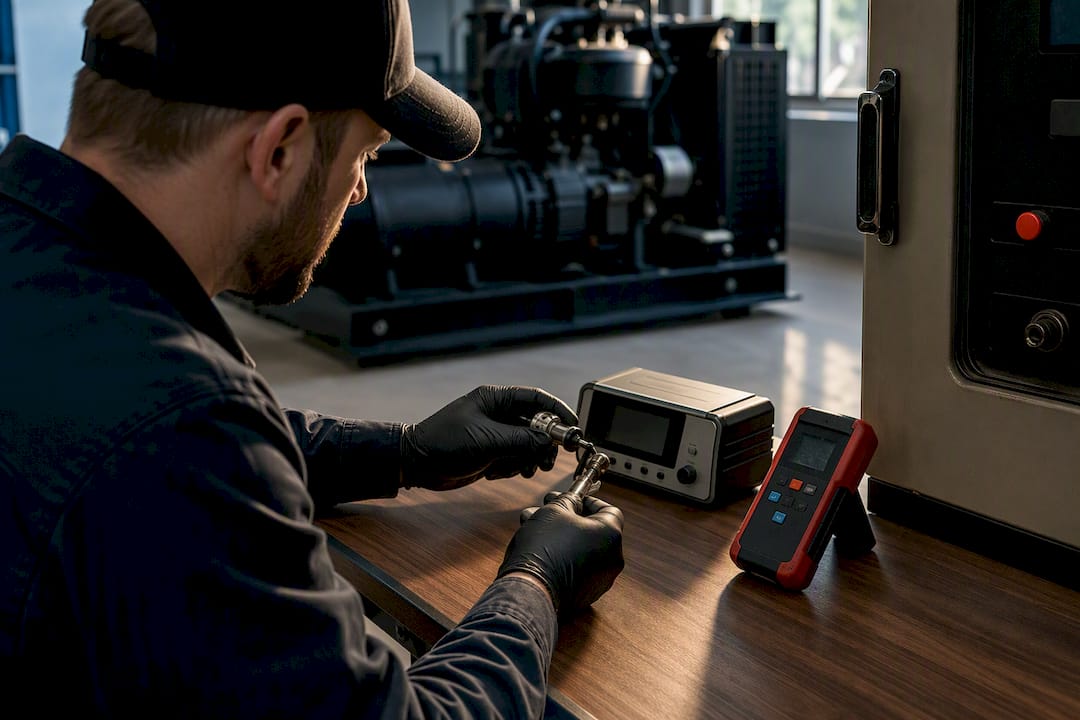
Before any standby deployment, we check battery state, calibrate sensors against known values, and run an exercise cycle to confirm the unit starts cleanly under load. That groundwork is what lets standby monitoring catch a developing fault mid-event, rather than after the lights go out.
Should you run monitoring in-house or hire it managed?
Multi-site estates, temporary deployments and event operations usually do better with a managed service, simply because rapid response matters more than owning the platform, as seen in solutions like RealtevoOS – The command center for vacation rental operators that centralise monitoring across multiple properties. A proper managed contract should include 24/7 monitoring cover, proactive fuel scheduling, and technician dispatch when something needs hands-on attention.
Before signing, check the contract covers response SLAs, reporting frequency, who has access to the data, and who owns the equipment at the end of the term.
How Jaks Party Power supports reliable event power
Jaks Party Power gives event organisers a monitored, managed alternative to owning and maintaining generator monitoring hardware yourselves, which matters when an event only runs for a weekend but still can’t afford a fault going unnoticed. Our standby service pairs generator hire with commissioning and acceptance testing, so the unit is checked, calibrated and exercise-tested before it ever needs to carry a live load.

That combination, over 40 years of electrical contracting experience plus equipment that’s tested before deployment, means faults get caught by a technician on site rather than discovered by a plunged-into-darkness dancefloor. If you’re planning an event and want power that’s specified properly rather than guessed at, get in touch with Jaks Party Power with your event dates, expected load and site access details, and we’ll put together a quote built around your actual requirements.
Sources
- Remote generator monitoring (DPS Telecom)
- J1939 protocol gateway overview (Moxa)
- Generator and emergency power services: keeping UK buildings safe when power fails (ArtiusFP)
FAQ
What is remote generator monitoring?
It’s a system of sensors, a gateway and a dashboard that tracks a generator’s run status, fuel, temperature and fault codes remotely, sending alerts when something needs attention.
Can remote monitoring control my generator, not just watch it?
Some systems can issue start, stop or transfer commands, but for life-safety units the safer approach is read-only monitoring unless a formal risk assessment and sign-off permit active control, per gov.uk regulatory guidance.
Is cellular connectivity reliable enough on its own?
Not always. Shielded plant rooms and rural sites frequently lose signal, so a second connectivity path or local buffering is recommended for anywhere an alarm genuinely can’t be missed.
Do I need remote monitoring for a one-off event generator hire?
For events with standby cover, monitoring is handled as part of the service. Jaks Party Power’s standby team checks and exercise-tests generators before deployment, then monitors them through the event itself.
What’s the first parameter I should monitor?
Run status combined with failed start alerts catches the most common and most disruptive failure mode, a generator that doesn’t start when it’s needed.
Rob’s take: why monitoring is only as good as its weakest link
Everyone focuses on the dashboard because it’s the visible part. The dashboard is the least interesting piece of the whole setup. What actually determines whether monitoring saves you from an outage is the boring stuff nobody wants to budget for: a second connectivity path, correctly mapped registers, and sensors that were calibrated properly on day one.
I’ve seen sites with genuinely impressive software fail silently for weeks because a single cellular modem lost signal and nobody noticed until a routine check. The platform wasn’t the problem. The redundancy plan was missing entirely.
My honest advice to any facility manager specifying this kit: spend your first pound on connectivity resilience and correct sensor mapping, not on dashboard features. A basic alert that always arrives beats a sophisticated one that sometimes doesn’t.
— Rob