
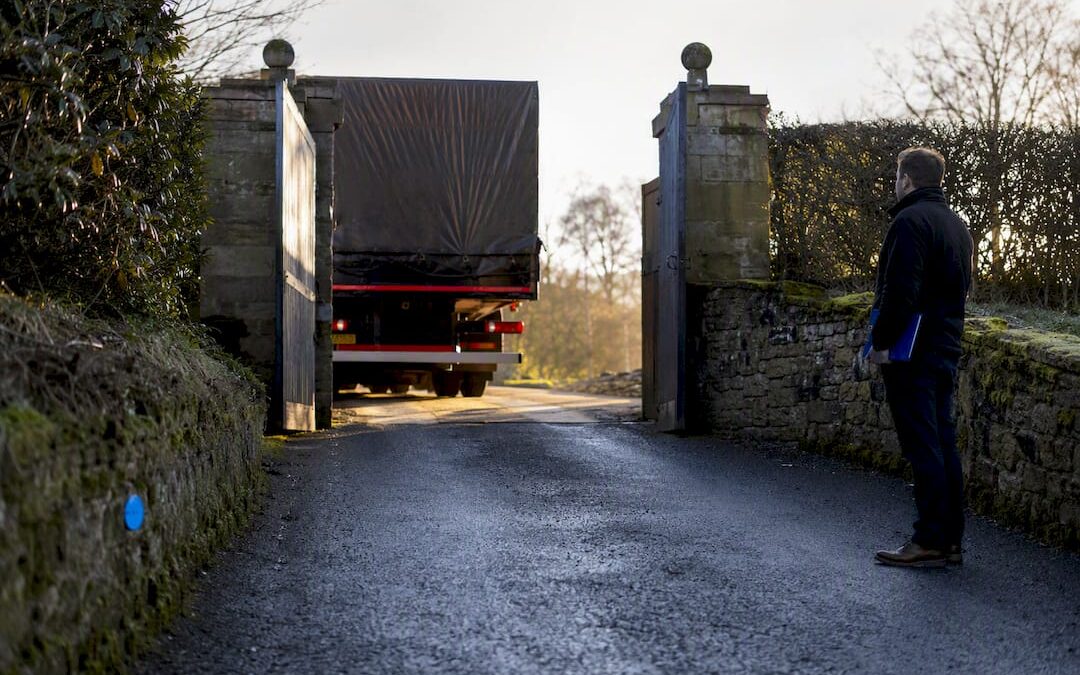
Expect a parcel courier for a small portable or inverter set, and a specialist pallet or haulage delivery for anything larger. Before dispatch, hand the carrier your site’s vehicle dimensions, turning space, and unloading method, because generator delivery access depends entirely on that information reaching the driver in advance. Skip it, and you risk a refused delivery on the day.
TL;DR:
- Proper site planning involves providing carriers with vehicle dimensions, access route surveys, and clearances to prevent delivery refusals or delays.
- Small portable generators travel by parcel networks without lift equipment, while medium units require pallet carriers with tail-lifts or forklifts, and heavy generators need specialized haulage with crane options.
- For complex or oversized loads, early scheduling of permits, police escort, and route checks is essential, especially in remote areas or urban zones with strict regulations.
- Confirming the unloading method, lifting equipment, ground conditions, and restrictions in writing before dispatch minimizes safety risks and operational disruptions.
- Engaging a provider that manages the entire delivery and installation process, including site surveys and support during the event, reduces the risk of failed delivery and operational downtime.
Table of Contents
- Delivery methods and carrier types for different generator sizes
- Delivery times, regional charges and what triggers a surcharge
- Site access: dimensions, clearances and what the driver actually needs
- Unloading and lifting: agreed methods and the checks that stop refusals
- Permissions, abnormal loads and scheduling escorted deliveries
- Your pre-delivery checklist before booking dispatch
- How a hire-and-setup provider handles this in practice
- Why organisers keep making the same access mistake
- An alternative to arranging generator delivery yourself is a service where the survey, the delivery, and the setup are handled as one connected process by people experienced in electrical contracting work.
- Sources
- FAQ
Delivery methods and carrier types for different generator sizes
Not every generator travels the same way, and the method dictates almost everything else about the delivery, from the paperwork you need to the equipment waiting at your gate.
Small portable and inverter generators, usually light enough for standard parcel networks, usually move through standard parcel networks. These arrive on a tracked, dated service much like any other boxed item, and the driver expects a normal doorstep or reception drop. There’s no lifting gear involved and no site survey required. If you’re arranging portable generator access for a small marquee or a market stall, this is almost always the route your supplier will use.
Mid-weight units generally travel on pallets through specialist carriers. This changes the delivery experience considerably. A pallet delivery typically arrives on a curtain-sided or flatbed lorry fitted with a tail-lift, which lowers the load to kerbside height. Some carriers instead expect a forklift at the receiving end. That distinction matters because a driver turning up with a tail-lift vehicle cannot magically produce a forklift if your access plan assumed one, or vice versa.
Heavy site generators, containerised sets, and anything built onto a skid or trailer chassis need proper specialist haulage. These deliveries involve HIAB-mounted cranes, dedicated crane hire, or low-loader trailers depending on weight and shape. This is where generator transport solutions become genuinely bespoke: no two heavy deliveries look quite the same once ground conditions, access width, and final positioning enter the equation.
The key operational point across all three tiers is this: drivers will only do what’s been pre-agreed. A parcel driver won’t attempt a heavy lift. A pallet driver with a tail-lift won’t use an on-site forklift unless that’s been arranged beforehand, and HSE guidance is explicit that drivers should not use a forklift at the delivery site unless the arrangement was agreed in advance and the site has been assessed as suitable.
A few things to settle before you even confirm a delivery date:
- Whether the carrier expects kerbside drop-off or full site delivery
- Which lifting equipment (if any) the vehicle carries as standard
- Whether your access route can accommodate that specific vehicle type
- Who supplies additional lifting equipment if the standard vehicle can’t manage to unload
Getting this wrong doesn’t just cause delay. It can mean the vehicle turning around at your gate having achieved nothing, which then restarts the entire scheduling process.
Delivery times, regional charges and what triggers a surcharge
In-stock parcel deliveries generally move within a few working days. Pallet deliveries take a little longer, often a week or so, because carriers batch routes and need advance notice for tail-lift or forklift-equipped vehicles. Specialist haulage for heavy or containerised units needs the longest lead time. Route planning, crane or HIAB booking, and any permit checks all happen before a firm date is even offered.
Regional exceptions are common and worth planning around rather than being surprised by. Deliveries to the Scottish Highlands and Islands, parts of rural Wales, and other remote postcodes often carry longer transit windows and additional charges, simply because fewer carriers run regular routes there and the return-leg economics are worse for the haulier.
Surcharges tend to appear for a handful of predictable reasons:
- Remote or island postcodes where standard networks don’t reach directly
- Failed first attempts, where access wasn’t as described and the vehicle had to leave
- Out-of-hours or night deliveries, which need different staffing and sometimes local authority coordination
- Additional lifting equipment brought specifically because the standard vehicle couldn’t manage the site
- Escort or permit requirements for abnormal loads, covered in more detail further down
The single most useful thing you can do here is ask your supplier for a firm, written lead time and a delivery quote before you commit to a project date. Generic “3 to 5 working days” language on a website rarely reflects what a genuinely remote or access-constrained site will experience. If you’re managing efficient generator delivery against a fixed event date, get that confirmation in writing early, not the week before.
Site access: dimensions, clearances and what the driver actually needs
This is where most delivery failures actually happen, and it’s rarely the generator’s fault. It’s almost always the final few hundred metres.
Carriers don’t need to know how big your generator is. They need to know how big the vehicle carrying it is, and whether your site can physically accommodate that vehicle. A driveway that comfortably fits your car tells you nothing about whether a 7.5 tonne rigid or an articulated low-loader can get through the same gateway, round the same bend, or under the same tree canopy.
HSE guidance on vehicles and loads sets out exactly what information the carrier needs before the vehicle sets off:
- Width of both the vehicle and the load, including any overhang
- Length, particularly relevant for low-loaders and trailer combinations
- Height, accounting for the load itself, not just the cab
- Gross weight, since this determines which bridges and roads are usable at all
- Manoeuvring space at the delivery point, including turning circles for large rigids
- Visibility along the approach route, especially at junctions and blind bends
Bridge clearance deserves particular attention. HSE cites 5.03 metres as the normal minimum clearance under UK highway bridges, though this is guidance rather than a guarantee, and it comes with an important caveat. Ramps, cambered approaches, and awkward gradients can all reduce the effective clearance well below the bridge’s stated height. A vehicle that should technically clear a bridge on paper can still strike it if the road surface rises unevenly on the approach.
Weight limits work the same way. A bridge or private access road rated for general traffic may not be rated for a fully loaded generator transporter, and this is precisely the kind of detail that only emerges through a proper route check rather than a quick look at a map.
Pro Tip: Walk or drive the actual delivery route yourself with the vehicle dimensions in hand, not just the postcode on a satnav. Satnav routing frequently sends HGVs down roads that are legally accessible but practically unsuitable, and the driver won’t discover this until they’re already committed to the lane.
Restrictions should be documented and flagged at decision points along the route, not just noted as a single line in an email. If there’s a low bridge, a weight-limited road, or a narrow village high street on the approach, the driver needs that information positioned where they can still choose an alternative route, not after they’ve already turned into the restriction. This is standard practice under HSE’s guidance on separating vehicles from pedestrians and avoiding situations where drivers discover a hazard only once committed to a tight space.
Unloading and lifting: agreed methods and the checks that stop refusals
Agree the unloading method before the vehicle leaves the depot, not when it arrives at your gate. Kerbside drop, tail-lift, forklift-assisted, HIAB, or full crane lift are all different operations requiring different equipment, different ground conditions, and often different numbers of people on site.
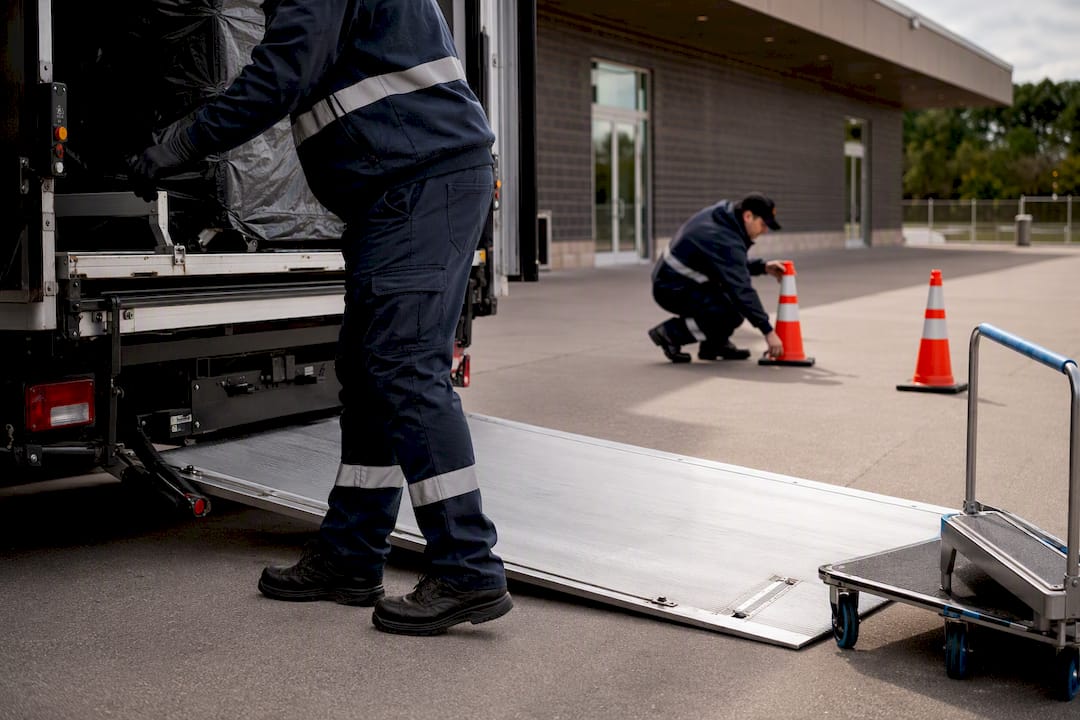
HSE’s guidance on delivering safely treats this as a shared responsibility between carrier and customer, and that framing matters more than it sounds. The carrier controls the vehicle and the driver’s competence with it. You control the site, the ground conditions, and whatever lifting equipment might be waiting there. Neither party can plan a safe unload without information from the other.
Where a genuine lift is involved, whether that’s a HIAB crane taking a generator off a flatbed or a mobile crane positioning a containerised set, HSE guidance requires the operation to be properly planned by a competent person, supervised throughout, and carried out with equipment carrying valid safe working load (SWL) markings and up-to-date inspection records. This isn’t bureaucratic box-ticking. A lifting chain or crane hook without current certification is a genuine safety liability, not a paperwork inconvenience.
Before the vehicle arrives, check:
- Ground conditions at the unloading point, particularly after rain or on grass sites
- Whether any ramps or temporary bridging can actually bear the combined vehicle and load weight
- That pedestrians and site staff will be kept clear of the unloading zone
- Who is supplying the forklift, HIAB, or crane, and whether they’ve confirmed suitability for your access
HSE’s site-based access guidance also flags that where staff need to reach the vehicle or load directly, perhaps to remove sheeting or check strapping, proper platforms, gantries, or other safe access should be in place, and a competent person should check them before use.
Drivers are entitled to refuse or halt an unload on safety grounds, and this is precisely the scenario careful preparation avoids. A driver who arrives to find unstable ground, no agreed lifting equipment, or pedestrians wandering through the unloading zone is well within their rights to stop and leave. That’s not the carrier being difficult. It’s the exact outcome HSE’s shared-responsibility principle is designed to prevent, and it’s almost always avoidable with a short conversation the week before.
Permissions, abnormal loads and scheduling escorted deliveries
A movement becomes “abnormal” once it exceeds standard road-legal dimensions or weight, and this changes almost everything about how the delivery gets planned. Larger containerised generators, big standby sets on trailers, or anything requiring a low-loader can tip into this category, and the practical implications extend well beyond just booking a bigger lorry.
Local authority notices give a useful real-world picture of what this involves. One example from a Merthyr Tydfil movement of generator and transformer equipment shows the load being scheduled at night, coordinated with police, with rolling road closures and parking suspensions along the route. That’s not unusual for genuinely oversized equipment moving through built-up areas.
Typical controls for these movements include:
- Police coordination for escorting the load through junctions or roundabouts
- Rolling road closures, where traffic is held briefly as the load passes rather than the road closing for hours
- Temporary parking suspensions along the route to preserve clearance
- Night-time or off-peak scheduling to reduce disruption and traffic conflict
Permit applications and route approvals are usually handled by the haulage specialist rather than the buyer, but they take real time, often weeks rather than days, depending on the route’s complexity and how many authorities the load passes through. This is the single biggest reason abnormal-load deliveries need to be scheduled early. Confirming your event or installation date before the route and permits are confirmed is one of the most common planning mistakes organisers make, and it’s almost always the wrong order to do things in.
If your project timeline is tight, build in slack around the permit lead time rather than around the delivery itself. A haulier can usually move quickly once cleared. Getting cleared is the part that takes patience.
Your pre-delivery checklist before booking dispatch
Work through this before you confirm a dispatch date, not after.
- Gather vehicle-plus-load dimensions, not just the generator’s own footprint, including width, length, height and gross weight for the specific vehicle type your carrier plans to use.
- Confirm the unloading method in writing, whether that’s tail-lift, forklift, HIAB, or crane, and establish exactly who is supplying that equipment.
- Verify SWL markings and inspection records on any lifting equipment involved, whether it’s yours or the carrier’s, before the delivery day arrives.
- Survey the actual route, including bridges, narrow sections, and any gradient that could reduce effective clearance below what’s stated for the road.
- Mark restrictions at decision points, so a driver approaching a low bridge or narrow lane still has room to choose an alternative before committing.
- Agree a delivery window rather than a vague day, and discuss a contingency plan if the first attempt fails for reasons outside anyone’s control.
- Nominate a single site contact who will be available and reachable throughout the delivery window, not a general office number.
- Prepare a designated unloading area that’s been checked for ground conditions, is segregated from pedestrian traffic, and is clear of overhead obstructions.
Pro Tip: For anything beyond a small portable set, commission a proper site survey rather than relying on a phone description of your access. Environmental factors that seem trivial in conversation, an unexpected kerb height, a gate that’s narrower than it looks in photos, a slope that steepens near the delivery point, are exactly the details that cause failed first attempts and knock-on charges.
Sites arranging generator delivery requirements for a genuinely complex install, multiple units, restricted urban access, or a remote rural venue, benefit disproportionately from this kind of upfront checking, as explained in THE GURLZ Outdoor DJ Setup, Venue Shot Visuals. The cost of a survey is small next to the cost of a failed delivery attempt and a rebooked crane.
How a hire-and-setup provider handles this in practice
A background in electrical contracting can shape how delivery and access get managed once generators enter the picture. Rather than treating delivery as a separate logistics problem bolted onto the hire, the survey, the transport, and the setup are planned as one connected process.
A site survey happens before equipment is ever dispatched. That means someone competent has already assessed ground conditions, access width, and the practical realities of getting a generator, and any distribution boards, lighting, or cabling that go with it, into position without the guesswork that causes failed deliveries elsewhere. Lifting and unloading, where it’s needed, gets coordinated by staff who understand what a competent person actually needs to check before a lift proceeds.
For events where power failure simply isn’t an option, having support present throughout the event rather than just at delivery reduces the operational risk considerably.
For a straightforward small generator, self-managed delivery through a standard hire firm is often perfectly workable. Where the access is genuinely complex, multiple pieces of equipment need coordinating, or the event simply can’t tolerate delay, working with a provider who manages the whole chain, generator range through to permanent power installations, removes a substantial amount of risk from the organiser’s plate.
Why organisers keep making the same access mistake
The gap between a smooth generator delivery and a refused one is rarely about the equipment. It’s almost always about information that never made it from the site to the carrier in time.
HSE frames delivery as a genuinely shared responsibility: the carrier owns the vehicle and the driving competence, you own the site and everything happening on it. That principle gets ignored constantly, usually because organisers assume “we’ve got access” means the same thing to a car as it does to a 7.5 tonne rigid with a crane on the back. It doesn’t, and that mismatch is where nearly every failed delivery I’ve seen traces back to.
The fix isn’t complicated. For anything beyond a small portable unit, commission a proper site survey rather than describing your access over the phone. It costs little against the price of a wasted haulage slot and a rescheduled crane, and it turns a shared responsibility into an actual plan both sides can follow.
— Rob
An alternative to arranging generator delivery yourself is a service where the survey, the delivery, and the setup are handled as one connected process by people experienced in electrical contracting work.
That matters most for events where there’s no room for a failed first attempt: weddings, corporate functions, large shows where power genuinely cannot fail. A site survey and hire arrangement means someone competent has already checked ground conditions and access before equipment is ever dispatched, and standby cover keeps that support in place throughout the event itself, not just at the delivery stage. If you’re planning a project with complex access, restricted approach roads, or simply want the delivery risk taken off your own list, request a quote for a specific generator and get the survey booked before you commit to a date.
Sources
Before booking a delivery, check HSE’s guidance on vehicles and loads and its site-based access guidance directly. Both cover clearances, lifting checks, and safe access in more depth than any single article can. For a real example of abnormal-load coordination, the Merthyr Tydfil notice shows how local authorities handle these movements in practice.
FAQ
Can I plug a generator into my house in the UK?
Not directly into your household wiring without a properly installed changeover switch or interlock, fitted by a competent electrician. Connecting a generator straight into domestic sockets or a consumer unit without that safeguard risks backfeeding the network and is both dangerous and against wiring regulations.
What is the 20/20/20 rule for generators?
There’s no single, widely recognised technical standard known as the “20/20/20 rule” for generators. If you’ve encountered this phrase, it likely refers to a specific manufacturer’s maintenance schedule rather than an industry-wide rule, so check the guidance that came with your specific unit.
Can a 2.5kVA generator carry a full event setup?
A 2.5kVA generator suits small loads such as basic lighting or a single sound system, not a full event setup with multiple power draws. For weddings, corporate events, or larger shows, sizing needs to account for combined load and startup surges, which is exactly what a proper event power planning process is designed to calculate.
Does a generator need an earth rod in the UK?
Many standalone generators used away from a permanent electrical installation do need a separate earth connection, depending on the generator’s earthing arrangement and how it’s being used. This is a competent-person decision based on the specific setup, not a blanket rule, so check with a qualified electrical contractor before use.
What information does a carrier need before delivering a generator?
Carriers need vehicle-plus-load width, length, height, and gross weight, along with manoeuvring space and any route restrictions such as low bridges or narrow approaches. HSE’s guidance on vehicles and loads sets out exactly what to supply before dispatch to avoid a failed or refused delivery.