by rob | Sep 24, 2026 | Event Power Guides
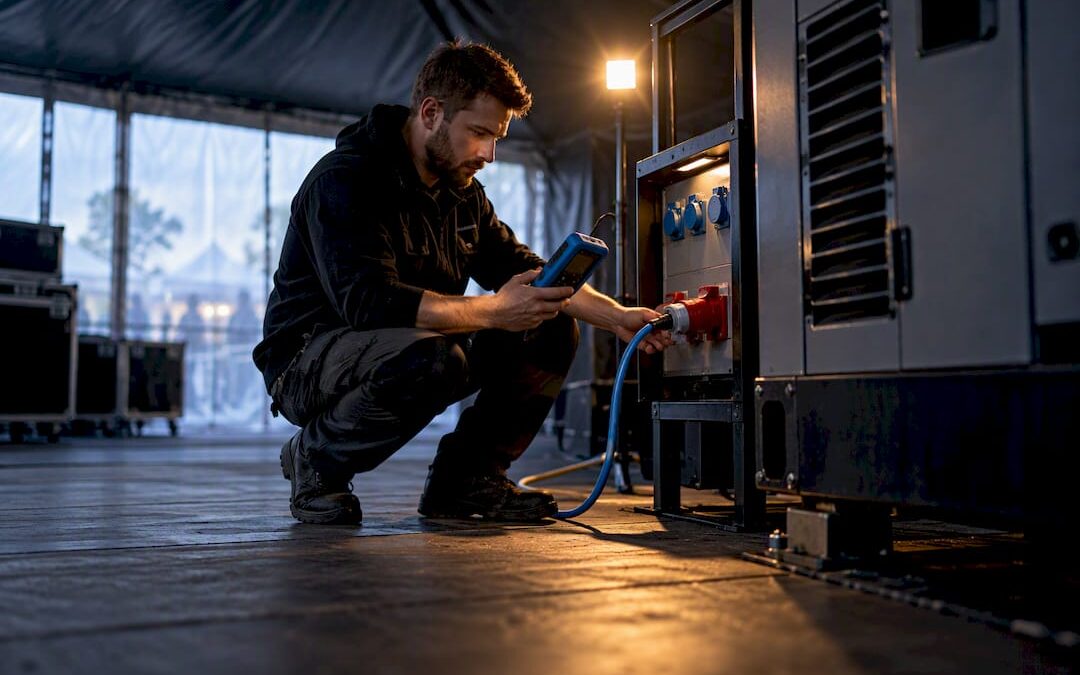
Size your generator from a proper load schedule, not a guess. List every item’s running watts, convert the total to kW, then divide by a power factor of around 0.8 to get kVA, and add margin for motor starting current and harmonic derating before picking a set. Once...

by rob | Sep 23, 2026 | Event Power Guides
Add up the running watts of every appliance likely to fire at once, add the largest single start-up surge on top, build in headroom of roughly 20 to 50%, then round up to the next standard generator size. Before you sign off on that figure, check whether any appliance...
by rob | Sep 22, 2026 | Event Power Guides
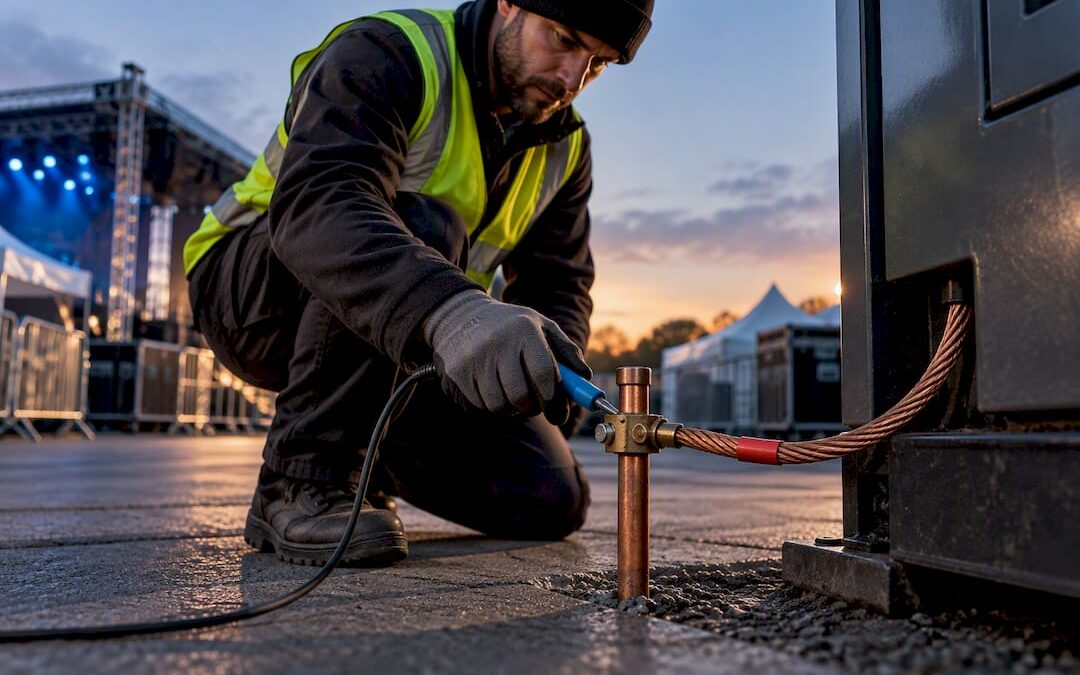
If a generator runs as a switched alternative to the mains, it cannot rely on the distributor’s earth. BS 7671 Regulation 551.4.3.2.1 requires a dedicated means of earthing for the set itself. Where an electrode genuinely cannot be driven, a time-delayed RCD rated at...
by rob | Sep 21, 2026 | Event Power Guides
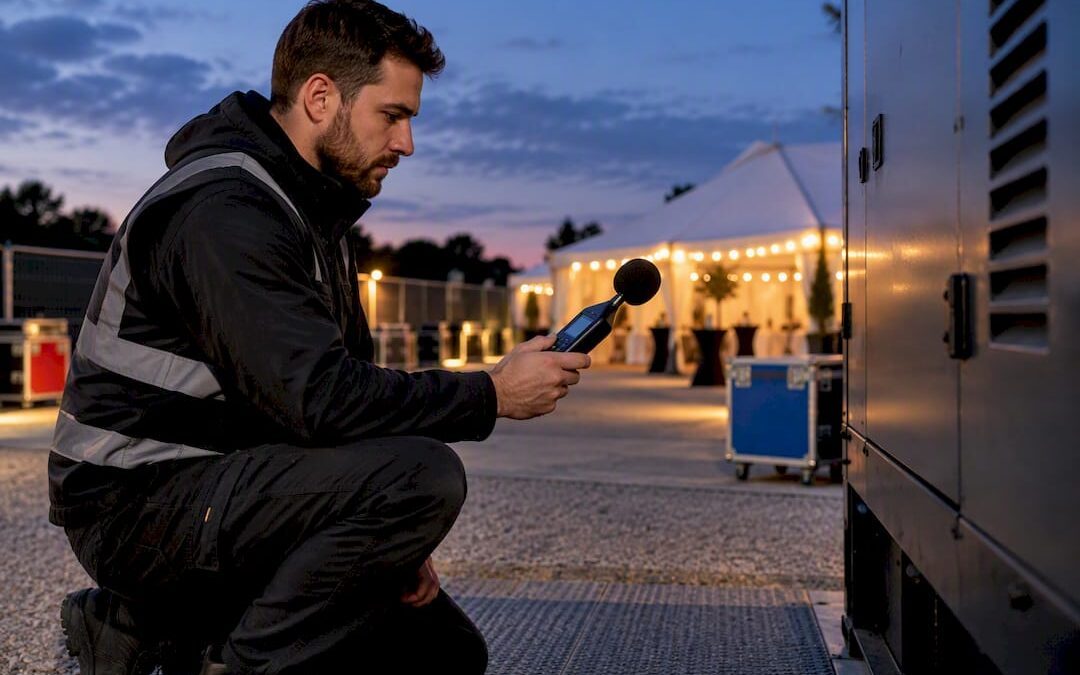
Open-frame generators run at 95 to 105 dBA close up, standard silent canopy units sit around 70 to 75 dBA, and super-silent or battery models drop below 60 dBA. The only reading worth trusting is A-weighted, taken at 7 metres, at 50% load, matching the ISO measurement...

by rob | Sep 20, 2026 | Event Power Guides
A small portable generator costs roughly £1.50 to £3 an hour to run, a medium event-sized unit £2.50 to £6, and large commercial machines anywhere from £5 to £38 or more, depending on size and load. The single biggest swing factor isn’t the machine, it’s how hard you...
by rob | Sep 19, 2026 | Event Power Guides
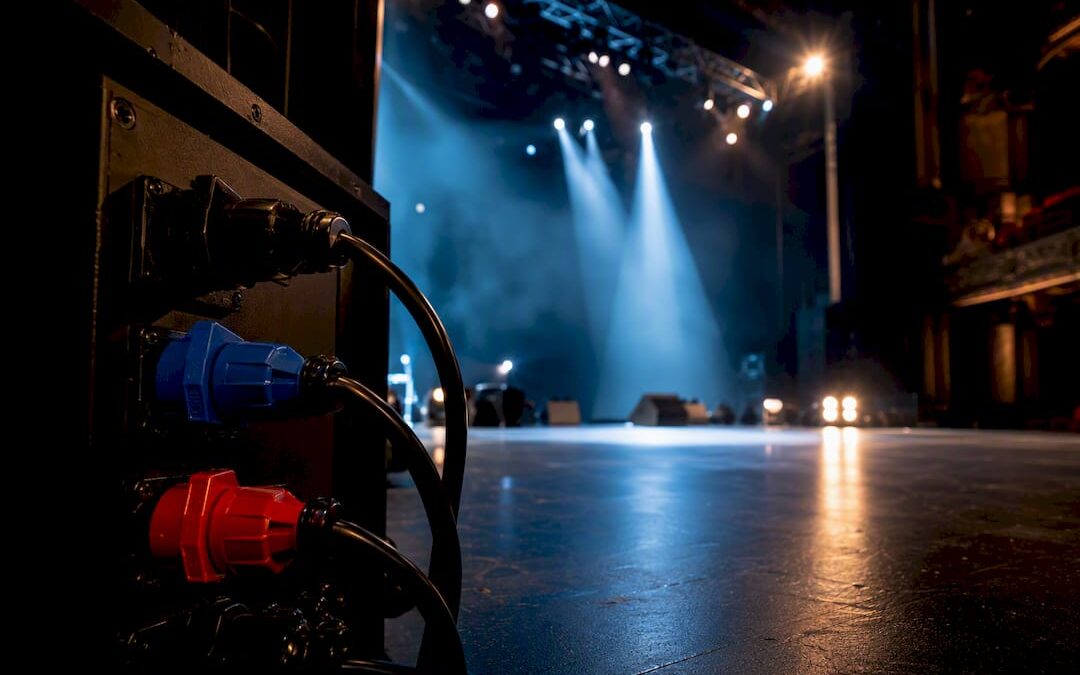
Size your rig to its connected load, not its average draw, and never load a circuit past 80% for anything running longer than a few minutes. That single rule, paired with proper phase balancing, governs almost every stage lighting power decision you’ll make. Design...
