

A corporate event setup vendor checklist is a structured planning framework that maps every supplier, deadline, and safety obligation required to run a professional event without failure. Mid-sized corporate events typically require 10–20 vendors for gatherings of 100–300 attendees. That volume of moving parts makes informal coordination a liability. UK safety regulations, including the upcoming Martyn’s Law and BS 7671 electrical standards, add legal weight to what planners document and when. A well-built vendor checklist is not just an organisational tool. It is your primary defence against delays, faults, and compliance failures.
1. Which vendors belong on your corporate event setup vendor checklist?
The first task in any event logistics plan is identifying every vendor category you need. Missing a category at this stage creates gaps that surface on setup day, when fixing them costs far more.
The core vendor categories for a corporate event are:
- Venue — the anchor booking that determines every other decision
- AV and technical production — sound, projection, screens, and microphones
- Power and electrical — generators, distribution boards, cabling, and lighting
- Catering — food, beverage, and service staff
- Security — door management, crowd control, and emergency coordination
- Décor and theming — staging, furniture, and branded elements
- Photography and videography — stills and moving image coverage
- Transport and logistics — equipment delivery, attendee transfers
- Cleaning and waste management — pre-event prep and post-event clearance
- Communications and IT — Wi-Fi infrastructure, registration systems, and event apps
For events with 100–300 attendees, coordinating 10–20 vendors with distinct contracts and setup windows is standard. Each vendor entry in your checklist should record the company name, primary contact, contract reference, confirmed setup time, and an escalation number for event day.
Pro Tip: Assign a unique reference code to each vendor in your master document. Use that code in every email thread and call log. When you need to trace a decision under pressure, you will find it in seconds.

2. How to prioritise vendor booking timelines
Booking sequence determines whether you get the suppliers you want or the ones left available. Primary vendors including the venue, AV provider, and lead event planner should be confirmed 9–12 months before the event date. Secondary vendors such as florists, entertainers, and décor specialists require 3–6 months of lead time.
The logic behind this staging is straightforward. Venues and AV companies hold limited capacity and book out early for peak corporate seasons. Locking them in first gives you a confirmed infrastructure on which to build every subsequent decision. Décor and entertainment vendors are more flexible but still need enough lead time to produce custom work.
Document each vendor’s booking deadline in your checklist alongside their deposit due date and contract signing deadline. A missed deposit can forfeit a confirmed slot with no warning. Treat booking deadlines with the same urgency as the event date itself.
3. How to design a vendor communication system that prevents errors
A single shared document or platform serves as the definitive record for all vendor information. Assigning one team member as the sole communication point prevents conflicting instructions and what experienced coordinators call “information drift,” where different vendors receive different versions of the same brief.
- Create a master vendor register. One document holds every supplier’s contact, contract status, setup window, and delivery confirmation.
- Appoint a vendor liaison. One person sends and receives all vendor communications. No other team member contacts suppliers directly.
- Standardise onboarding documentation. Every new vendor receives the same briefing pack: site map, load-in schedule, emergency contacts, and health and safety requirements.
- Schedule weekly status checks. In the final four weeks before the event, confirm each vendor’s status in writing every seven days.
- Issue a final confirmation 48 hours out. Send every vendor a single document confirming their arrival time, site contact name, and parking or access instructions.
Pro Tip: Create a shared folder with a subfolder per vendor. Drop every signed document, email confirmation, and invoice into the relevant folder. If a dispute arises on event day, you have a full audit trail without searching your inbox.
4. What are the key electrical safety considerations for corporate event setups?
Electrical faults are the most preventable cause of corporate event failure. Overloading circuits is the most common setup error. The 80% circuit load rule is the standard safeguard: a 15-amp circuit carries a maximum of 1,400W, and a 20-amp circuit carries a maximum of 1,900W. Equipment with motors or heating elements draws additional startup current, so those loads must be factored into calculations before the event, not during it.
Power distribution for lighting, sound, and AV must run on physically separate circuits. This isolation means a fault in one system does not black out the entire event. Each system should feed from its own distribution board, with clearly labelled breakers and a documented load schedule.
Portable distribution boards must comply with BS 7671, the UK wiring regulations standard. Formal testing and inspection certificates must be obtained before any equipment goes live on site. GFCI (earth leakage) protection is required on all outdoor circuits.
| Electrical checklist item | Requirement |
|---|---|
| Circuit load limit | Maximum 80% of rated capacity |
| Distribution separation | Separate boards for lighting, sound, and AV |
| Wiring standard | BS 7671 compliant equipment and installation |
| Testing and inspection | Certificates obtained before event day |
| Earth leakage protection | GFCI devices on all outdoor circuits |
Pro Tip: Request a copy of the venue’s existing electrical installation certificate before you plan your load schedule. Knowing the venue’s available supply capacity prevents you from specifying equipment that the building cannot support.
Jakspartypower brings over 40 years of electrical contracting experience to temporary power distribution for events, covering load calculations, compliant distribution boards, and on-site standby support.
5. Which steps ensure smooth on-site setup and compliance?
Pre-event safety meetings that align venue staff and all vendors on emergency responses and load calculations are the single most effective way to prevent technical delays. Most event disruptions trace back to infrastructure oversights, not logistics failures. A structured setup day checklist closes those gaps.
Your on-site setup checklist should cover:
- Vendor arrival confirmation — verify each supplier’s estimated time of arrival the morning of setup, with a named site contact for each
- Access and load-in sequence — stagger arrivals to prevent congestion at loading bays; heavy equipment first, décor last
- Power testing — test every circuit under load before any attendee-facing equipment is switched on
- AV and communications check — test microphones, projection, screens, and Wi-Fi with a full run-through at least two hours before doors open
- Emergency protocol briefing — all vendors and venue staff must be briefed on four emergency response modes: evacuation, invacuation, lockdown, and shelter-in-place
- Escalation contacts — every vendor team leader holds a printed card with the event coordinator’s number, the venue manager’s number, and the emergency services number
- Teardown and inventory reconciliation — at close, each vendor signs off their equipment list and confirms removal times to prevent overnight security issues
Event organisers must manage their contracted workers’ safety separately from venue safety protocols. Relying on the venue’s own procedures to cover your suppliers is a compliance error with real liability consequences.
6. How to comply with UK event safety regulations including Martyn’s Law
Martyn’s Law is the most significant change to UK event safety regulations in a generation. The legislation creates two tiers of obligation: the Standard tier applies to events with 200 or more attendees, and the Enhanced tier applies to events with 800 or more. Penalties for non-compliance reach up to £18 million. The law takes effect from april 2027, which means events planned now must already be building compliant security frameworks.
Practical compliance steps for your vendor checklist include:
- Document your expected attendance figure and confirm which tier applies to your event
- Appoint a named security lead responsible for the written security and emergency plan
- Brief all vendors on the security plan at the pre-event meeting, not just on the day
- Separate your workers’ safety management from venue protocols, as the law treats these as distinct obligations
- Retain all compliance documentation including briefing records, risk assessments, and security plans for a minimum of three years
- Integrate Martyn’s Law requirements into vendor contracts so that every supplier acknowledges their role in the security plan
Compliance is not a box-tick exercise. A documented, rehearsed security plan reduces both legal exposure and the real risk of harm to attendees and staff.
Key takeaways
A complete corporate event vendor checklist combines booking timelines, communication protocols, electrical safety standards, and UK legal compliance into one managed framework.
| Point | Details |
|---|---|
| Vendor volume | Mid-sized events need 10–20 vendors; document each with contact, contract, and setup window. |
| Booking sequence | Lock in venue, AV, and power 9–12 months out; secondary vendors at 3–6 months. |
| Electrical load rule | Keep all circuits at or below 80% capacity and separate power for lighting, sound, and AV. |
| Martyn’s Law | Events with 200+ attendees face legal security obligations from april 2027, with fines up to £18 million. |
| Communication control | One vendor liaison, one shared register, and written confirmations 48 hours before the event prevent errors. |
What I have learned from years of event power coordination
The failures I have seen at corporate events almost never come from bad intentions. They come from assumptions. A planner assumes the venue’s power supply is adequate. A vendor assumes someone else confirmed the load schedule. A security team assumes the organiser has covered the emergency briefing. Every one of those assumptions is a gap in the checklist.
The electrical side is where I see the most avoidable damage. Planners who skip the 80% load rule because “it worked last time” are one motor startup away from a breaker trip mid-presentation. The cost of a tripped circuit is not just the downtime. It is the client’s confidence in you, and that does not reset when the power comes back on.
What actually works is treating the vendor checklist as a live document, not a pre-event formality. Update it after every vendor call. Flag unconfirmed items in red. Make the communication lead accountable for closing every open item before setup day. The planners who do this consistently are the ones whose events run quietly, because the problems were solved two weeks earlier.
Martyn’s Law is also changing the conversation. Planners who are already building security frameworks into their vendor briefings and contracts are ahead. Those who plan to “sort it out closer to the time” will find themselves retrofitting compliance into an already pressured timeline. Start now.
— Rob
Jakspartypower: professional event power for corporate planners
Corporate event planners in Sussex and beyond rely on Jakspartypower for generator hire, compliant power distribution, and professional lighting solutions that meet UK safety standards. With over 40 years of electrical contracting experience, the team handles load calculations, equipment specification, and on-site standby support so your setup runs without fault.
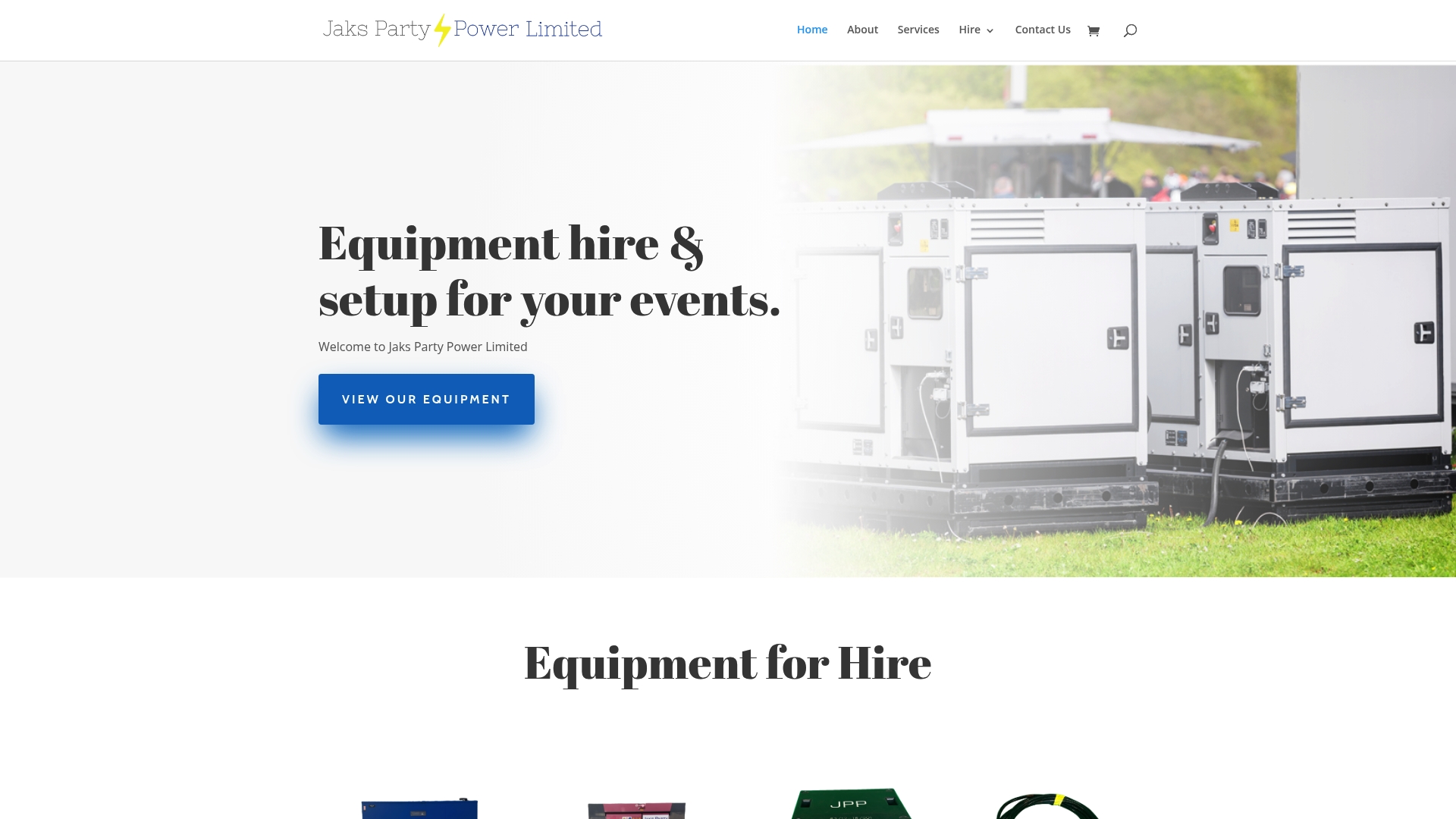
From generator hire sized to your event’s exact load requirements to full lighting product ranges for corporate venues, Jakspartypower provides the equipment and expertise that planners need to meet both operational and compliance demands. Request a quote through the Jakspartypower services page and get a specification built around your event.
FAQ
How many vendors does a typical corporate event require?
Mid-sized corporate events with 100–300 attendees typically require 10–20 vendors. Each vendor category needs its own contract, setup window, and named contact in your checklist.
What is the 80% electrical load rule for events?
The 80% rule limits circuit usage to 80% of its rated capacity. A 15-amp circuit carries a maximum of 1,400W and a 20-amp circuit carries a maximum of 1,900W, preventing breaker trips and overheating.
When does Martyn’s Law come into effect?
Martyn’s Law takes effect from april 2027. It requires Standard tier security planning for events with 200 or more attendees and Enhanced tier planning for events with 800 or more, with penalties up to £18 million.
How far in advance should primary event vendors be booked?
Primary vendors including venues, AV providers, and event planners should be booked 9–12 months before the event. Secondary vendors such as florists and entertainers require 3–6 months of lead time.
What emergency response modes must event planners prepare for?
Event planners must prepare for four modes: evacuation, invacuation, lockdown, and shelter-in-place. Planning that covers only evacuation leaves attendees and staff unprotected in scenarios such as severe weather or a security threat.