

Event setup mistakes are the leading cause of operational failures and guest dissatisfaction at live events, from corporate conferences to outdoor weddings. The gap between a well-planned event and a chaotic one is almost always found in the setup phase, not the planning documents. Poor power provision, congested layouts, and rushed timelines create problems that no amount of last-minute fixing can fully resolve. This article identifies the most frequent setup pitfalls for events and gives you the practical detail to avoid each one.
1. Common event setup mistakes: starting too late and planning too thin
Late starts are the single most damaging setup error an organiser can make. Major events require 6–12 months of planning lead time. Starting just one or two months out increases logistical failure risk substantially, because vendor slots, venue access windows, and equipment hire are already committed elsewhere.
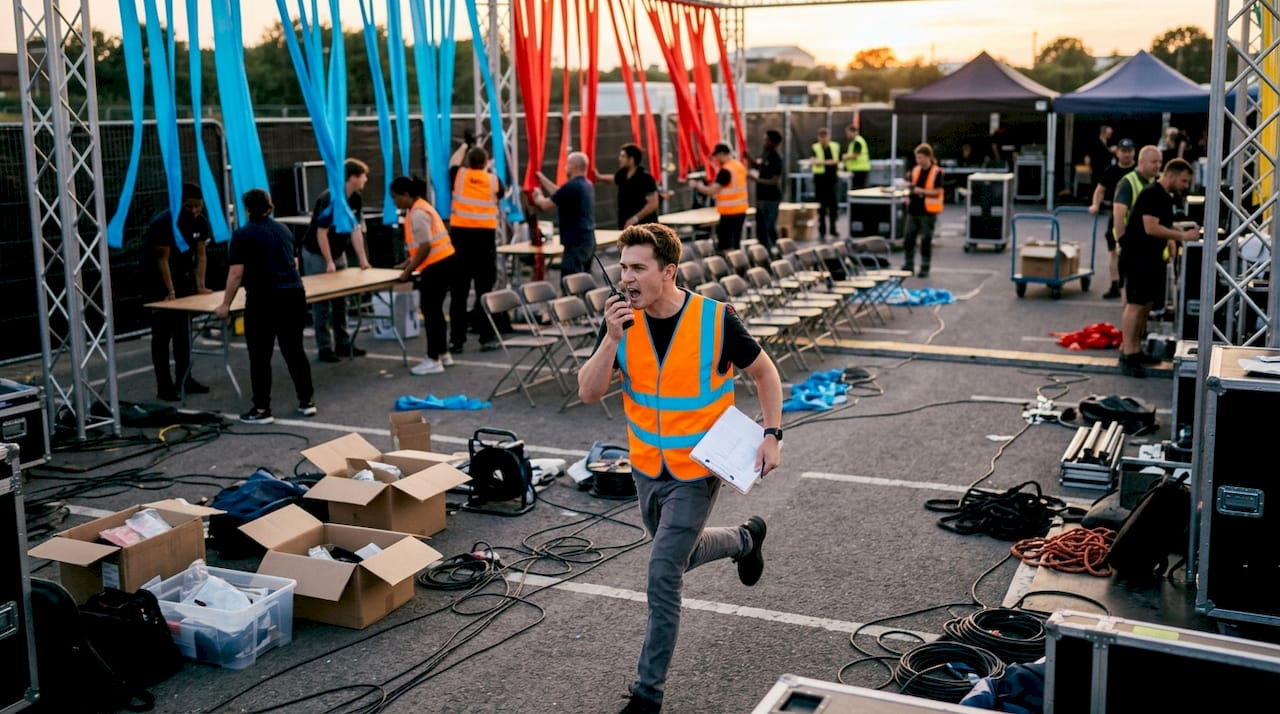
Smaller events under 500 guests can work within a 3–6 month window, but only if venue infrastructure is secured early. The moment you compress that timeline, every subsequent decision becomes reactive rather than considered. Inaccurate measurements, ignored venue restrictions, and inadequate scheduling all follow from a rushed start.
Common planning errors at this stage include:
- Failing to confirm load-in and load-out windows with the venue before booking vendors
- Understaffing the setup crew relative to the scale of equipment being installed
- Skipping a site visit and relying on floor plans alone
- Ignoring noise curfews, parking restrictions, and access height limits
Pro Tip: Create a master schedule that lists every vendor’s arrival time, setup zone, and departure window. Share it with all parties at least four weeks before the event.
2. Locking in venue before defining your event objectives
Locking in a venue before defining event objectives is the single most restrictive planning error an organiser can make. Hard constraints such as capacity limits, noise curfews, and load-in windows shape every setup decision that follows. Once you sign the venue contract, you are working inside those constraints permanently.
This mistake shows up during setup when organisers discover the loading bay is too narrow for their staging truck, or that the venue’s electrical supply cannot support the catering and HVAC running simultaneously. Neither problem is solvable on the day. Both are entirely avoidable with a pre-booking site audit.
Define your event’s core objectives first: expected attendance, technical requirements, catering scale, and branding needs. Then assess venues against those criteria. A venue that looks beautiful in photographs but lacks three-phase power or adequate cable routes will cost you far more in workarounds than it saves in hire fees.
3. Layout and visitor flow errors that frustrate guests
Poor layout is one of the most frequent setup pitfalls for events, yet it is consistently treated as secondary to décor. Guest journey failures such as poor signage, congestion at registration, and inadequate restroom ratios all derive directly from setup decisions made days before guests arrive.
The guest journey begins at the car park, not the entrance. Organisers who design layouts starting from the stage or the bar and work outward almost always create bottlenecks at arrival points. The registration desk, cloakroom, and first directional signs must be positioned before any other furniture is placed.
Frequent layout mistakes include:
- Placing product displays or exhibition stands directly in primary walkways
- Blocking fire exits with furniture, cable runs, or temporary structures
- Positioning the bar or catering station too close to the main entrance
- Failing to create separate flow paths for arriving and departing guests
- Neglecting accessible routes for guests with mobility requirements
Signage is not a finishing touch. It is a structural element of the setup. Clear directional signs at every decision point reduce staff workload, prevent congestion, and improve the overall experience without adding significant cost.
4. Electrical and AV setup errors that cause technical disruptions
Power failures and audio-visual breakdowns are the most visible setup errors at any event. They are also the most preventable. Failing to audit venue electrical capacity causes overloaded circuits and outages during peak load periods, particularly when HVAC, catering equipment, and stage lighting all draw simultaneously.
Venue fire code maximums often differ significantly from functional power availability. A venue rated for a certain load on paper may deliver far less under real operational conditions. Professional power auditors identify this gap before it becomes a failure on the night.
The AV side carries its own traps. In-house AV packages frequently fail complex event requirements because the equipment is matched to the room’s basic specification, not to the event’s actual goals. Involving a specialist AV partner early in the setup phase, rather than the week before, allows proper equipment selection, cable routing, and acoustic planning.
Key electrical and AV setup errors to address:
- Overloading a single circuit with multiple high-draw devices
- Using domestic extension leads instead of rated event-grade cable
- Placing speakers without acoustic testing in the actual room
- Running cables across walkways without proper cable ramps or covers
- Relying on venue-supplied lighting rigs without checking their output against your layout
Pro Tip: Do not test systems in isolation. Run a full integrated system check during setup, with all equipment operating simultaneously at peak load, to expose faults that isolated checks miss.
Successful event setup requires end-to-end integration testing under operational stress, not just confirming that individual units power on. This distinction between “set up” and “built” is where most technical failures originate.
5. Vendor coordination and onsite problem-solving pitfalls
Disorganised equipment storage and uncoordinated vendor access increase setup time, complicate movement through the venue, and place significant stress on event staff. Multiple vendors working simultaneously without a coordinated schedule create cascading delays that compress every subsequent task.
The core problem is the absence of a single onsite point of authority during setup. When the lighting crew, catering team, and staging contractor each report to different contacts, conflicts over space and timing go unresolved for too long. One vendor’s delay becomes every vendor’s problem.
Practical steps to prevent coordination failures:
- Assign one onsite setup coordinator with authority to resolve conflicts between vendors
- Issue each vendor a written schedule showing their access window, setup zone, and contact name
- Establish a shared communication channel (a group message thread works) for real-time updates
- Conduct a brief all-vendor briefing at the start of the setup day
- Build a contingency fund of 10–15% of the total budget to absorb unexpected costs from delays or equipment substitutions
Overlooked signage is a surprisingly common source of vendor confusion. Contractors arriving at an unfamiliar venue without clear zone markings waste time locating their designated areas. Label every zone, storage area, and power point before the first vendor arrives.
6. Underestimating setup and teardown timing
Unrealistic time estimates for setup and teardown are among the most frequent event setup blunders, and they rarely affect only the organiser. Venues impose strict load-in and load-out windows. Running over those windows incurs penalty charges, damages the relationship with the venue, and creates safety risks when teardown is rushed.
The table below shows where time is most commonly underestimated and the typical consequences:
| Setup phase | Common underestimation | Consequence |
|---|---|---|
| Rigging and staging | Assumes ideal crew size and conditions | Structural elements incomplete at doors-open time |
| Power and cable runs | Ignores routing complexity | Exposed cables, tripping hazards, circuit overloads |
| AV integration testing | Treats as isolated checks only | Undetected faults surface during the event |
| Teardown and asset return | Assumes same time as setup | Equipment damage, missed collection windows |
| Outdoor groundwork | Ignores sub-surface hazards | Structural instability, utility strikes |
Outdoor events carry an additional layer of risk. Underground utilities and unsuitable grounding conditions can cause structural failures in temporary structures. Soil condition surveys and proper grounding techniques are not optional extras for outdoor setups. They are safety requirements.
Build a buffer of at least 20% into every phase of your setup timeline. If a task is estimated at two hours, schedule two and a half. That buffer absorbs the small delays that are inevitable in any complex setup without compressing the phases that follow.
Key takeaways
Avoiding common event setup mistakes requires early planning, coordinated vendor management, and thorough power and layout audits before a single guest arrives.
| Point | Details |
|---|---|
| Start planning early | Major events need 6–12 months lead time; late starts cause cascading logistical failures. |
| Audit power before you commit | Venue electrical capacity on paper rarely matches functional availability under full operational load. |
| Design for guest flow first | Layout decisions must prioritise arrival, signage, and accessible routes before décor or branding. |
| Coordinate all vendors centrally | One onsite authority with a shared schedule prevents the conflicts that delay every setup phase. |
| Build time buffers into every phase | Add at least 20% to each setup and teardown estimate to absorb the delays that always occur. |
What 40 years in the field taught me about setup day
Setup day is where events are won or lost, and most organisers only realise this after their first serious failure. The mistakes I see repeated most often are not the dramatic ones. They are quiet errors: a power audit skipped because the venue “looked fine,” a vendor briefing cancelled because everyone seemed to know what they were doing, a cable run left exposed because there was not enough time to fit the ramps.
The mindset shift that changes everything is moving from “set up” to “built.” Setting up means placing equipment in position. Building means testing every connection, every circuit, and every signal path under the conditions that will exist when 300 guests are in the room. Those are very different activities, and conflating them is how technical failures happen in front of an audience.
Outdoor events deserve particular attention. Soil conditions, underground utilities, and weather exposure create variables that indoor venues do not. I have seen beautifully planned outdoor events compromised by a tent anchor driven into an unmarked utility line. A ground survey costs very little relative to the risk it eliminates.
My honest recommendation: bring your power and AV specialists into the planning conversation at the same time you book the venue. Not a week before. Not after the layout is finalised. From the start. The decisions made in those early conversations determine whether setup day is controlled or chaotic.
— Rob
Reliable event power from Jakspartypower
Electrical setup failures are preventable when you work with the right equipment and the right team from the outset. Jakspartypower has over 40 years of electrical contracting experience and provides generator hire, lighting, distribution boards, and cables tailored to events of every scale across Sussex.
Whether you are running a wedding, a large outdoor show, or a corporate event, Jakspartypower’s event power services include a standby support option that keeps your event running if anything unexpected occurs. Their team audits your power requirements before the event, not on the day, which is exactly the approach this article recommends. Get in touch with Jakspartypower to discuss your event’s power and lighting requirements before your setup window closes.
FAQ
How far in advance should event setup begin?
Major events require 6–12 months of planning lead time, with setup activities scheduled well within that window. Smaller events under 500 guests can work within 3–6 months if venue infrastructure is confirmed early.
What causes most electrical failures at events?
Failing to audit venue electrical capacity before the event is the primary cause. Functional power availability under full operational load is almost always lower than the figure stated in venue documentation.
Why do AV systems fail even after testing?
Most AV failures occur because systems are tested in isolation rather than as an integrated whole. Running a full system check with all equipment operating simultaneously at peak load exposes faults that individual checks miss.
How do I prevent vendor conflicts during setup?
Assign one onsite coordinator with authority over all vendors, issue written access schedules to every contractor, and hold a brief all-vendor briefing at the start of setup day. A shared communication channel for real-time updates prevents most conflicts from escalating.
What is the most overlooked element of event setup?
Signage is consistently underestimated. Clear directional signs at every decision point reduce guest confusion, prevent congestion, and reduce the workload on event staff throughout the day.