
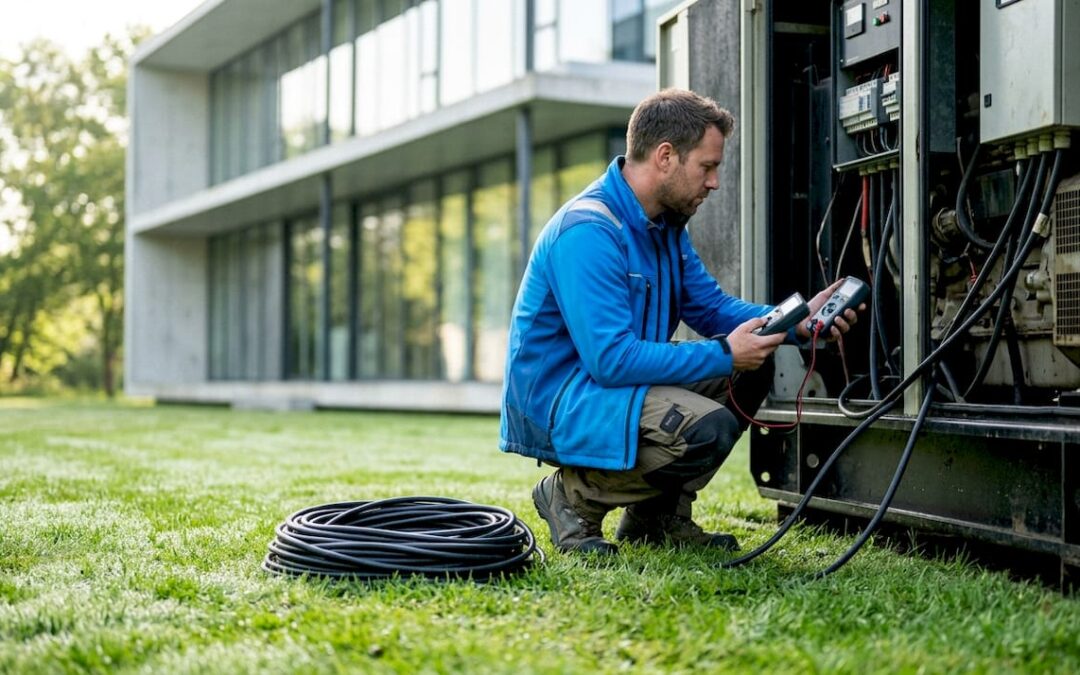
Standby service at corporate events is defined as the deployment of dedicated power backup systems and trained on-site personnel to maintain uninterrupted event operation when primary systems fail or incidents occur. The role of standby service at corporate events goes well beyond having a spare generator in a car park. It covers power switching, technical staffing, medical readiness, and communication protocols, all working together to protect your event from the moment doors open to the final handshake. Jakspartypower, with over 40 years of electrical contracting experience in Sussex, sets the operational benchmark for what dependable standby support looks like in practice.
What does the role of standby service at corporate events actually cover?
Standby service at corporate events divides into three core components: power systems, technical personnel, and medical readiness. Each component addresses a different category of risk, and all three must function together for the service to deliver real protection.
Power systems and switchover performance
The power element is the most technically demanding. Industry standards for mission-critical events specify a switchover time of less than 20 milliseconds from mains to standby supply. That threshold matters because digital systems, including AV desks, LED walls, and conferencing equipment, register any gap longer than 20ms as a power failure. A sub-20ms transfer is invisible to the audience. Anything slower causes visible flicker, system reboots, or complete blackout.
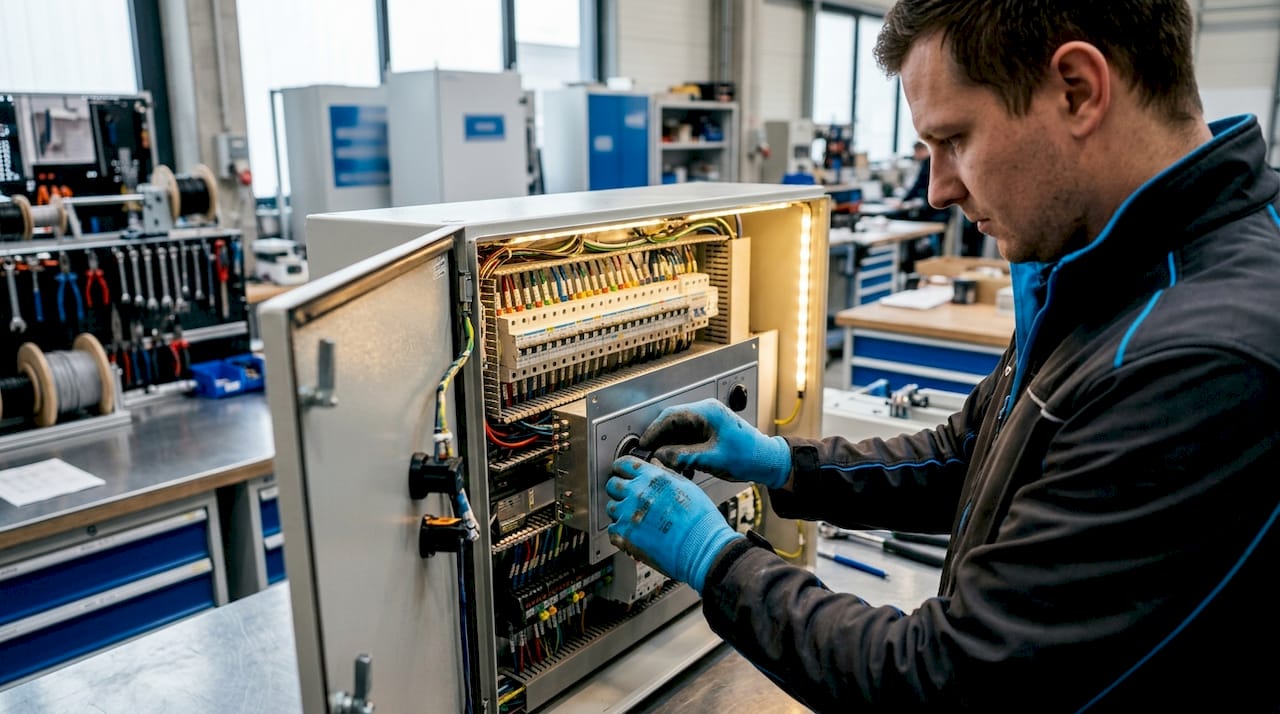
A less obvious but equally serious risk is in-rush current from load profiles. Most planners size a generator by average wattage, but large motors and LED drivers draw three to five times their running current at startup. A generator with sufficient average capacity can still trip its own breaker when multiple loads start simultaneously. Proper standby power planning requires a full load profile analysis, not just a wattage total.
Technical staffing ratios
The human side of standby service follows clear staffing guidelines. 2026 event management guidelines set general event staffing at one technician per 40–50 attendees, tightening to one per 20–30 for executive summits. Supervisory ratios should sit at one supervisor per 8–12 staff members. These numbers exist to maintain accountability and response speed across the full venue footprint.
Medical standby readiness
Medical standby services are mandated by local authorities based on crowd size, event risk profile, and the nearest hospital’s response time. An on-site medical team shortens emergency response times dramatically compared to waiting for municipal ambulance services. For corporate events with senior executives, international delegates, or physically demanding formats, medical standby is a contractual and reputational necessity.
| Event type | Recommended power backup | Technical staff ratio | Medical standby |
|---|---|---|---|
| Small conference (under 100) | Single generator, manual transfer | 1:50 | First-aider on site |
| Mid-size corporate dinner (100–500) | Auto-transfer generator, <20ms | 1:40 | Trained first responder |
| Executive summit (500+) | Dual-feed with UPS bridge | 1:20–30 | Paramedic crew on site |
| Large product launch or show | Full standby power array | 1:20 with supervisor 1:10 | Full medical team |
Pro Tip: Always request a written load profile from your AV and catering suppliers before briefing your standby power provider. That single document prevents the majority of generator sizing errors.
Why is standby service indispensable for risk management?
Standby support staff spot issues within 60 seconds and stabilise situations before they escalate. That speed is the difference between a minor technical hiccup and a public relations incident that follows your brand for months. Professional standby teams act as a trained buffer, absorbing problems before they reach the audience.
“Successful corporate events are defined by the audience noticing none of the back-end coordination. Standby service acts as the coordinating intelligence behind experiences that appear effortless.” — Why full-service event support matters
The benefits of standby event support extend directly into legal and financial territory. Medical standby services reduce legal liabilities by documenting incidents early and demonstrating duty of care. Insurers increasingly require evidence of on-site medical and technical standby provision before issuing event liability cover. Without that evidence, a claim following a power failure or medical emergency becomes significantly harder to defend.
The direct benefits of standby service for corporate event planners include:
- Uninterrupted AV performance through sub-20ms power transfer, preventing visible disruption to presentations and live feeds
- Crowd safety management via trained staff who can respond to medical or security incidents without alerting the wider audience
- Insurance compliance by meeting the documented standby requirements that most corporate event liability policies now specify
- Reduced reliance on municipal services, keeping your event self-sufficient and avoiding delays caused by external emergency response times
- Brand protection, because a single visible failure at a high-profile event carries reputational costs that far exceed the cost of standby provision
How does standby service integrate into event planning workflows?
Good standby service does not begin on the day of the event. It begins weeks earlier, during the planning phase, when the standby team should be treated as a core supplier rather than an afterthought.
Pre-event site walkthrough
A site-specific walkthrough should occur 24 hours before setup begins. The walkthrough identifies infrastructure challenges that are invisible on a floor plan: cable routes that block emergency exits, generator positions that create noise problems near conference rooms, and power distribution points that are too far from load centres. Jakspartypower conducts pre-event site assessments as standard practice, ensuring that power distribution and standby positioning are planned around the actual venue, not a drawing of it.
Communication protocols
Standby teams use pre-scripted, non-technical radio codes to report and manage incidents without alarming guests. A technician reporting a power anomaly uses a code word, not a description. That keeps the communication fast, discreet, and understood by every team member. Planners should ask for a copy of the radio protocol before the event and confirm that all suppliers, including AV crews and catering teams, are briefed on escalation procedures.
Integration steps for planners
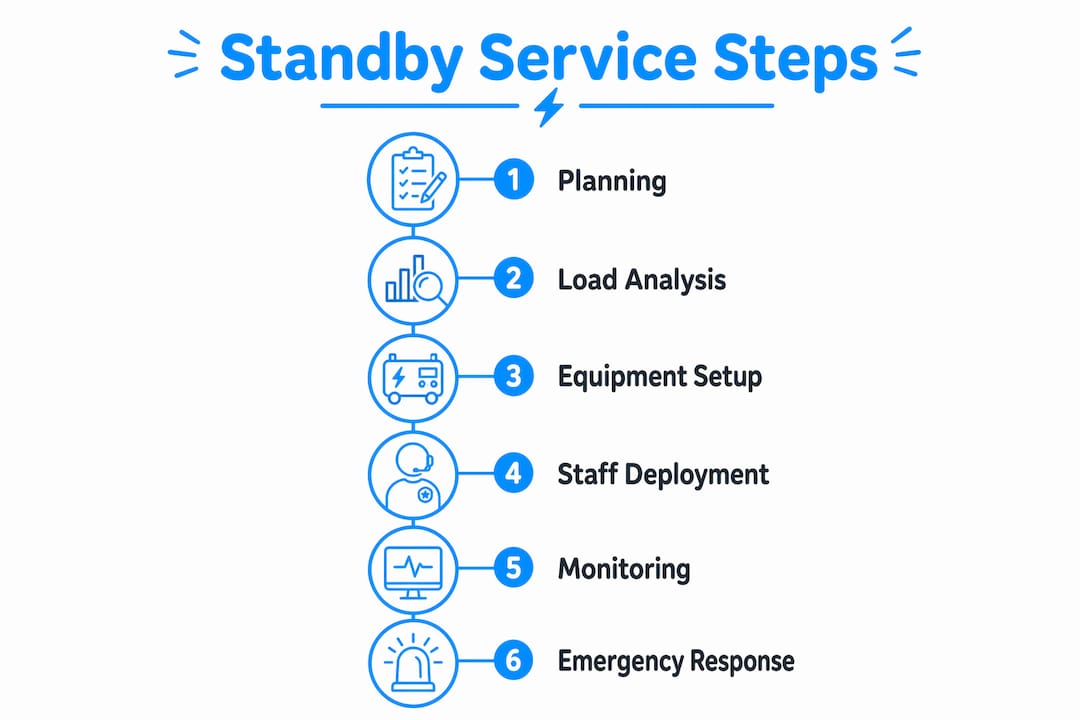
Follow this sequence to embed standby service properly into your planning workflow:
- Appoint your standby provider early. Confirm the standby team at the same time as your AV and catering suppliers, not after them.
- Share the full equipment load list. Include AV, lighting, catering, and any temporary heating or cooling units. This enables accurate load profile analysis.
- Schedule the site walkthrough. Book it for 24 hours before setup, with the standby team, venue manager, and AV lead present together.
- Agree the communication hierarchy. Define who calls what, using what code, and who has authority to escalate to emergency services.
- Confirm contractual scope. Specify switchover time guarantees, staffing ratios, and medical provision in writing before signing off.
- Run a pre-event briefing. Gather all suppliers on the morning of the event to walk through the plan, confirm radio channels, and identify any last-minute changes.
Pro Tip: Provide your standby power team with a minute-by-minute event run sheet, not just a start and finish time. Knowing when the keynote speaker goes live or when the awards ceremony begins allows the team to pre-position and heighten their monitoring at critical moments.
What should you look for in a standby service provider?
Choosing the wrong standby provider is a risk that only becomes visible at the worst possible moment. Evaluate providers against these criteria before committing.
Technical capability
Confirm that the provider’s generators and transfer systems meet the sub-20ms switchover standard required for digital event environments. Ask for documentation, not just a verbal assurance. Verify that the provider carries out load profile analysis as part of their standard process, and ask how they handle in-rush current risks for large AV and catering loads.
Staff training and supervision
Ask about the qualifications of on-site technical staff and the supervisory ratio the provider operates. 2026 guidelines recommend a supervisory ratio of 1:8–12. Providers who cannot specify their ratios are likely operating with insufficient oversight. For events with a medical standby requirement, confirm the clinical qualifications of the medical team and their familiarity with the venue type.
Questions to ask any standby provider before hiring
- What is your guaranteed switchover time, and can you provide test documentation?
- Do you conduct a load profile analysis before sizing equipment?
- What staffing ratio do you operate for an event of this size and type?
- How do your teams communicate during an incident, and what radio protocol do you use?
- What is your contractual position on liability if a power failure causes equipment damage?
- Have you worked at this venue or a comparable venue before?
| Evaluation area | Entry-level providers | Experienced providers |
|---|---|---|
| Switchover time | Manual or unspecified | Documented <20ms auto-transfer |
| Load analysis | Wattage total only | Full load profile with in-rush review |
| Staffing ratios | Unspecified | Defined ratios with supervisory cover |
| Communication | Ad hoc verbal | Pre-scripted radio protocol |
| Contractual clarity | Basic hire agreement | Scope, liability, and SLA defined |
Key takeaways
Standby service at corporate events is the single most effective safeguard against power failure, safety incidents, and reputational damage, and it must be planned from the outset, not added at the last minute.
| Point | Details |
|---|---|
| Sub-20ms switchover is non-negotiable | Digital AV systems register any longer gap as a failure; confirm this standard in writing with your provider. |
| Load profile analysis prevents most failures | Size generators on in-rush current peaks, not average wattage, to avoid breaker trips during peak load moments. |
| Staffing ratios define response quality | Executive summits require one technician per 20–30 attendees and one supervisor per 8–12 staff for reliable coverage. |
| Site walkthroughs must happen 24 hours before setup | On-site assessment identifies cable routing, emergency access, and power distribution issues invisible on a floor plan. |
| Medical standby reduces liability and response time | On-site medical teams shorten emergency response and provide the documentation insurers require for liability cover. |
Why standby service has become a professional standard, not an optional extra
When I started working in event power supply, standby service meant parking a generator outside and hoping the mains held. That approach is now genuinely inadequate for corporate events, and the shift has happened faster than most planners realise.
Client expectations have changed. Boards and senior communications teams now ask specifically about contingency planning before approving event budgets. They have seen enough high-profile failures at industry conferences to understand that a power cut during a keynote is not just inconvenient. It is a brand story that travels.
The regulatory environment has also tightened. Local authorities in 2026 are more likely to require documented standby provision as a condition of event licensing, particularly for events above a certain attendance threshold. Planners who treat standby as a box-ticking exercise rather than a genuine operational layer are the ones who get caught out.
What I have found consistently is that the best standby teams add value beyond their core brief. They spot cable hazards during the walkthrough. They notice that the catering team has plugged a bank of induction hobs into a circuit that was allocated to AV. They flag it before it becomes a problem. That kind of proactive coordination is what separates a provider with real experience from one that simply delivers equipment and waits.
My advice is straightforward: appoint your standby provider at the same time as your AV company, give them the same level of briefing, and include them in every pre-event call. The cost is modest. The protection is not.
— Rob
Jakspartypower’s standby power and event support
Corporate event planners in Sussex and the surrounding area have a direct route to dependable standby power provision through Jakspartypower. With over 40 years of electrical contracting experience, the team brings technical depth that generic hire companies cannot match.
Jakspartypower’s event standby services include fast-switching generator systems, full distribution board setups, and experienced on-site technical support. The generator hire range covers events from small corporate dinners to large-scale product launches, with equipment sized through proper load analysis. For planners who want a single, accountable supplier for power, lighting, and standby support, Jakspartypower delivers exactly that. Contact the team through jakspartypower.com to discuss your next event.
FAQ
What is standby service at a corporate event?
Standby service at a corporate event is the provision of backup power systems and trained on-site personnel to maintain uninterrupted operation if primary power or technical systems fail. It typically includes automatic generator transfer, technical staff, and medical readiness.
How fast must a standby generator switch over?
Industry standards for corporate events specify a switchover time of less than 20 milliseconds to prevent digital system disruptions. Any longer gap causes visible flicker or equipment reboot in AV and conferencing systems.
When is medical standby legally required at an event?
Medical standby is mandated by local authorities based on crowd size, event risk profile, and proximity to hospital services. For most corporate events above a few hundred attendees, at minimum a trained first responder on site is required.
What staffing ratio should a standby team operate?
General corporate events require one technician per 40–50 attendees, while executive summits need one per 20–30. Supervisory cover should sit at one supervisor per 8–12 staff members to maintain accountability.
Why does load profile analysis matter for standby power?
Load profile analysis accounts for in-rush current peaks when motors and LED drivers start up, which can be three to five times their running load. Sizing a generator on average wattage alone risks breaker trips at the worst possible moment during an event.