
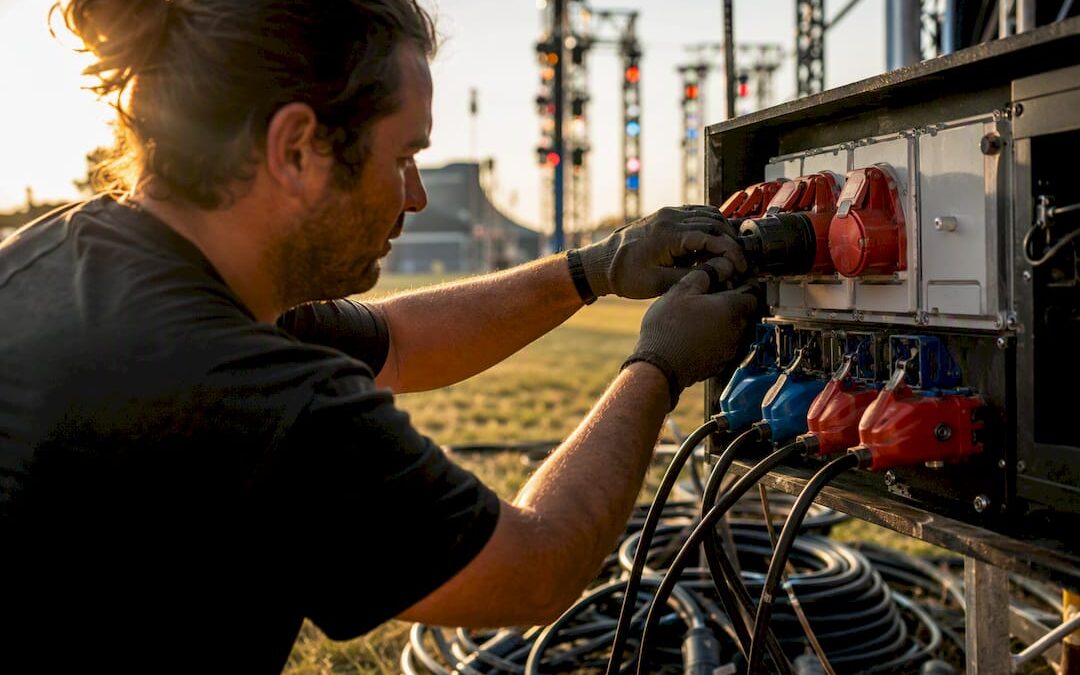
Cost depends on four things: whether you need a generator or a temporary mains connection, the kVA you actually require, the distribution equipment between source and load, and the labour and standby cover needed to run it safely. Get a load list and site plan together first, then request an itemised quote against BS 7909 from a competent supplier. Guesswork before that stage almost always leads to underestimating or overpaying.
TL;DR:
- Temporary power costs vary significantly based on the required kVA, type of connection, distribution complexity, and needed standby cover, making a detailed quote essential.
- Generator hire rates scale with output and usage time, while temporary mains connections depend on venue permissions and may eliminate fuel costs but involve connection charges.
- Accurate comparison of quotes requires detailed breakdowns of kit ratings, cable runs, labor hours, fuel policies, and insurance, along with verified supplier competence and documentation.
- BS 7909 compliance adds costs for qualified personnel, earth testing, and certification, especially for larger or more complex setups, but ensures safety and reliability.
- Site-specific factors like environment, existing infrastructure, and access influence costs, with rural or industrial sites generally incurring higher expenses, emphasizing the need for early, detailed planning.
Table of Contents
- What does a temporary three-phase power quote include?
- How do you compare quotes fairly?
- Why do BS 7909 and BS 7671 push up the price?
- How can you cut cost without cutting corners?
- What does a 3 phase upgrade cost for different site sizes?
- Upfront costs versus ongoing costs: what’s the split?
- How long does the process take from assessment to commissioning?
- Does the venue type change the cost?
- Get a compliant, itemised quote for your event
- What on-site experience actually teaches you
- Sources
- FAQ
What does a temporary three-phase power quote include?
A proper quote for temporary three-phase power hire breaks down into five distinct cost blocks, and understanding each one lets you spot a lazy or padded quote in seconds.
Generator hire versus a temporary mains supply is the first fork. Generator hire rates scale with kVA and run hours, so a 60kVA set running a 12-hour wedding costs less overall than the same set running a three-day festival, even before fuel is added. Temporary mains, where the venue or a local supply already exists, cuts out fuel and generator hire but depends on venue or network permissions and often needs its own connection charge.
Distribution equipment is where quotes start to diverge sharply between suppliers. You are paying for primary, secondary and final distribution gear, matched to the hierarchical structure that keeps a site safe: a primary distribution board feeding secondary boards, which then feed 32A or 63A final distribution packs to individual stages, bars or catering units. Cable lengths, connector types (ceeform, camlock) and the number of tails all add to the bill.
Labour rarely gets the attention it deserves in a budget. You are paying for install, testing, de-rig, and, on larger or overnight events, a standby engineer on day or night rates.
Operational costs round out the quote:
- Fuel for the generator’s full run duration, including refuelling logistics on multi-day events
- Transport for kit to and from site, particularly relevant for rural venues
- Public liability and equipment insurance
- Local authority permits where the event triggers licensing conditions
- Power quality measures such as correct RCD selection, harmonics mitigation for LED-heavy rigs, and load balancing across phases
That last point matters more than most organisers expect. Updated BS 7909 guidance pushes suppliers towards compliant RCD protection rather than bypass shortcuts, and different RCD types (A, F, B) cost differently depending on what’s plugged in.
How do you compare quotes fairly?
Two quotes with the same headline day rate can differ by hundreds of pounds once you strip out what’s actually included. The fix is an itemised comparison, not a gut feeling.
Ask every supplier to break their quote into these lines:
- Kit list with ratings (generator kVA, distribution board amperage, number of final outlets)
- Cable lengths and types, specified in metres per run
- Labour hours for install and de-rig, stated separately from any standby day
- Fuel policy: is fuel included, charged at cost, or estimated per hour of run time?
- Transport charges to and from site
- Testing and certification, including earth electrode tests and completion paperwork
- Standby engineer cover, with day and night rates shown separately
- Insurance cover and what it actually protects
Contract terms deserve as much scrutiny as the price itself. Check the cancellation policy, the rate for extending hire beyond the agreed hours, and whether fuel price is fixed or variable. A supplier who won’t commit to a fixed fuel rate is passing market risk onto you.
Before signing anything, request a single-line diagram, a RAMS document, evidence of the supplier’s competence (qualifications, insurance, and ideally BS 7909 familiarity), and confirmation of their public liability cover.
Pro Tip: Ask for the single-line diagram even on a modest event. If a supplier can’t produce one, that’s usually a sign they haven’t properly planned the distribution hierarchy, and that gap tends to surface as an unplanned cost on the day.
Why do BS 7909 and BS 7671 push up the price?
Some of what you’re paying for isn’t negotiable, and it shouldn’t be. BS 7909 is the primary UK code of practice for temporary electrical systems at events, applied alongside BS 7671, and it puts a named Senior Person Responsible (SPR) at the centre of every installation of any scale. That person has to be competent, and competence takes time to price in.
Earthing arrangements are a good example of a cost line organisers rarely anticipate. For generator-supplied systems, TT earthing is generally preferred over PME to avoid the risk of a lost PEN conductor, and setting up TT correctly means installing and testing an earth electrode before any load goes live.
Expect these items to appear on a compliant quote:
- Earth electrode resistance testing, documented on the single-line diagram
- Completion certificates confirming the installation meets BS 7671 requirements
- PAT testing on all portable equipment before it goes on site
- Insulation and continuity checks on distribution runs
Local authority guidance often draws a line around 6kVA, treating small, simple systems differently from large or complex ones that need full design documentation. If your event sits above that threshold, budget for the paperwork as well as the kit.
How can you cut cost without cutting corners?
The organisers who get the best rates aren’t the ones who haggle hardest. They’re the ones who give suppliers clean information early.
Start with an accurate load list and book well ahead of the event date. Weekend and short-notice hires attract premium rates because overnight rigging and tight rig-to-ready windows often require shift-rated labour, and suppliers price that uncertainty in.
Practical levers worth using:
- Minimise cable runs by placing distribution boards close to major loads rather than at the edge of the site
- Bundle generator, distribution and staffing with one supplier over a longer hire period to cut duplicated transport and mobilisation costs
- Check venue or DNO permissions before assuming a generator is your only option; temporary mains can be cheaper where it’s available
- Never choose unqualified labour to save money on install day
That last point is the one that actually costs organisers money in the long run. A cut-price install that fails an earth test mid-event, or trips repeatedly under load, costs far more in disruption and reputational damage than the saving was worth.
Pro Tip: Send your load list to two or three suppliers at the same time, on the same day. Simultaneous quoting keeps everyone pricing against the same brief, which makes the comparison honest.
What does a 3 phase upgrade cost for different site sizes?
Price scales with kVA and complexity rather than site size alone, but the two usually move together. A small private event, such as a marquee wedding needing lighting, catering power and a bar, typically needs somewhere in the 20 to 60kVA range, with a single generator and a modest distribution setup of one secondary board and a handful of 32A outlets.
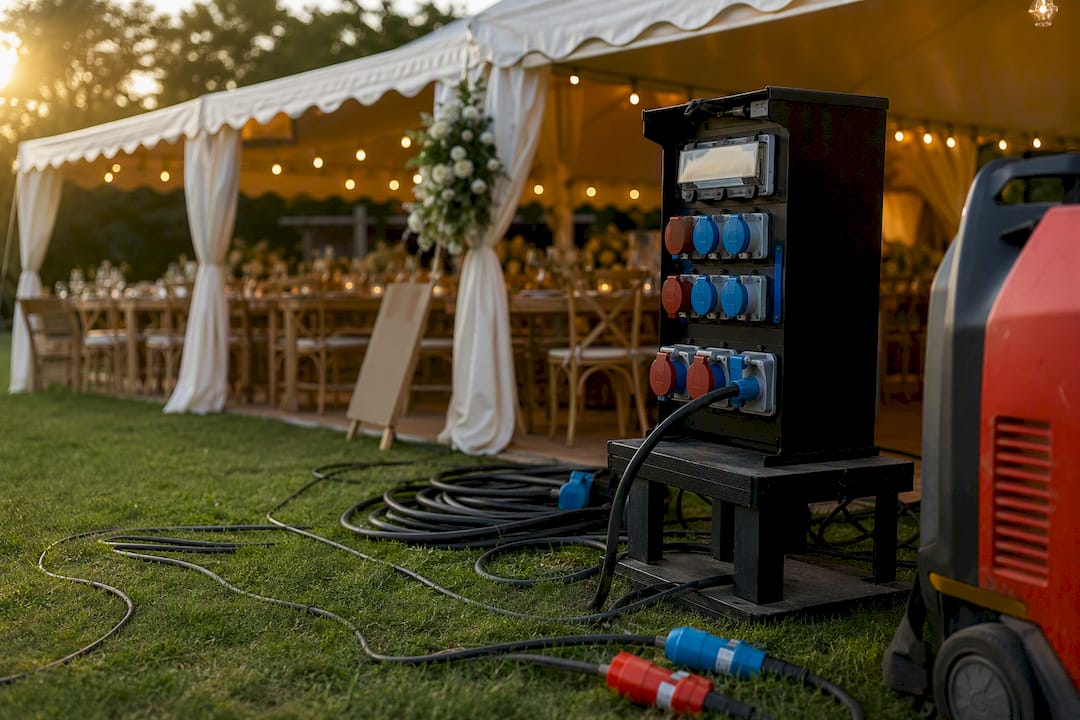
Mid-sized corporate or community events, think a two-day outdoor festival or a large marquee show, tend to need 60 to 150kVA, spread across primary and secondary distribution feeding multiple zones: staging, catering, vendor pitches and site lighting. This is where cable runs lengthen and labour hours increase noticeably, because more zones mean more testing points.
Large festivals sit in a different bracket entirely. Skid-mounted 400A primary distribution feeding a mix of 125A, 63A and 32A outlets is standard for multi-stage sites, and the planning, cable stock and crew required to run that safely is substantially higher than a single-generator wedding setup.
There is no single fixed price that applies across all three brackets, which is exactly why an itemised quote against your specific load list matters more than any published price table. Two events needing the same headline kVA can still land on very different final costs depending on how spread out the site is and how many final distribution points are needed.
Upfront costs versus ongoing costs: what’s the split?
Upfront costs cover everything needed to get power live and certified: generator or connection mobilisation, distribution board hire, cable, initial testing, earth electrode installation, and the labour to install and commission the system before doors open.
Ongoing costs are what accrue while the event runs: fuel consumption, standby engineer hours, and any load changes that require reconfiguration mid-event. Fuel is usually the largest variable ongoing cost, particularly on multi-day festivals where a generator might run continuously for many hours.
De-rig sits in its own category, sometimes bundled with the upfront quote and sometimes billed separately. It includes labour to strip distribution, final testing sign-off, and transport of kit back off site. Organisers occasionally overlook de-rig when comparing quotes, and it can add a meaningful percentage to the total if quoted as an afterthought rather than built in from the start.
The practical takeaway is to ask suppliers to separate these two categories explicitly. A quote that bundles fuel into a flat day rate looks simple but hides the real cost of a longer-than-planned event; one that itemises fuel separately, ideally against a fixed rate per litre, gives you an accurate forecast and protects you from surprise invoices after the event has finished.
How long does the process take from assessment to commissioning?
Timeline depends on scale, but the sequence is broadly the same for every event. Initial assessment, where a competent supplier reviews your load list and site plan, typically happens two to six weeks before the event for straightforward installs, and considerably earlier, sometimes months out, for large multi-stage festivals that need council liaison and detailed design work.
Design and documentation follow: the single-line diagram, RAMS, and a design check for anything falling into the larger or more complex category under BS 7909. This stage can be quick for a small wedding generator setup and considerably longer for a site needing multiple distribution zones and DNO coordination.
Physical install and testing usually happens in the 24 to 48 hours before the event opens, though large festivals often need several days of rigging ahead of gates opening. Earth electrode testing, insulation checks and completion certification all happen at this stage, before any load is connected.
Commissioning is the final step: energising the system, confirming correct phase balance and RCD operation, and signing off the completion certificate. On a well-planned event this is a formality. On one where the load list changed late or access was delayed, it’s where problems surface, which is exactly why early assessment matters so much more than most organisers assume going in.
Does the venue type change the cost?
Installation environment shifts the cost picture more than most organisers expect, largely because it changes what’s already available on site.
A residential-style setting, a private garden wedding or a marquee on a homeowner’s land, usually starts from zero: no existing three-phase supply, limited vehicle access for generators, and no existing distribution infrastructure. Everything has to come in on a trailer and go back out again, which pushes transport and labour costs up relative to the power actually consumed.
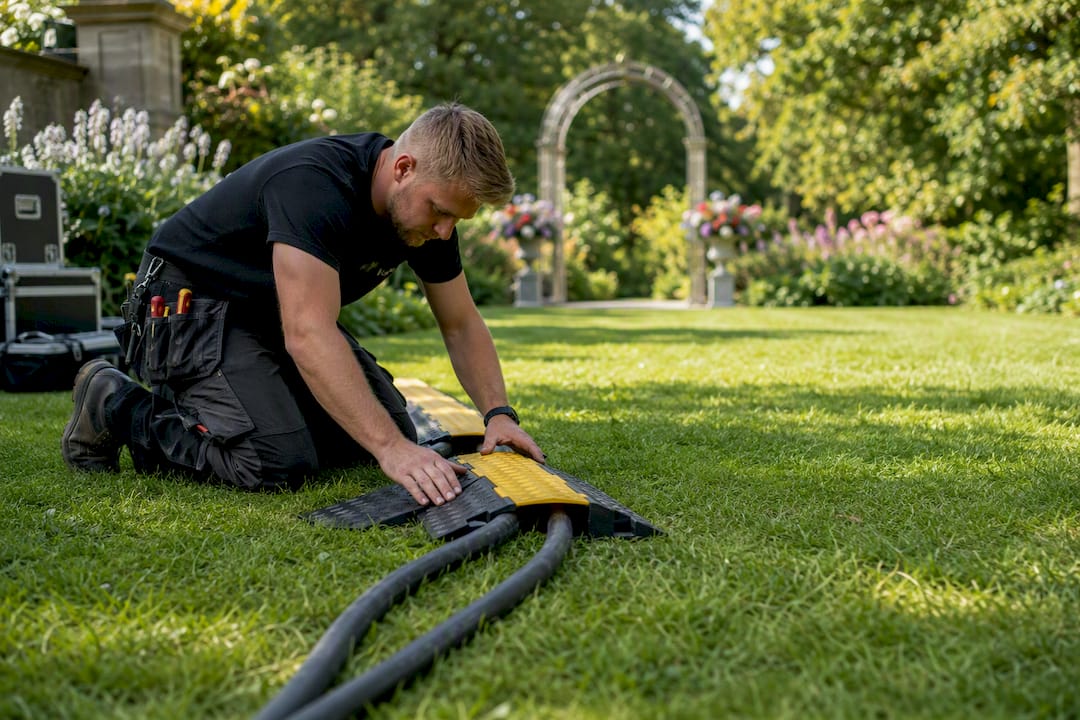
Commercial venues, hotels, exhibition halls, function rooms, often have some existing electrical infrastructure, occasionally including three-phase supply already on site. That can reduce or remove the need for a generator entirely, shifting the job towards temporary distribution and testing rather than full generation. Purpose-built event socket outlets are still required for final distribution even where the venue supply exists, since domestic-style sockets aren’t suitable for event loads.
Industrial or greenfield sites, think large-scale festivals or outdoor commercial shoots, sit at the top end of cost. Access is often good for heavy plant, but the scale of distribution needed, multiple zones, longer cable runs, more testing points, drives labour and equipment costs up regardless of how easy the site is to reach. The environment doesn’t just change logistics; it changes the entire distribution design.
Get a compliant, itemised quote for your event
Jakspartypower has spent over 40 years in electrical contracting, and that experience shows up in the detail of a quote, not just the equipment on the invoice. Rather than a generic day rate, you get three-phase generator hire, 32A and 63A three-phase distribution packs, PDB and SDB boards, cable hire and standby engineers priced against your actual load, with BS 7909 compliance built in from the start rather than bolted on afterwards.
To get an accurate quote, send over your site plan, a load list covering every piece of equipment that needs power, your event hours, and any access constraints for delivery vehicles. If you’re still working out what kit you need, the equipment hire checklist is a useful starting point before you contact suppliers. For anyone specifying AV alongside power, the meeting room tech checklist is a handy companion resource for matching equipment to load.
Request a site quote or book a telephone consultation through Jaks Party Power and get a proper itemised breakdown before your event date locks in.
What on-site experience actually teaches you
The mistakes that cost organisers money are rarely dramatic. They’re small oversights that compound: a load list drawn up before the caterer confirmed their equipment, a cable run planned before anyone walked the actual site, a generator booked at the minimum kVA with no headroom for a last-minute stage addition.
The fix in every case is the same. Build the load list last, after every vendor has confirmed their kit, and walk the site with the supplier before finalising distribution placement. Standby cover isn’t a luxury add-on for anything beyond the smallest private party; it’s the difference between a five-minute fix and a stalled event when something trips at 9pm on a Saturday.
Compliance with BS 7909 isn’t paperwork for its own sake. It’s what makes that standby response fast and safe rather than improvised.
— Rob
Sources
- Temporary electrical systems (IET Wiring Matters, Spring 2013)
- Exhibition & event electrical | Temporary installations (Elec‑Mate)
FAQ
What’s the average cost of temporary three-phase power for an event?
There’s no single average figure, since cost depends on kVA required, distribution complexity and hire duration. Request an itemised quote against your specific load list rather than relying on a published price range.
Is a generator always cheaper than a temporary mains connection?
Not necessarily. Temporary mains remove fuel and generator hire costs but depend on venue permissions and existing infrastructure, while a generator gives you full control regardless of site limitations.
Do I need BS 7909 compliance for a small private event?
Smaller, simpler systems are treated differently to larger or complex ones under BS 7909, but a competent supplier should still provide basic testing, earthing and documentation regardless of event size.
What documents should I request before booking a supplier?
Ask for a single-line diagram, a RAMS document, evidence of competence, and confirmation of insurance cover before signing any contract.
How far in advance should I book three-phase power for my event?
Book several weeks ahead for straightforward events and months ahead for large multi-stage festivals, since weekend and short-notice hires typically carry premium rates.
Can Jakspartypower provide standby engineer cover during my event?
Yes, standby engineer support is part of the service, providing on-site response if equipment needs attention while your event is running.