
Hiring a generator for a UK marquee wedding typically costs between £400 and £1,200, and most quotes at that level cover a set fuel allowance, delivery within a set radius, and basic cabling. Where you land in that range depends on three things: the generator’s size in kVA, how long you need it, and whether you add extras like standby cover or a super-silent unit for a noise-sensitive venue.
TL;DR:
- Generator hire costs for UK marquee weddings range from £400 to £1,200, depending on size, hire length, and additional features like noise reduction and standby support.
- A 10 to 22kVA generator typically suffices for small weddings, while a 45kVA unit is standard for 100 to 120 guests with full catering and entertainment.
- Quotes should include fuel allowances, delivery within a set radius, cabling, distribution boards, and VAT; ask about these details if they are not specified.
- Larger or more complex events may require multiple generators or contingency planning, especially to handle peak loads during catering or speeches.
- Booking early, obtaining itemized quotes, and choosing turnkey packages from experienced suppliers can significantly reduce onsite risks and hidden costs.
Table of Contents
- How much does a wedding generator cost?
- What size generator do I need for a wedding?
- What affects the cost of hiring a wedding generator?
- How do I get an accurate generator hire quote?
- Turnkey hire vs DIY: what actually reduces risk on the day
- Rob’s take: what actually matters when budgeting for wedding power
- Get an itemised quote from Jaks Party Power
- Sources
- FAQ
How much does a wedding generator cost?
Prices scale with kVA and hire length, and the spread between suppliers can be wide even for similar-sized units. A small generator suited to lighting and a PA system might run to a moderate day rate, while a 45kVA unit capable of running a full marquee, catering trailer, and band typically costs several hundred pounds for a weekend and can be notably more for week-long hire when delivery, collection, and cabling are bundled in.
Regional rate tables from suppliers show this pattern clearly across day, two-day, three-day, and weekly bands, with example pricing by kVA size confirming that larger units carry a proportionally smaller cost jump per extra day than smaller ones. Fuel is usually quoted with an included allowance (a set number of running hours) rather than an unlimited supply, so ask exactly how many hours are covered before you sign anything.
A standard quote for a wedding generator should include:
- The generator itself, sized in kVA to match your load, a fixed fuel allowance for the hire period, delivery and collection within a stated mileage radius, basic cabling and a distribution board or socket outlet, and VAT, stated separately or already included.
Statistic Callout: Generator hire for a UK marquee wedding is commonly estimated at £400 to £1,200, and it sits alongside flooring, lighting, and heating as one of the costs planners most often underestimate.
If your quote doesn’t mention fuel hours, delivery mileage, or whether distribution boards are included, ask. Those three gaps are where a “cheap” quote quietly becomes an expensive one on the day.
What size generator do I need for a wedding?
Generator size is measured in kVA (kilovolt amps), not kW (kilowatts), and the two aren’t quite the same thing. kVA is the total apparent power a generator can supply; kW is the real power your equipment actually uses. For three-phase supplies, a typical power factor of 0.8 means a 40kVA generator delivers roughly 32kW of usable power once you account for the difference, so sizing on kVA alone without checking the power factor can leave you short.
Three common wedding scenarios illustrate the range:
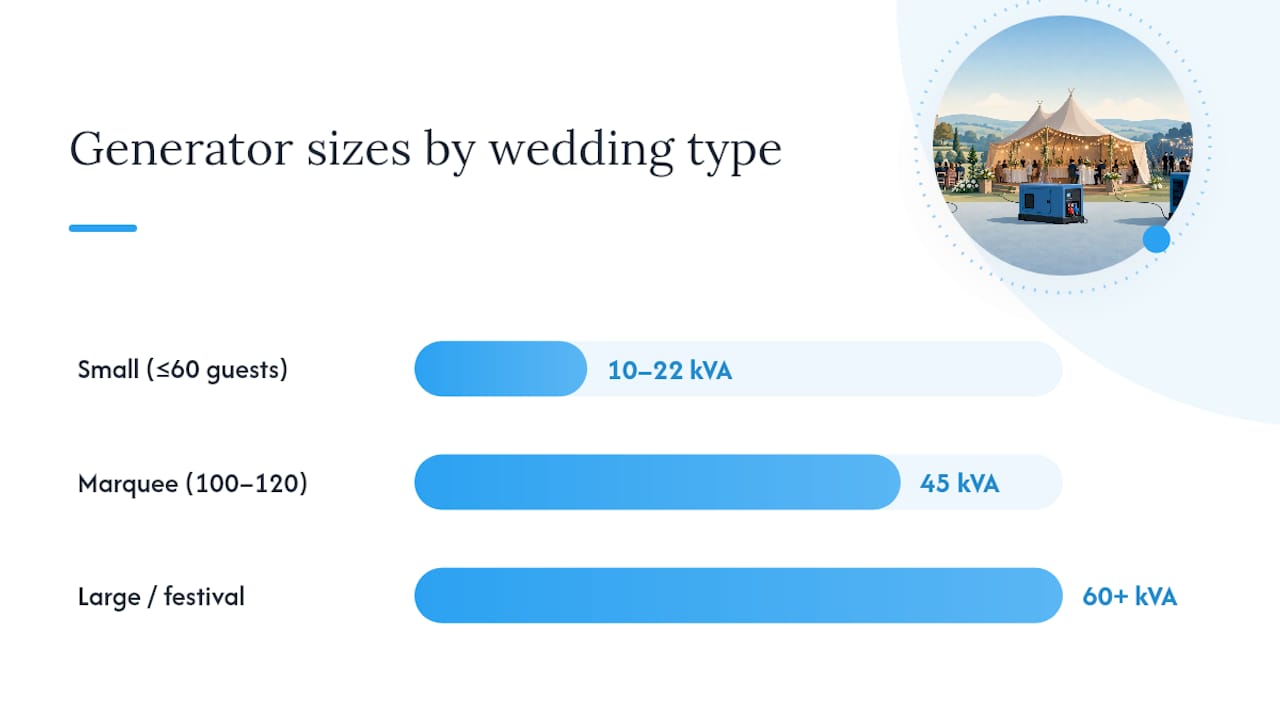
- Small, intimate wedding (up to 60 guests, lighting, PA, and a few catering appliances): a 10 to 22kVA generator is usually enough.
- Typical marquee wedding for 100 to 120 guests (full lighting rig, catering equipment, band or DJ, heating): most suppliers land on a 45kVA generator as the standard recommendation once all loads are totalled.
- Large or festival-style wedding (multiple marquees, extensive catering, staging, and heavy lighting): expect to need 60kVA or more, sometimes split across two units for redundancy.
Catering is usually the load planners underestimate most. Kettles, hot cupboards, and heating elements draw far more at switch-on than their running wattage suggests.
Pro Tip: Add a 20 to 30% contingency on top of your calculated continuous load to cover catering spikes and simultaneous peak draws, such as everyone’s phone chargers going in at once during the speeches. This margin is what separates a generator that copes with the first course and one that trips halfway through.
What affects the cost of hiring a wedding generator?
Cost isn’t just about kVA size. Several variables move the price up or down, and knowing them helps you read a quote properly rather than just comparing the bottom line.
- Hire duration: day, weekend, and week rates rarely scale in a straight line. Weekly hire is usually better value per day than a single day booking.
- Fuel policy: some quotes include a generous fuel allowance; others charge per hour used beyond a minimal baseline.
- Delivery and site access: long driveways, restricted access, or remote venues can add callout charges.
- Noise attenuation: super-silent models cost more to hire but are often required by venues with noise restrictions or nearby residents.
- Cabling and distribution: extra runs of cable, additional distribution boxes, or multiple power zones increase the price.
- Standby support: having an electrician on call during the event adds cost but removes a significant point of risk.
- Seasonal demand: peak wedding season (May to September) pushes both prices and availability, and last-minute bookings pay a premium.
Greener fuel options such as HVO, or hybrid generator-battery setups, typically add to the hire cost while cutting emissions, which matters increasingly for venues with sustainability commitments. Very large or long-duration generators can occasionally attract environmental or local authority scrutiny, though this is rare for a standard weekend wedding.
How do I get an accurate generator hire quote?
An accurate quote starts with information you provide, not information the supplier guesses. Work through this before you contact anyone:
- List every piece of equipment that needs power: lighting, catering appliances, heating, sound system, and any specialist kit like a smoke machine or ice cream van.
- Draw up an event run sheet showing when each load switches on, so the supplier can see your actual peak usage window, not just a total.
- State any noise or environmental restrictions from the venue in writing.
- Ask for delivery and collection terms in the quote itself, not just verbally.
- Confirm how many contingency fuel hours are included beyond the core hire period.
Once you have quotes back, compare them on the same terms by asking each supplier: What’s included in the fuel allowance? What’s your response time for standby support if something fails mid-event? Can you provide insurance certificates and confirm the installation meets BS 7671 wiring regulations? Is VAT included in the figure quoted?
Pro Tip: Book your generator as early as you book your venue. Peak summer months see availability tighten fast, and last-minute bookings often mean paying more for whatever’s left rather than what actually suits your marquee. For a deeper look at load calculations, our guide on how much power a large marquee actually needs walks through the maths in more detail.
Turnkey hire vs DIY: what actually reduces risk on the day
A turnkey generator package typically bundles the generator, delivery, siting, cabling, distribution boards, fuel management, and a standby electrician into one contract. Piecing that together yourself from separate suppliers can look cheaper on paper, but it shifts coordination risk onto you: if the cabling supplier and generator supplier disagree about connector types on the morning of the wedding, there’s no single point of accountability.
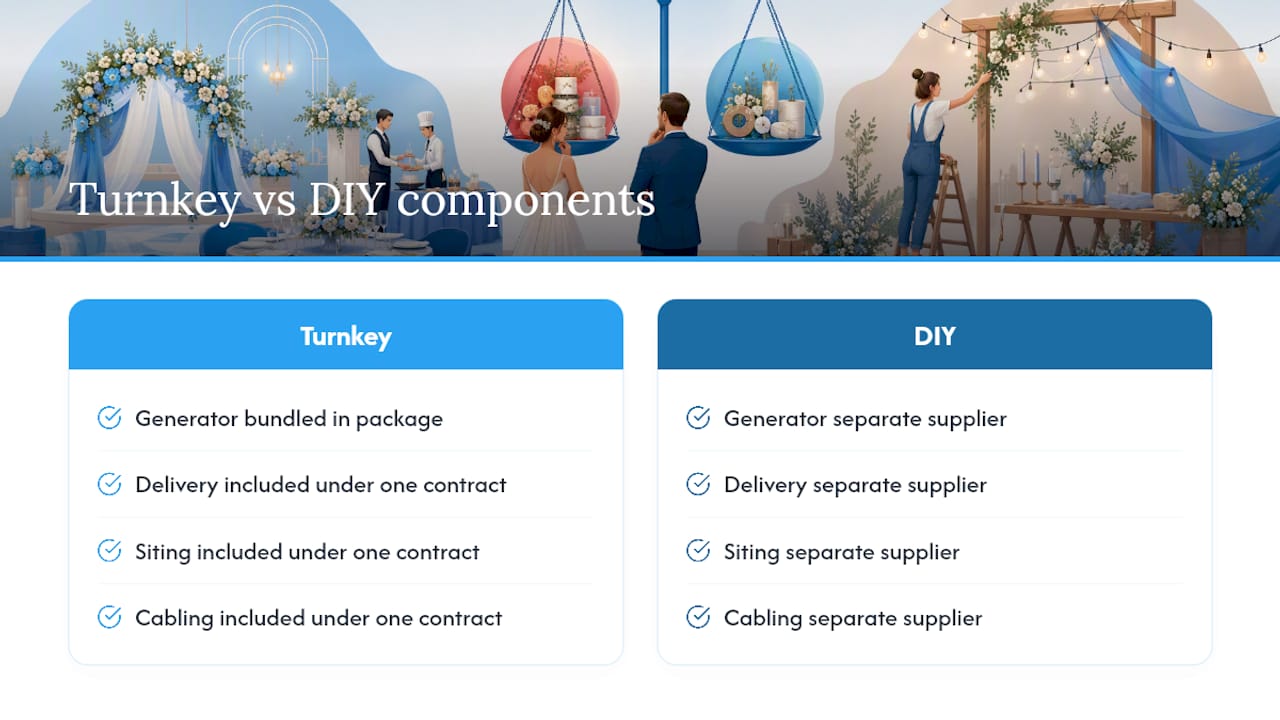
Industry practice backs this up. Coordinated packages that combine delivery, siting, and standby support under one supplier consistently reduce onsite failures compared with DIY arrangements stitched together from multiple vendors. A short standby response window, often part of a turnkey contract, matters most in the exact moment you can least afford downtime: mid speech, mid first dance, mid catering service.
At Jaks Party Power, standby support and single-supplier coordination come from over 40 years of electrical contracting experience, not just event hire. That background is why labelling temporary distribution boards to BS 7671 standards and keeping one contractor accountable for the whole power chain tend to matter more in practice than the headline hire price.
Rob’s take: what actually matters when budgeting for wedding power
Most couples budget for the generator itself and forget the things around it: cabling runs, distribution, and a standby contact who actually answers the phone. Plan power early, size it slightly larger than your spreadsheet says, and get an itemised quote rather than a single lump figure. Contingency isn’t an optional extra. It’s the difference between a wedding that runs and one that doesn’t.
— Rob
Get an itemised quote from Jaks Party Power
A specialist supplier offers an alternative to juggling separate generator, cabling, and standby contractors for your wedding: one supplier, one point of contact, and extensive electrical contracting experience behind the fuel management and standby support that keep a marquee wedding running when something goes wrong.
Rather than piecing together quotes from a generator firm, a cabling supplier, and a separate standby electrician, you get a bespoke package sized to your guest count, catering load, and venue access, with fuel allowance and distribution boards specified upfront rather than discovered on the invoice. Read through the benefits of hiring event generators for a fuller breakdown of what’s typically included, then get in touch for an itemised quote against your own guest list and run sheet before your preferred dates get booked up.
Sources
- Marquee weddings UK: 2026 costs & top suppliers | Weddings Hub
- Generator Hire Prices 2026 — Fosseway Hire
- What size generator for wedding marquee? — Camelot Marquees Ltd
- Wedding generator hire: what you need to know — Carron Marquees
FAQ
How much does it cost to hire a generator per day in the UK?
Day rates vary by size, but a small generator suitable for lighting and sound can start around £150 a day, while a 45kVA unit for a full marquee wedding costs considerably more, with weekly hire usually offering better value per day than a single-day booking.
How much does generator hire typically cost for a wedding?
Most UK marquee weddings budget £400 to £1,200 for generator hire, depending on kVA size, hire duration, and whether standby support or noise attenuation is added.
What size generator do I need for a 100 person wedding?
For a marquee wedding hosting 100 to 120 guests with catering, lighting, and a band or DJ, a 45kVA generator is the standard recommendation once all loads are totalled with contingency added.
Where can I hire a 45kVA generator for a wedding?
Specialist event power suppliers such as Jaks Party Power supply and size generators including 45kVA units for marquee weddings, handling delivery, cabling, and distribution as part of a turnkey hire package.
Does a wedding generator quote usually include fuel and delivery?
Yes. Most UK generator hire quotes include a set fuel allowance for the hire period and delivery within a stated radius, though cabling and distribution boards are sometimes quoted as separate add-ons, so it’s worth confirming inclusions before booking.