
A small portable generator costs roughly £1.50 to £3 an hour to run, a medium event-sized unit £2.50 to £6, and large commercial machines anywhere from £5 to £38 or more, depending on size and load. The single biggest swing factor isn’t the machine, it’s how hard you run it: load percentage and diesel price together can double or halve those numbers overnight. Use the worked examples below to get a figure specific to your event or your home.
TL;DR:
- Diesel prices fluctuate more than most planners expect, with a 10 to 20 percent change significantly impacting total fuel costs.
- Running generators below 30 percent load for extended periods increases fuel consumption and risks engine damage due to inefficient combustion.
- Proper load sizing based on actual power requirements can cut diesel use by up to 40 percent, especially when matched to real demand.
- Pre-scheduling fuel delivery and bulk purchasing can reduce standby and emergency surcharge charges during larger events.
- Routine maintenance, including oil changes and load-bank testing, lowers fuel consumption and prevents costly breakdowns during critical moments.
Table of Contents
- Generator running costs UK: what actually drives the number
- Worked examples: what three common scenarios actually cost
- Sizing and load management: what 40 years of contracting teaches you
- Maintenance costs you shouldn’t skip
- Cutting your running costs and your emissions
- When professional hire and standby actually save you money
- Get a running-cost estimate you can actually rely on
- Sources
- FAQ
Generator running costs UK: what actually drives the number
Fuel price is the obvious variable, but it’s not the only one that matters. Diesel remains the dominant fuel for hire generators in the UK, with petrol reserved mostly for small portable units and LPG occasionally specified where emissions rules or noise restrictions apply. Whatever fuel you use, the pump price you pay on any given week sets your baseline, and it moves more than most planners expect.
Consumption is measured in litres per hour, and that figure changes dramatically with load. A 60 kVA generator running at 75% load might use around 38 litres over a 12 hour day, according to fuel tank capacity data, but the same machine ticking over at 20% load can burn nearly as much fuel per kWh delivered because diesel engines are inefficient at low output. That’s the trap most first-time hirers fall into: they size up “to be safe” and then pay for inefficiency all day.
Beyond fuel, a realistic running-cost estimate has to include:
- Servicing and consumables — oil, filters, and periodic load-bank testing to keep the engine in good condition
- Delivery and collection — transport costs that scale with generator size and site access
- Refuelling logistics — a fuel-delivery surcharge if you’re topping up mid-event rather than pre-filling
- Operator or standby staff — necessary for larger installations where a fault mid-event isn’t an option
- Permits and noise compliance — relevant for outdoor events near residential areas
Miss any of these and your budget will look fine on paper and fall apart on the day. The UK events industry spends an estimated £230 million a year on diesel for generators, and a large share of that spend goes further than it needs to simply because load wasn’t calculated properly before booking.
Worked examples: what three common scenarios actually cost
Numbers are more useful than ranges, so here are three real-world scenarios using standard consumption data and current UK diesel pricing.
Small home backup (6 to 10 kVA): running at moderate load, a domestic backup generator typically uses a few litres per hour. At a diesel price of roughly £1.60 to £1.70 per litre, that puts hourly running costs at around £3.50 to £6.50, or £40 to £75 for an overnight power cut.
Wedding-sized hire (20 to 33 kVA): a mid-size unit powering marquee lighting, catering equipment, and a sound system at 50 to 60% load will typically use 6 to 9 litres an hour. Over an 8 hour reception, expect fuel costs of roughly a moderate amount, before hire and delivery fees. Our wedding generator cost guide breaks this down further for typical UK wedding setups.
60 kVA event day: at 75% load across a 12 hour day, fuel use lands around 38 litres, putting diesel cost at roughly £60 to £65 for the day, on top of hire and standby charges.
Pro Tip: Always price your fuel budget on the diesel rate at the time of quoting, not last month’s price. A 10 to 20% swing in either load or fuel cost changes your total by a similar margin, and diesel prices move more than most planners realise.
Working out your own figure is a four-step job:
- Estimate your expected load in kW — add up everything you’re powering, then apply a safety margin, not a doubling
- Find the litres-per-hour figure for that load on your generator’s spec sheet, using manufacturer consumption tables as a reference
- Multiply litres per hour by the current price per litre to get your fuel cost per hour
- Add fixed costs — hire, delivery, standby staff, and a contingency of 10 to 15% for the unexpected
That final step is the one people skip, and it’s usually where the “surprise” costs come from.
Sizing and load management: what 40 years of contracting teaches you
Diesel generators run most efficiently between 50% and 80% load. Drop below 30% for extended periods and you risk wet stacking, where unburned fuel builds up in the exhaust system, cutting efficiency further and shortening engine life. An oversized generator idling under light load doesn’t just waste diesel, it actively damages the machine over time.
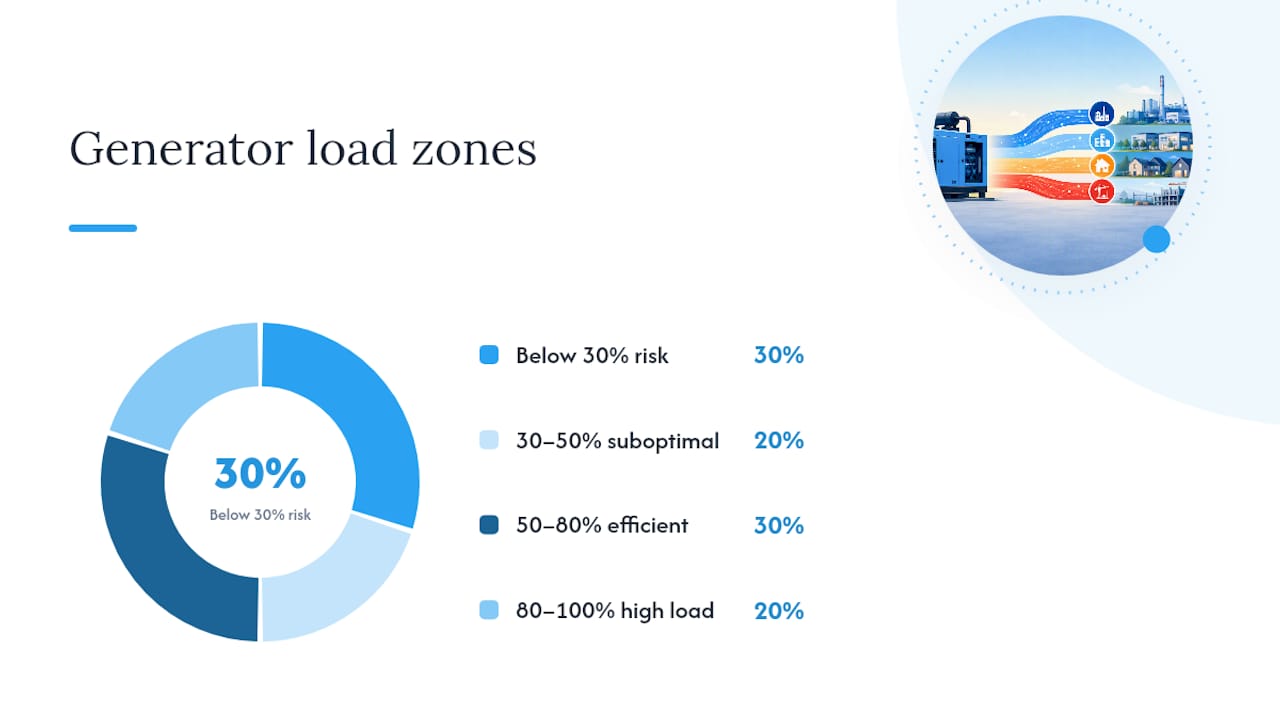
The fix is straightforward in principle, harder in practice: size against an honest inventory of what you’re actually powering, not a worst-case guess. For multi-generator setups, staggered starts and synchronisation let you bring capacity online as demand rises rather than running everything flat out from the first minute.
Fuel logistics matter almost as much as sizing. Scheduling refuels in advance rather than calling for an emergency top-up avoids surcharge pricing, and bulk purchasing for larger events can meaningfully undercut retail diesel rates.
- Size generators against actual measured or itemised load, not a rounded-up guess
- Avoid running below 30% load for sustained periods
- Pre-schedule refuelling rather than relying on emergency call-outs
- Use staggered or synchronised generators for variable-demand events
For a deeper look at load planning on bigger sites, our guide to generators at large events covers sizing decisions in more detail, and the event equipment hire checklist is worth working through before you book anything.
Maintenance costs you shouldn’t skip
Routine servicing is a recurring cost, not an optional extra, and it directly affects fuel spend. A well-maintained generator burns less diesel per kWh than a neglected one because clean filters and correctly gapped injectors mean more complete combustion.
Standard servicing items include:
- Oil and filter changes, typically every 200 to 250 running hours
- Injector checks and cleaning at scheduled service intervals
- Load-bank testing to confirm the unit performs under real demand, not just at idle
- Battery and cooling system checks before major events
Budgeting 5 to 10% of your total hire or ownership cost for maintenance is a reasonable planning figure. Skip it and the fuel bill creeps up quietly. Well-maintained units can use up to 20% less fuel than poorly serviced ones, and deferred maintenance has a habit of turning into an expensive breakdown at the worst possible moment, usually mid-event.
Cutting your running costs and your emissions
The single biggest lever is sizing. Oversizing “for safety” is the most common and most expensive mistake in event power planning, and matching capacity to actual load through proper load profiling has been shown to cut diesel use by up to 40% in some events.
Where it’s practical, hybrid setups combining mains power or battery storage with a generator for peak demand only can trim runtime hours significantly. Procurement matters too: negotiating fuel delivery in advance and including standby cover in your original quote avoids the premium pricing that comes with last-minute changes.
- Match generator capacity to real, itemised load rather than a rounded-up estimate
- Use battery or mains hybrid solutions to cover peak demand rather than running a bigger unit constantly
- Negotiate bulk fuel delivery ahead of the event date
- Build standby cover into your original quote rather than adding it last minute
Pro Tip: If your event includes catering equipment, factor its peak draw separately. Catering loads spike sharply and briefly, and planners often size generators around this single peak rather than the average demand across the day. Providers like Wild Foodz publish event catering guidance that’s useful for cross-checking equipment lists against your power plan.
When professional hire and standby actually save you money
Over four decades of electrical contracting has taught us one thing about generators: the failures that cost real money are almost always avoidable ones. A DIY setup can work for a small domestic backup or a low-stakes private party. For weddings, corporate events, or anything with paying guests, standby cover isn’t a luxury, it’s what stops a fuel miscalculation or a mid-event fault turning into a cancelled event.
— Rob
Get a running-cost estimate you can actually rely on
An experienced electrical contracting provider offers quotes that factor in realistic load rather than rounded-up estimates, with hire options including standby cover to help prevent faults from causing event cancellations.
A quote from us covers fuel estimates based on your actual load, correct generator sizing, delivery, setup, and any standby staffing you need, all worked out before the event rather than adjusted on the day. We supply generators, distribution, cabling, fuel, and lighting as one coordinated package rather than separate bookings that need to be reconciled on site. If you’re planning a wedding, corporate event, or private party anywhere in Sussex, visit our services page to request a quote, or go straight to our generator hire page to check sizing and availability for your date.
Sources
- UK Events and Diesel use factsheet
- How long will a generator run? Fuel tank capacity guide – CH Events
- How much does it cost to run a generator | Generators Direct
FAQ
How much does it cost to run a generator per hour in the UK?
Small portable generators typically cost £1.50 to £3 an hour, medium event units £2.50 to £6, and large commercial generators £5 to £38 or more, depending on size and load. Load percentage and current diesel price are what push a specific job to either end of that range.
Does generator size affect running cost per kWh delivered?
Yes. Running a generator well below its rated capacity increases fuel use per unit of power delivered and risks wet stacking, so an oversized unit often costs more to run than a correctly sized one, not less.
What’s cheaper to run, diesel or petrol generators?
Diesel generators are generally more fuel-efficient for sustained loads, which is why they dominate event and standby hire in the UK. Petrol units suit short-duration, low-power domestic use, but their consumption per kWh tends to be higher at comparable output.
How much does Jaks Party Power charge for generator hire?
Pricing depends on generator size, event duration, and whether standby cover is included, so current rates are available directly through our services page once we know your load and site details.
How can I reduce my generator running costs?
Load profiling alone has cut diesel use by up to 40% on some events.