

Single-phase is the standard 230V supply running to most UK homes, and it’s fine for almost everything you’ll plug in. Three-phase gives you 230V phase-to-neutral, 400V between phases, and far higher usable capacity, but you only need it when several heavy loads run at once (think multiple EV chargers, a big heat pump, or commercial kitchen kit). Most people never need to upgrade.
TL;DR:
- Most UK homes do not require three-phase power because their peak demand stays below about 23kW, which is the limit for a 100A single-phase supply.
- Upgrading to three-phase typically involves significant network work, with costs ranging from a few thousand to tens of thousands of pounds depending on civil works and distance from the network.
- Proper maximum demand calculations are essential before considering an upgrade, as shared service cables and demand diversity often prevent the need for three-phase.
- Temporary three-phase hire for events is often more practical and cost-effective than a permanent property upgrade when heavy concurrent loads are only occasional.
- Checking fuse count, meter type, cable thickness, and labels helps to determine your current supply type without professional help.
Table of Contents
- Three phase vs single phase power: what actually differs?
- When do you actually need three-phase power?
- How do I check what supply I already have?
- What does a three-phase upgrade actually cost?
- What are the safety and wiring basics to know?
- What do contractors wish more clients understood?
- Why three-phase matters more at events than at home
- Hiring three-phase power for your event
- Where to check the rules yourself
- Sources
- FAQ
Three phase vs single phase power: what actually differs?
Single-phase wiring uses one live conductor and a neutral, delivering 230V. Three-phase uses three live conductors plus a neutral, giving you 230V phase-to-neutral and 400V line-to-line. That extra structure is what lets three-phase systems carry so much more load without the cabling becoming unworkable.
A typical single-phase supply in the UK runs at 60A or 100A, which works out to roughly 14 to 23 kW. A 100A three-phase supply, balanced across all three lines, delivers around 69 kW. That’s not a small jump. It’s the difference between running a kettle and running a small workshop.
- Wiring: single-phase = live + neutral; three-phase = three lives + neutral
- Voltage: 230V (single-phase) vs 230V phase-to-neutral / 400V line-to-line (three-phase)
- Typical uses: single-phase covers homes and small offices; three-phase suits motors, commercial kitchens, multiple EV chargers, and large heat pumps
- Cost and complexity: single-phase is cheaper to install and simpler to maintain; three-phase costs more upfront but scales far better under heavy concurrent demand
- Motor performance: three-phase motors self-start and run smoother because the three phases peak at staggered intervals, producing something close to constant power rather than the pulsing delivery you get from single-phase
When do you actually need three-phase power?
Most homeowners never hit the ceiling on single-phase. The question isn’t “would three-phase be nice” but “does my peak concurrent demand actually exceed what single-phase can deliver”. That’s a maximum demand calculation, not a guess based on your energy bill.
A qualified maximum demand calculation uses diversity factors, because not everything in a building runs flat-out at the same moment. An electric oven, an EV charger, and an immersion heater rarely peak together, so adding up the nameplate ratings on every appliance you own massively overstates real demand. This is the single most common reason people are quoted for an upgrade they didn’t need.
Common triggers worth checking against:
- Two or more EV chargers rated at 7 to 22kW, especially if they’ll charge simultaneously
- A large air source or ground source heat pump alongside existing heavy loads
- Commercial kitchen equipment, particularly induction cooking or large ovens
- Motors above roughly 3kW, which draw a high starting current on single-phase
- Combined peak demand pushing past around 23kW, the practical limit of a 100A single-phase cut-out
If you’re weighing up EV charging as the deciding factor, it’s worth checking your vehicle’s onboard charger first. Plenty of cars still cap at 7kW single-phase charging regardless of what your supply can deliver, so upgrading purely for EV reasons can be money spent on headroom you’ll never use, a point echoed in guidance on hotel and hospitality EV charging planning.
Pro Tip: Get the maximum demand calculation done before you contact your Distribution Network Operator. It’s the one document that turns a vague “we might need three-phase” into a specific number a DNO can actually quote against.
How do I check what supply I already have?
You don’t need to be an electrician to get a decent first read on your supply, and knowing the basics before you call one saves everybody time.
Head to your service head, the sealed unit where the supply enters the building, usually near your meter. Count the fuses: one fuse almost always means single-phase, while three separate 100A fuses point to a three-phase supply. Never open the cut-out yourself. This is a visual check only.
Beyond the fuse count, a few other clues help:
- A three-phase meter looks different and is usually labelled accordingly
- Thicker incoming cable often signals three-phase, since it’s carrying more current
- A consumer unit fed from a TPN (three-phase and neutral) board rather than a single busbar suggests three-phase is already on site
A quick number worth knowing: a 100A single-phase supply gives you roughly 23 kVA, while a 100A three-phase supply gives roughly 69 kVA at unity power factor. Same amperage, three times the capacity, because you’re stacking three phases rather than running one.
Write down what you find. Fuse count, meter type, cable thickness, any labels visible on the cut-out. That’s exactly what an electrician or DNO will ask for on a first call, and turning up with answers rather than questions gets you a faster, more accurate quote.
What does a three-phase upgrade actually cost?
Upgrading means applying to your local Distribution Network Operator, not just swapping your consumer unit. This trips people up constantly: the limiting factor almost always sits in the street, not in your property.
Most DNOs offer a free budget estimate valid for 90 days, which is worth getting even at the early “just exploring” stage. The quote reflects genuine network feasibility, not a generic price list, because what you’ll be charged depends heavily on what’s already running under your road.
Typical works involved:
- A meter swap to a three-phase meter
- A new service cable from the network to your property
- Possible street excavation if the existing supply can’t carry the extra load
- Unlooping, if your property currently shares a cable with a neighbour
Costs vary enormously, from a few thousand pounds at the simple end to tens of thousands where civil works are involved. Distance from the nearest three-phase point in the network, whether digging is required, and whether your service is shared with other properties all drive that range far more than the size of your own demand.
What are the safety and wiring basics to know?
Three-phase installations carry higher earthing and bonding requirements than single-phase, and conductor sizing has to account for the extra current-carrying capacity across three lives. This isn’t something to leave to guesswork or well-meaning DIY attempts.
Load balancing matters more than most people expect. If one phase carries significantly more load than the others, you risk neutral overloading and voltage fluctuation.
- Distribution should rotate circuits across L1, L2 and L3 rather than piling load onto one phase
- TPN distribution boards are the standard way of managing this in practice
- All installation and testing work should follow BS 7671, the IET Wiring Regulations, and be certified by a qualified electrician
Pro Tip: If you’re hiring temporary three-phase distribution for a one-off event rather than installing it permanently, ask whoever supplies it how they’re balancing phases across your specific equipment list. A generator running badly unbalanced loads wears faster and trips more.
What do contractors wish more clients understood?
The traps that catch people out aren’t exotic. They’re the same handful of issues, repeated on job after job.
Shared or “unlooped” supplies are the biggest one. If your service cable is shared with a neighbouring property, separating it can add real cost and delay that has nothing to do with your own consumption. The second is assuming a new consumer unit solves everything, when the actual constraint is the DNO’s cable under the road.
Confirm network capacity before you spend a penny on internal work. A feasibility check from the DNO and a proper maximum demand calculation, done together, prevent almost every expensive surprise on a three-phase upgrade.
Before contacting a DNO, a decent electrician will typically:
- Photograph the service head and fuse arrangement
- Record the meter type and any existing labelling
- List every appliance likely to run concurrently, with actual (not nameplate) power draw
- Note whether the service cable is shared with another property
Why three-phase matters more at events than at home
Most houses stay on single-phase for good reason: the peak demand simply doesn’t get close to the ceiling. Events are different. A wedding marquee running catering equipment, staging power, and lighting all at once can hit concurrent loads that would trip a domestic single-phase supply in seconds.
That’s why planners lean on three-phase distribution for anything beyond a small gathering. It isn’t about total energy used across the night. It’s about resilience when everything switches on together. For a one-off event, permanently upgrading a venue’s supply rarely makes sense. Hiring temporary three-phase distribution, and having a standby contractor on hand, is usually the pragmatic route. If you’re weighing that decision, our guides on what a 3-phase power supply actually involves and distribution board installation for events go into the practical detail.
— Rob
Hiring three-phase power for your event
If you’ve read this far weighing up whether your venue needs a permanent upgrade, there’s usually a simpler answer: don’t upgrade the building, hire the power instead. Suppliers offer 32A and 63A three-phase distribution boards, cables, and standby electrical support for events, combining extensive electrical contracting experience rather than a rental catalogue approach.
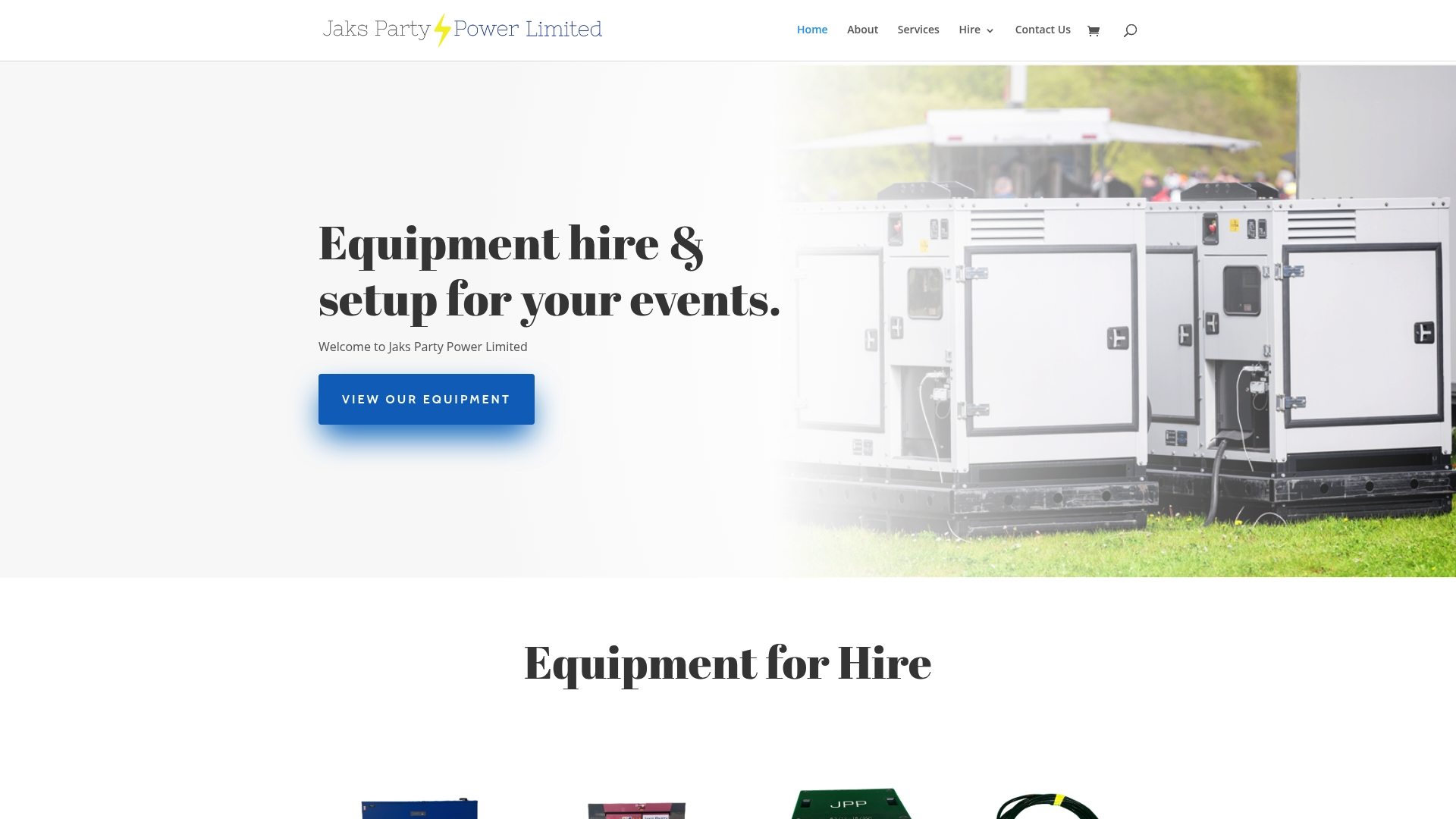
That matters because temporary events face exactly the concurrent-load problem this article has been describing, catering, staging, and lighting all peaking together, without any of the justification for a permanent DNO upgrade. Our distribution boards for large events are sized and balanced by people who’ve done this on hundreds of sites, not left to chance on the day. If you’re planning a wedding, corporate event, or a show with heavy power demand, read our guide on the benefits of hiring event generators and request a quote for your date.
Where to check the rules yourself
For the technical detail behind everything above, UK Power Networks explains how to spot your supply type at the service head, and BS 7671 (the IET Wiring Regulations) governs how any three-phase installation must be earthed, bonded, and tested. If you’re weighing a genuine property upgrade rather than event hire, a DNO application is the correct starting point, and most network operators will give you a free, no-obligation feasibility estimate before you commit to anything.
Sources
- Single-phase and three-phase power in the UK
- What’s the difference between a single phase and three phase electricity supply
- Three phase upgrade guide (UK)
FAQ
What is better, three-phase or single-phase?
Neither is universally better. Single-phase suits the vast majority of homes because their peak demand never gets close to its limits; three-phase suits properties or events with high concurrent loads, heavy motors, or multiple simultaneous high-power devices.
Is 240V single-phase or three-phase?
230V is the standard phase-to-neutral voltage in both systems. Single-phase supplies 230V using one live and a neutral, while three-phase also delivers 230V phase-to-neutral but adds 400V between phases.
Can three-phase run at home?
Yes, but it’s uncommon for ordinary domestic use. Homes with heavy simultaneous demand, such as multiple EV chargers alongside a large heat pump, sometimes upgrade after a maximum demand calculation confirms it’s genuinely needed.
Why is three-phase only 415V?
Three-phase in the UK runs at 400V line-to-line, which comes from the mathematical relationship between the 230V phase voltage and the offset between the three phases, not an arbitrary rating.
Do I need three-phase for my event?
If your event runs catering, staging, and lighting simultaneously at any meaningful scale, hiring temporary three-phase distribution is usually more practical than assuming single-phase hire will cope, particularly once several pieces of equipment start together.