

What are the best alternatives to Gofer.co.uk for UK event power?
Choosing a Gofer.co.uk alternative comes down to three non-negotiables: BS 7671 compliance, correct generator sizing, and a supplier who will actually be on-site when things get complicated. The UK event power market has plenty of capable providers, but the gap between a credible one and a risky one is wider than most planners expect.
Here is what to confirm before signing with any supplier:
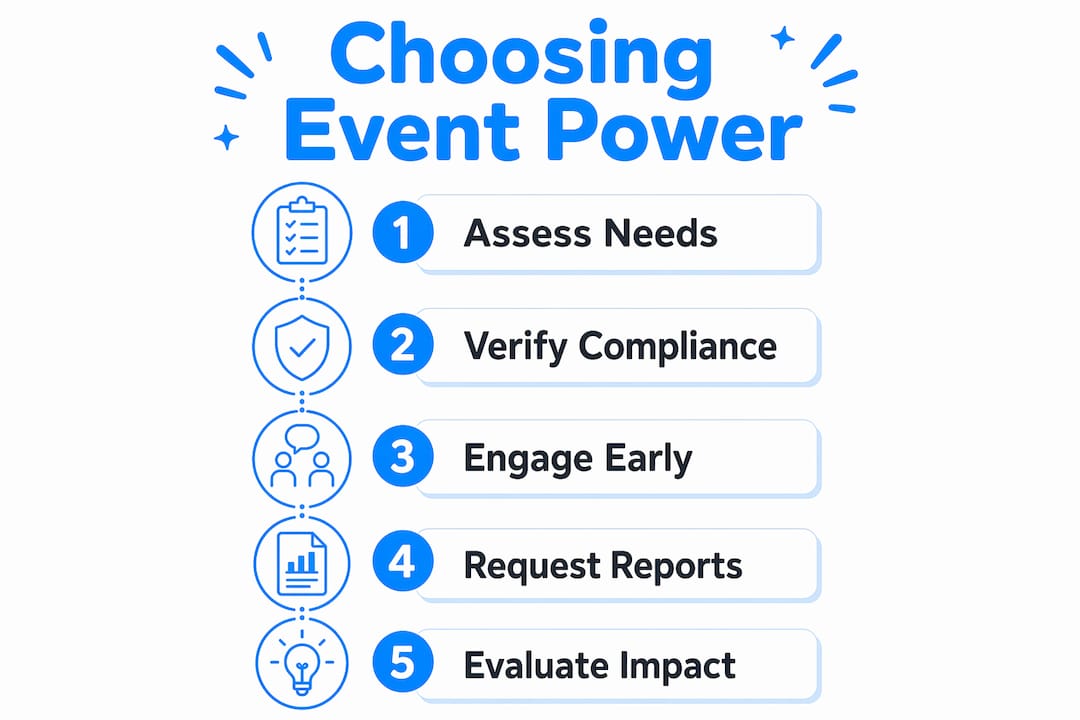
- Regulatory compliance: All temporary electrical installations must meet BS 7671, with a formal inspection certificate issued by a qualified electrician before the public arrives. Emergency lighting must comply with BS 5266-1.
- Generator sizing: Do not exceed 80% of rated output to prevent overheating. Small events typically need moderate generator capacity; larger festivals generally require significantly more power.
- Load distribution: Large sites should spread load across multiple generators. One failure should not kill the whole site.
- Outdoor safety: Lighting towers and speaker supports must account for wind loading and ground conditions, with clear exclusion zones maintained around equipment.
- Environmental standards: LED lighting, hybrid generators, and solar arrays are now standard expectations for UK events with noise or sustainability requirements.
Pro Tip: Check whether your shortlisted supplier carries public liability insurance and issues a formal test certificate. Any credible provider will offer both without being asked.
How do you choose a reliable UK event power provider?
The single most useful thing you can do is engage your power supplier early. Getting them involved at the design stage lets them position equipment intelligently, reduce cable runs, and cut fuel use before the budget is locked. Suppliers brought in late tend to patch rather than plan.
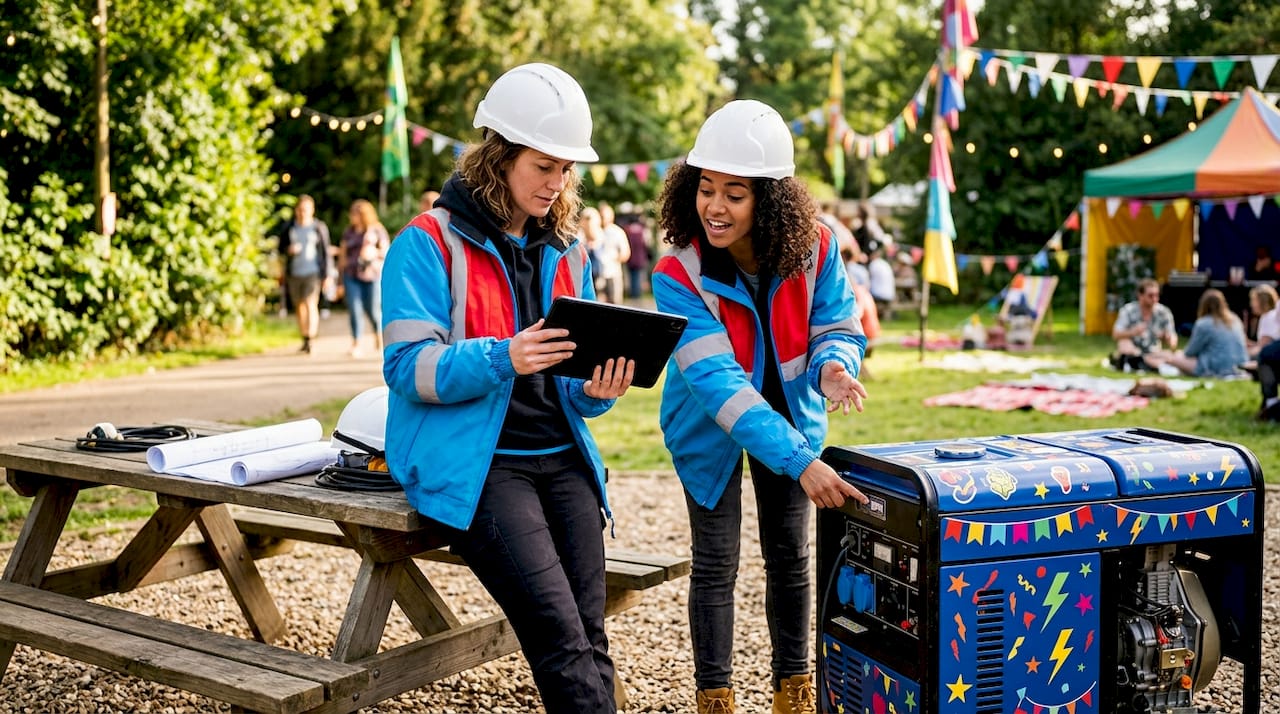
A proper site survey is not optional. It covers ground strength, slope, wind exposure, and cable routing. Suppliers who skip it are guessing at costs and risks that are entirely site-specific.
When evaluating options, look for:
- Qualified personnel and proof of BS 7671 compliance
- Capacity to cover load-in and breakdown phases, not just the public hours
- Hybrid or battery-storage options for noise-sensitive venues
- A clear pricing structure with no hidden delivery or fuel surcharges
- Post-event reporting so you can refine power planning for future events
For outdoor festival setups, understanding power distribution basics before you speak to suppliers puts you in a much stronger negotiating position.
Pro Tip: Ask every supplier for a post-show report. The Powerful Thinking guidance recommends using the first year with a new supplier as an assessment year, monitoring fuel usage and load across the event to identify savings for the following year.
What does the HSE require for emergency power at events?
The HSE requires event dutyholders to have site-specific emergency plans that include independent backup power for emergency lighting. That lighting must comply with BS 5266-1 and be tested regularly. Plans must be reviewed before each event, not carried over unchanged from the previous year.
Power suppliers must be contracted and physically present during load-in and breakdown, not just during the public-facing hours. The HSE is explicit that these phases carry the highest-risk work activities, even with fewer people on site. A supplier who disappears after setup is a liability.
How do you reduce noise and environmental impact from event power?
Hybrid generator systems, which pair a diesel unit with battery storage, can shut the engine off entirely during low-load periods. That cuts noise, fuel consumption, and emissions simultaneously, while real-time energy monitoring gives you the data to manage it actively. LED festoon and LED stage lighting reduce the load that generators need to carry in the first place. Understanding lighting power consumption before specifying equipment helps you right-size the generator rather than over-hire.
Which UK event power providers are worth considering?
The UK market includes a range of specialist suppliers, from regional operators covering a single county to national fleets with 24/7 availability. When comparing options, look at these categories rather than names alone:
- Regional specialists often offer faster response times, better site familiarity, and more flexible contracts than national chains.
- Full-service providers supply generators, distribution boards, cabling, and on-site engineers as a single package, reducing coordination risk.
- Green power specialists focus on hybrid and battery systems, useful for festivals with noise restrictions or sustainability commitments.
For generator hire options and distribution equipment, comparing quotes from at least three suppliers is standard practice. Venue scheduling tools can help coordinate power supplier timelines alongside other contractors.
Jakspartypower: a trusted Sussex alternative with decades of electrical contracting experience
If you want a provider who brings genuine electrical contracting depth rather than just hired kit, Jakspartypower is worth a serious look. With over 40 years of electrical contracting experience, the team covers generators, distribution boards, lighting, and cabling as a single managed service, with a standby option that keeps an engineer on-site throughout your event.
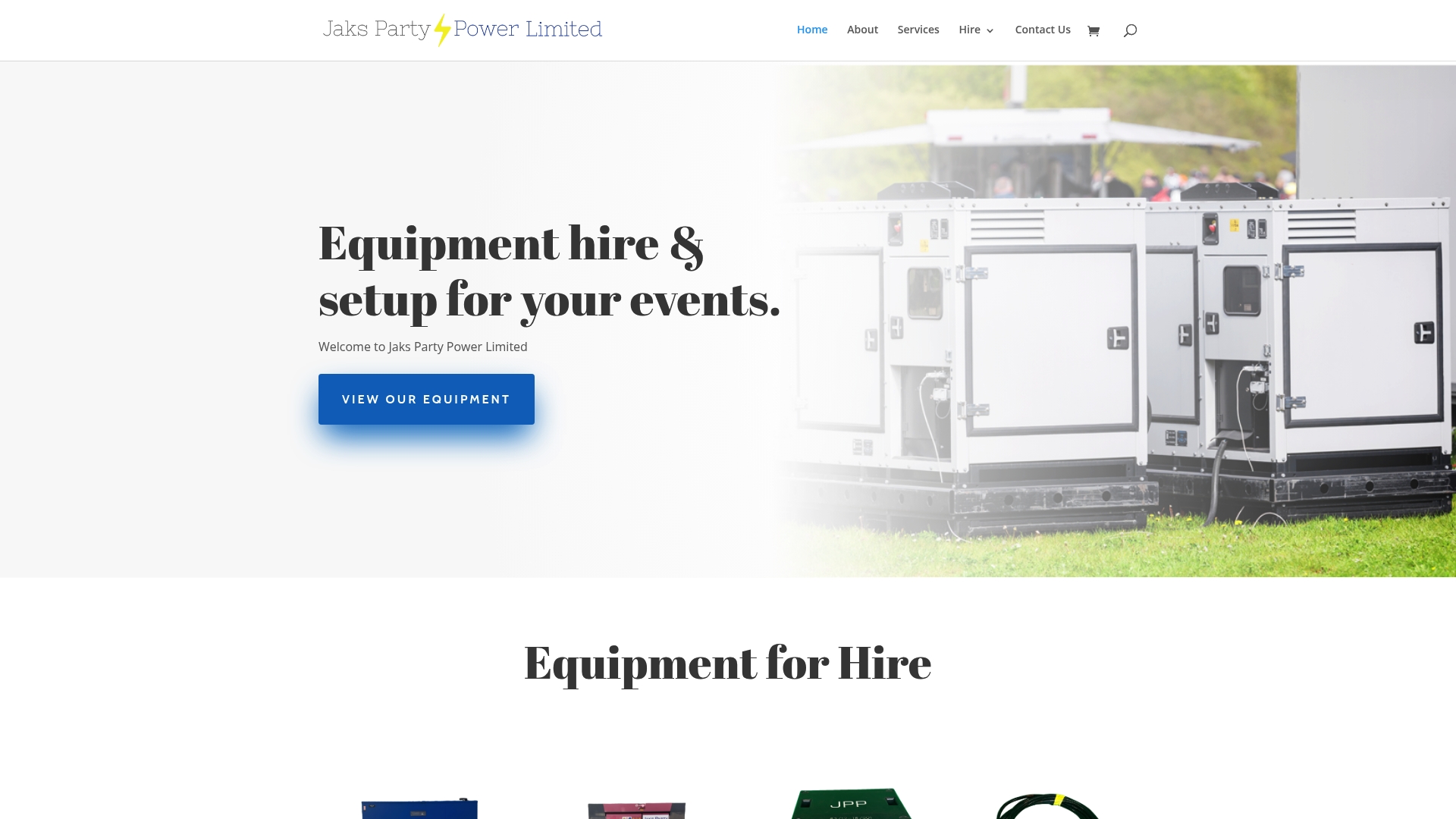
Jakspartypower serves events across Sussex, from weddings to large outdoor shows, and carries the compliance credentials and equipment range that planners need. Visit Jakspartypower to explore the full equipment catalogue or get in touch for a tailored quote.
Key takeaways
Choosing the right UK event power supplier requires compliance verification, early engagement, and a supplier who covers every phase of your event, not just the public hours.
| Point | Details |
|---|---|
| BS 7671 compliance | Every temporary installation needs a formal inspection certificate before public access. |
| Generator sizing | Stay below 80% of rated output; small events need 20–30 kVA, larger festivals often exceed 100 kVA. |
| Early supplier engagement | Involving your power supplier at the design stage reduces fuel use, equipment needs, and costs. |
| HSE emergency requirements | Independent backup power for BS 5266-1 emergency lighting is mandatory, with site-specific plans reviewed before each event. |
| Jakspartypower | Sussex-based specialist with 40+ years of electrical contracting experience, covering generators, lighting, and distribution as a full-service package. |
FAQ
What standards must UK event electrical installations meet?
All temporary event electrical installations must comply with BS 7671, and emergency lighting must meet BS 5266-1. A qualified electrician must issue a formal inspection certificate before the public is admitted.
How much generator capacity does a typical event need?
Small events generally require moderate generator capacity; larger festivals usually need substantially more power. Never run a generator above 80% of its rated output to avoid overheating.
Why does early supplier engagement matter?
Engaging your power supplier during the planning stage allows smarter equipment positioning, shorter cable runs, and lower fuel use, all of which reduce overall event costs.
Does Jakspartypower cover events outside Sussex?
Jakspartypower is based in Sussex and specialises in events across the region. Contact the team directly to discuss coverage for your specific location and event type.
What should I ask a new event power supplier?
Confirm BS 7671 compliance, public liability insurance, site survey provision, and whether they will be on-site during load-in and breakdown. Ask for a post-event report to improve future planning.