
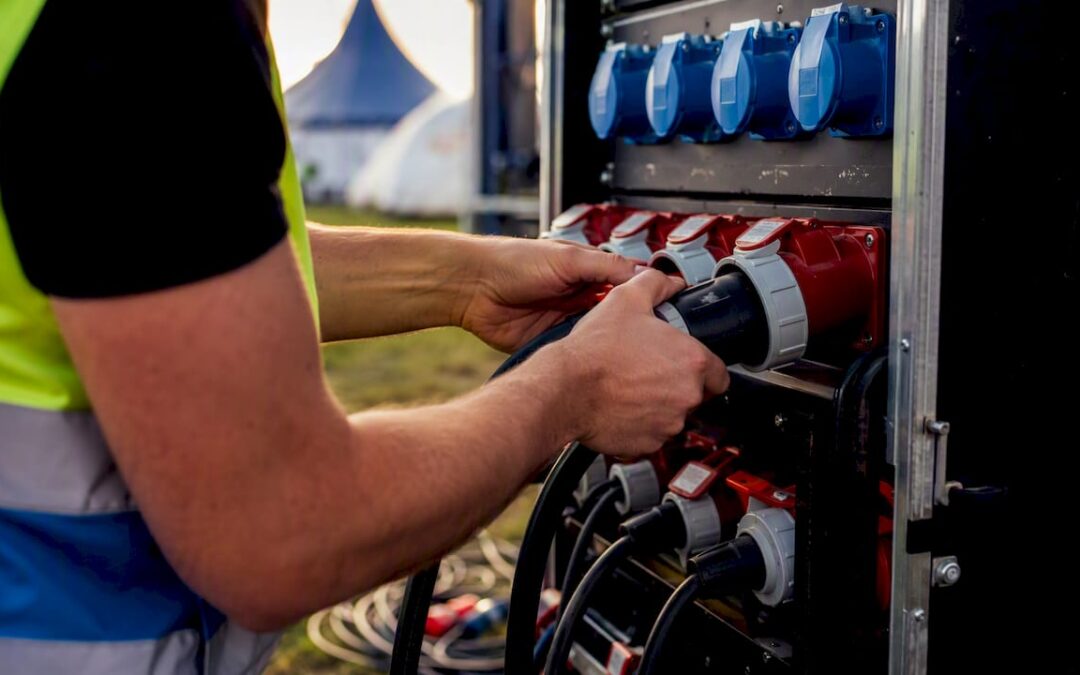
A three-phase power supply delivers electricity through three live conductors, each offset by 120 degrees, giving smoother and higher-capacity power than the single wire most homes rely on. For the vast majority of UK households, single-phase is more than enough. Three-phase tends to matter only if you’re planning something big: a very large heat pump, a 22 kW EV charger, or a substantial solar and battery installation.
You can often tell which supply you have without touching anything. Check these first:
- Fuses at the cut-out: one fuse usually means single-phase; three fuses side by side mean three-phase.
- Meter markings: labels like “3×230V” or a visible 400V rating point to three-phase.
- Consumer unit width: a noticeably wide board with a three-pole main switch is a strong three-phase indicator.
Pro Tip: If you’re unsure after a quick look, don’t guess. A qualified electrician can confirm your supply type in minutes without opening anything you shouldn’t touch.
Key Takeaways
Three-phase power delivers roughly three times the usable capacity of single-phase, but the vast majority of UK homes never need it.
| Point | Details |
|---|---|
| Definition | Three-phase uses three staggered live conductors at 230V phase and 400V line voltage. |
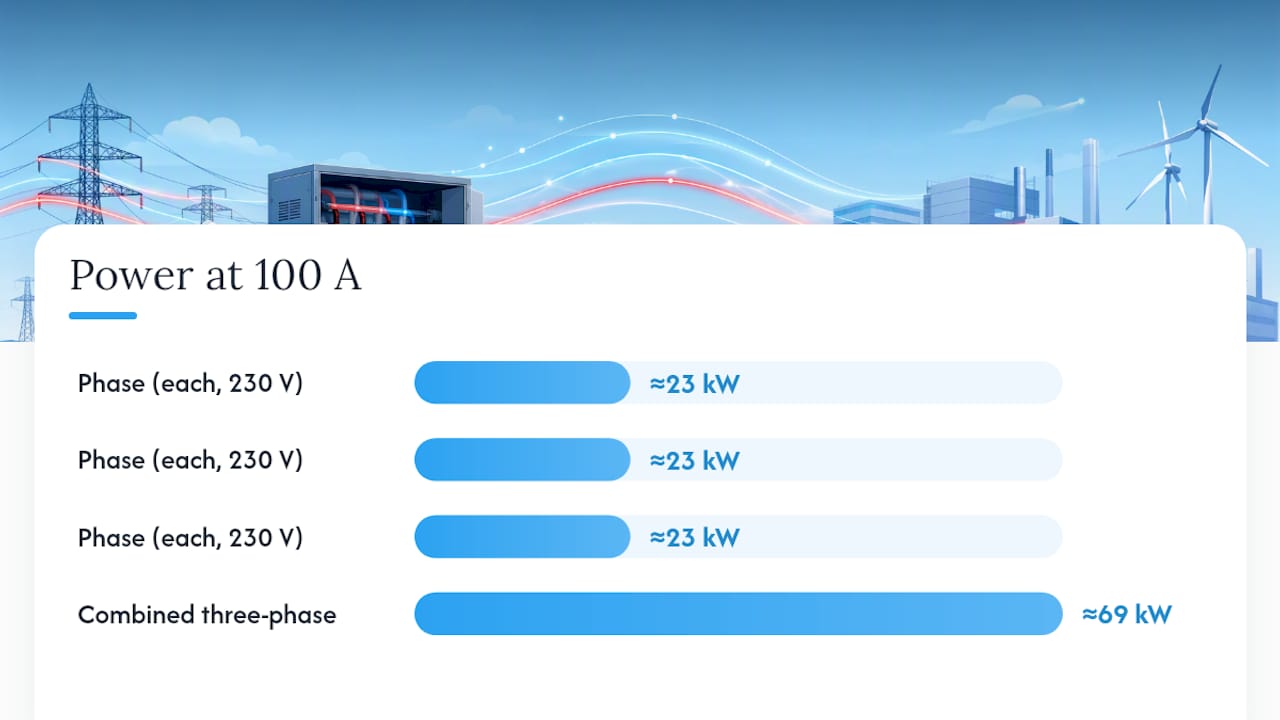
| Capacity gap | A 100A three-phase supply gives around 69 kW versus 18 to 23 kW for typical single-phase. |
| Check before calling anyone | Count fuses at the cut-out, read meter markings, and check consumer unit width. |
| Upgrade trigger | Consider it only for 22 kW EV charging, large heat pumps, or significant solar/battery expansion. |
| Cheaper alternatives exist | Fuse upgrades, export limiting, and battery buffering often solve the problem without a full upgrade. |
Table of Contents
- What is a 3-phase power supply compared with single-phase?
- How does three-phase power work?
- How do I know if I have a 3-phase power supply?
- What is three-phase electricity used for?
- Do I need to upgrade to a three-phase power supply?
- How do you upgrade to three-phase, and what does it cost?
- What safety and installation changes should you expect?
- Do you actually need three-phase, or does clever single-phase design solve it?
- Sensible alternatives for one-off high-demand events
- Rob’s take on three-phase upgrades
- Sources
- FAQ
What is a 3-phase power supply compared with single-phase?
Single-phase power, the standard in nearly every UK house, sends electricity down one live conductor at 230V. Three-phase uses three live conductors instead, each carrying 230V to neutral, but 400V between any two phases (called line-to-line voltage). That structure is what unlocks the extra capacity.
The numbers make the gap concrete. A typical single-phase domestic supply with an 80A to 100A main fuse gives you roughly 18 to 23 kW of simultaneous capacity. A 100A three-phase supply, by contrast, delivers significantly higher total capacity, because you’re effectively running three of those circuits in parallel rather than one working alone.
In practice, that difference shapes where each supply gets used:
- Single-phase: almost all UK homes, standard appliances, ordinary EV chargers with moderate power levels.
- Three-phase: large motors, commercial kitchens, bigger EV chargers, industrial equipment, and some large heat pump or solar installations.
The gap isn’t about safety or reliability. It’s purely about how much load the supply can carry at once.
How does three-phase power work?
Picture three separate power waveforms, each shifted by exactly 120 degrees from the next. Instead of a single supply rising and falling to zero, one of the three phases is always near its peak. That staggering is what makes three-phase delivery smoother than single-phase, particularly for motors, which run more efficiently on a steadier feed.
Electricians describe the wiring in two configurations: star (Y) and delta. In a star setup, common in UK domestic and light commercial connections, three phases meet at a shared neutral point. Delta wiring, more common in industrial settings, connects the phases directly to each other with no shared neutral. You don’t need to wire either yourself, but the terms explain why your electrician talks about “line” voltage (400V, between two phases) and “phase” voltage (230V, between one phase and neutral) as different things.
The practical upshot:
- Each phase individually behaves much like an ordinary single-phase supply at 230V.
- Combine three of them and you get roughly three times the usable power, around 69 kW at 100A, without pushing more current through any single conductor.
- That’s why heavy three-phase equipment often runs cooler and more efficiently than the same load forced through a single-phase feed.
How do I know if I have a 3-phase power supply?
You can usually answer this from the meter cupboard, without calling anyone out. Follow these steps in order:
- Open the service cut-out cover (the sealed box before your meter) and count the fuses. Three fuses side by side strongly suggests three-phase; a single fuse means single-phase.
- Read the meter face or label. Markings such as “3×230V” or a stated 400V rating confirm three-phase.
- Look at your consumer unit. A wide board with a three-pole main switch and multiple incoming live conductors is another strong sign.
None of these checks require you to remove seals, touch live parts, or open anything marked as sealed by your supplier. If the fuses, meter, and consumer unit tell three different stories, or you’re still unsure, stop there.
Pro Tip: Never break a meter seal or tamper with the cut-out yourself. It’s not just unsafe, it can also invalidate your supply agreement. Call a qualified electrician if anything looks ambiguous.
What is three-phase electricity used for?
Three-phase earns its keep wherever equipment needs sustained, heavy power rather than the occasional short burst. The clearest examples:
- 22 kW EV chargers, which need three-phase to reach that speed at all.
- Large heat pumps, particularly in bigger or all-electric properties.
- Commercial catering equipment, including heavy-duty convection ovens that draw sustained high current.
- Large solar and battery inverters beyond typical domestic sizing.
- Workshop machinery with substantial motors, since three-phase motors run more efficiently than single-phase equivalents of the same power.
The benefits are straightforward: more usable capacity, lower current through each conductor (which reduces voltage drop over longer cable runs), and steadier delivery to motor-driven equipment. For a typical household running a normal mix of appliances, cooking, lighting, and an ordinary car charger, none of that translates into a noticeable benefit. Single-phase does the job perfectly well.
Do I need to upgrade to a three-phase power supply?
Work through this before ringing anyone:
- Add up your genuine peak simultaneous load. Not everything running at once, but a realistic worst case: EV charger, heat pump, oven, and whatever else might overlap.
- Compare that figure against your main fuse rating. Most homes sit on an 80A to 100A single-phase fuse, giving roughly 18 to 23 kW.
- Apply diversity. Appliances rarely all draw maximum current simultaneously, so your real peak is often lower than the sum of nameplate ratings.
Industry guidance suggests that once your calculated demand pushes towards the equivalent of 100A single-phase, a three-phase connection becomes genuinely worth exploring.
Before committing, consider the cheaper alternatives:
- A straightforward fuse upgrade from your District Network Operator (DNO).
- Export limiting on solar systems to stay within single-phase limits.
- Smart energy management to stagger high-draw appliances.
- Battery buffering to smooth peak demand rather than expanding supply capacity.
How do you upgrade to three-phase, and what does it cost?
If the numbers genuinely point towards three-phase, the process runs in a fairly fixed order:
- Confirm your current supply type using the checks above, or ask an electrician to verify.
- Get a qualified electrician or installer to calculate your actual demand, factoring in diversity rather than raw nameplate figures.
- Contact your DNO for a formal connection offer, since they alone confirm local network capacity and approve the upgrade.
- Plan the internal electrical works, likely including a new consumer unit and heavier cabling.
- Book the installation, coordinating your electrician’s internal work with the DNO’s external connection.
The DNO stage is where timelines get unpredictable. If local infrastructure needs reinforcing, cable replacement or even transformer upgrades, a project can stretch from weeks into months. Costs vary widely with the scope of that external work and can run into several thousand pounds once street works are involved.
Pro Tip: Get your DNO quote before committing to any internal rewiring. There’s little point spending on a new consumer unit if the connection offer turns out to be unaffordable or delayed by months.
What safety and installation changes should you expect?
Three essentials before any work starts: use a properly qualified electrician, notify your DNO as required, and never attempt to inspect live equipment yourself, including the meter and cut-out.
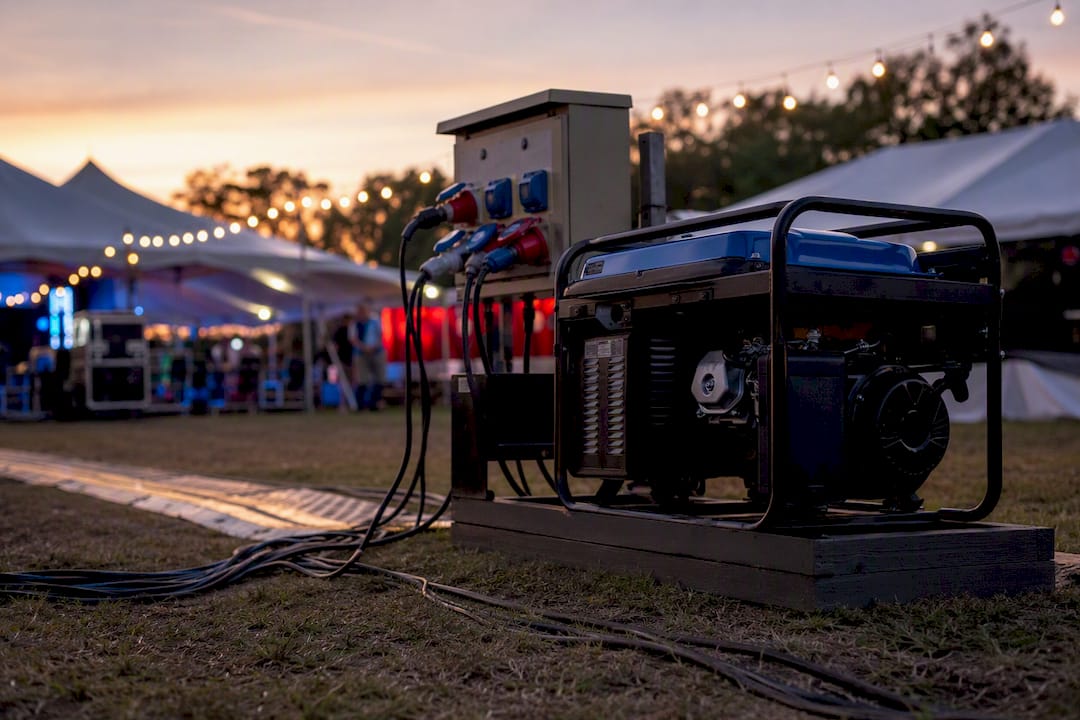
Internally, expect a larger three-phase consumer unit, heavier cabling sized for the higher capacity, and updated protective devices throughout. Space around the meter position often needs to grow to accommodate the new equipment. Metering itself may change too. Some three-phase installations affect smart meter compatibility, so it’s worth confirming with your supplier before work begins, rather than discovering a gap afterwards. For temporary high-load needs around a single event, a distribution board setup designed for short-term use can avoid permanent electrical changes altogether.
Do you actually need three-phase, or does clever single-phase design solve it?
The biggest myth going around is that solar needs three-phase. It usually doesn’t. Most domestic solar sits comfortably within single-phase limits at 4 to 8 kW, and even larger systems can often stay single-phase with export limiting. The second myth, that three-phase is somehow riskier, doesn’t hold up either. Properly installed, it’s no more dangerous than single-phase; the real hurdle is regulatory and network approval, not the electricity itself.
Where future-proofing genuinely makes sense is a full renovation or new build aiming for an all-electric setup. Fitting three-phase during that work tends to cost far less than retrofitting it later once walls and floors are finished.
Pro Tip: If you’re not mid-renovation, look at battery storage or export limiting before committing to a three-phase upgrade. Cheaper, faster, and often does the job.
Sensible alternatives for one-off high-demand events
Not every high-load situation calls for a permanent supply change. If the trigger is a single event rather than everyday household demand, a much simpler route exists: hire generators or temporary distribution equipment sized for that occasion, then hand it back once the event is over. Jakspartypower supplies generators and distribution equipment across Sussex for exactly this scenario, from large weddings drawing serious lighting and catering loads to corporate events needing guaranteed standby power. It’s often the more sensible choice than a costly network upgrade for demand that only appears a few times a year. Browse the range of event power equipment to see what fits a one-off high-demand occasion without touching your property’s permanent supply.
Rob’s take on three-phase upgrades
Most of the anxiety around three-phase comes from people assuming it’s the only way to future-proof a house. It usually isn’t. Battery storage and export limiting have quietly solved the problem that used to justify a lot of unnecessary upgrades, and they cost a fraction of what a DNO reinforcement project runs to.
Where I think the conventional advice falls short is timeline honesty. Guides talk about upgrades like they’re a straightforward electrician’s job. They’re not. The moment your DNO decides the local network needs reinforcing, you’re at the mercy of their scheduling, not yours. That’s the detail that catches people out, not the wiring itself.
My practical view: if you’re mid-renovation or building new, put three-phase on the table early, because retrofitting later is genuinely more expensive. If you’re not, exhaust the cheaper options first. And if the real driver is a single big event rather than daily household demand, don’t touch your supply at all. Hire the capacity for the day and send it back.
Sources
- What’s the difference between a single phase and three phase electricity supply? | UK Power Networks
- Single-phase vs three-phase power explained | Glow Homes
- Upgrading to Three-Phase Supply: Why & How – Green Squirrel Energy Ltd
- Single Phase vs Three Phase Power | UK Electrician’s Guide | Elec‑Mate
- How Do You Know If Your Home Is Suitable for Three-Phase Power? | Carter’s Electrical
FAQ
How do I know if I have a 3-phase power supply?
Check the service cut-out for three fuses instead of one, look for “3×230V” or 400V markings on your meter, and note whether your consumer unit has a wide, three-pole main switch.
Is 240V considered 3-phase?
No. A reading of around 230V is the standard single-phase voltage in UK homes. Three-phase is identified by 400V line-to-line readings or three separate 230V phases, not a single 230V figure.
Do UK houses have 3-phase power?
Most don’t. The standard UK domestic supply is single-phase, and three-phase is typically reserved for larger properties, commercial premises, or homes with unusually high electrical demand.
What is 3-phase power used for?
It’s commonly used for large motors, commercial catering equipment, 22 kW EV chargers, big heat pumps, and large solar or battery installations that exceed what a single-phase supply can handle.