
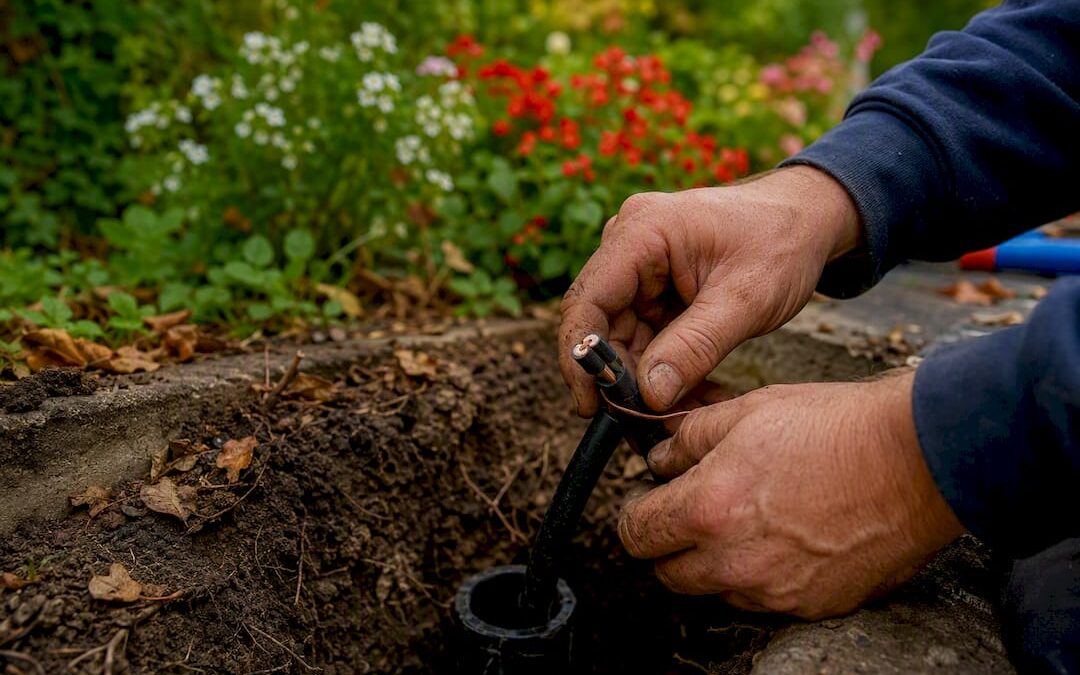
A mains power connection is the permanent physical link between your property and the local electricity distribution network, the wiring that lets you switch on a socket or a light and get power on demand. It is not just about plug sockets. “Mains powered” covers both the appliances you plug in with a three-pin plug and the equipment that is hardwired directly into your wiring, such as boilers, cookers and ceiling lights.
Two organisations matter here, and they are not the same thing. Your Distribution Network Operator (DNO) owns the cable running to your property and carries out the physical connection. Your energy supplier installs the meter and sends you the bills. Mixing the two up is the single biggest source of confusion when people try to get connected.
- The DNO connects the cable; your supplier meters and bills the electricity that flows through it
- A property can be “mains powered” without a single plug socket if everything runs through fixed wiring
- Connection offers from a DNO are typically valid for 90 days, so timing your application matters
Key Takeaways
A mains power connection is the permanent link between the distribution network and a property, covering both plug-in appliances and hardwired fixed installations alike.
| Point | Details |
|---|---|
| Definition covers more than sockets | Mains powered includes hardwired boilers, cookers and lighting, not just plug-in devices. |
| DNO and supplier are separate | The DNO owns the cable and connection; the supplier only handles the meter and billing. |
| Offers expire quickly | Connection offers are typically valid for 90 days, so accept and schedule promptly. |
| Contestable work can be competitive | Trenching and cable laying can be quoted by accredited contractors, but the DNO must approve the final link. |
| Safety checks follow any change | New connections or consumer unit alterations need a qualifying certificate before use. |
Table of Contents
- What does mains power connection mean in physical terms?
- Plug-in appliances versus hardwired installations
- Who does what: DNOs, suppliers and electricians
- How to get connected to mains power: a step-by-step process
- Why earthing and circuit protection matter
- Sources
- FAQ
What does mains power connection mean in physical terms?
Underneath the jargon, a mains connection is three pieces of hardware working in sequence. A service cable runs from the local distribution network, usually buried under the pavement or road, to your property boundary and then into the building. This is the DNO’s cable, and they own it for the entirety of its length, right up to the point it terminates inside your property.
That termination point is the service head, sometimes called the cut-out. It houses the main fuse and marks the legal boundary between the DNO’s equipment and everything downstream. Immediately after the cut-out sits the meter, which records how much electricity you use for billing purposes. From the meter, the supply feeds into your consumer unit (what most people still call the fuse box), where it splits into individual circuits protected by their own breakers, one for the kitchen sockets, another for upstairs lighting, another for the cooker, and so on.
Every one of those circuits ultimately traces back to the same feed. In the UK, that feed arrives as alternating current at a nominal 230 volts and 50 hertz, which is why every plug and every fixed appliance in a British home is built to that same electrical standard.
- Service cable: DNO-owned, runs from the network to your property
- Service head/cut-out: the boundary point and main fuse, still DNO territory
- Meter: records consumption for your supplier’s billing
- Consumer unit: splits the supply into protected circuits for sockets and fixed wiring
It helps to picture the wider system too. Transmission lines act like motorways, moving huge amounts of power across the country, while the distribution network is the equivalent of local roads, carrying that power the last few miles to your street and into your consumer unit.
Plug-in appliances versus hardwired installations
This is where most confusion starts. People hear “mains powered” and assume it means something you plug into a wall socket. It doesn’t, not exclusively.
- Plug-in appliances connect via a standard three-pin plug into a socket outlet. Kettles, televisions, laptop chargers and washing machines all fall into this category. You can unplug them, move them, replace them without touching the fixed wiring at all.
- Hardwired or fixed installations connect directly into the consumer unit with no plug involved. Ceiling lights, electric showers, boilers, cookers and immersion heaters are typically wired this way, on a dedicated circuit sized and protected for that specific load.
- Both draw from the same mains feed. The electricity reaching a hardwired boiler is identical in origin to the electricity reaching a plugged-in toaster. What differs is how it gets from the consumer unit to the appliance, and the safety requirements attached to that route.
Hardwired equipment generally demands more careful installation because it cannot simply be swapped out. A faulty plug can be replaced in minutes; a faulty cooker circuit needs an electrician who understands hardwired connections to trace and fix. This distinction is one reason regulations treat fixed wiring work more strictly than swapping a plug.
Who does what: DNOs, suppliers and electricians
Three distinct parties handle a mains connection, and their roles rarely overlap.
The DNO owns every metre of cable up to your service head and performs the actual connection to the network. They issue connection offers, set technical requirements for new supplies, and are legally the only party permitted to carry out the final, non-contestable connection. Coordinating your DNO application with your supplier choice at the same time is the most reliable way to avoid weeks of unnecessary delay.
Your energy supplier is a completely separate commercial entity. They arrange the meter installation and handle billing, but they have no authority over the physical cable or the connection itself. This split confuses plenty of homeowners who assume one phone call to their supplier will sort everything out.
Between the two sits a category of work known as contestable work, things like trenching or laying cable on private land before it reaches the network boundary. Accredited independent contractors can carry this out competitively, often at lower cost than going through the DNO directly, but the DNO must still inspect and approve the final connection before it goes live.
- DNO: owns cables, issues connection offers, performs the final non-contestable connection
- Energy supplier: installs the meter, manages billing, has no cable ownership
- Accredited contractors: can carry out contestable work such as trenching
- Registered electrician: required for any internal wiring, consumer unit work or certification
Ofgem requires network operators to publish a transparent connection charging methodology, so you can see how a quoted price breaks down rather than accepting a figure on trust.
Pro Tip: Ask your DNO explicitly which parts of your job are contestable before you accept their quote. Getting competing prices on the contestable elements alone can shave a meaningful amount off the total connection cost.
How to get connected to mains power: a step-by-step process
Getting connected, whether for a new build, a renovation, or a property that has never had a supply, follows a fairly predictable sequence once you know who to contact and in what order.
- Check what’s already there. If the property has an old or disconnected supply, note the meter point number and any existing cut-out, as reusing infrastructure is usually faster than starting fresh.
- Gather your site details. You’ll need the property address, expected load (how many circuits, whether you need three-phase for something like a workshop), and a site plan if it’s a new build.
- Request a connection quote from your local DNO. They’ll assess the site and issue a formal connection offer covering cost, technical requirements and a proposed timescale.
- Appoint an energy supplier in parallel. Don’t wait for the DNO quote to finish before doing this; supplier registration and meter arrangements can run alongside the DNO process.
- Accept the offer within its validity window. Connection offers are typically valid for 90 days. Miss that window and you may need a fresh quote, sometimes at a different price.
- Schedule contestable work separately if applicable. Trenching and cable laying on private land can often be arranged with an accredited contractor while you wait for the DNO’s slot for the final connection.
Costs split broadly into two buckets. Non-contestable costs, the DNO’s own connection work, follow their published charging methodology and are largely fixed. Contestable costs, covering things like digging trenches or laying ducting, are open to competitive quotes from accredited firms, which is where most of the potential savings sit.
- Confirm your load requirements before requesting a quote, undersizing causes problems later
- Run the DNO application and supplier appointment at the same time, not sequentially
- Get at least two quotes for any contestable work before committing
- Diary the 90-day offer validity the moment you receive it
Delays almost always trace back to one of two causes: applying to the supplier and DNO at different times, or missing the connection offer’s validity window and having to restart the quote process.
Why earthing and circuit protection matter
A mains connection without proper protection is a serious hazard, which is exactly why the consumer unit is more than just a box of switches.
Earthing provides a safe path for fault current to travel, so that if a live wire touches a metal casing, the fault trips a protective device instead of energising the casing itself. RCDs (residual current devices) detect tiny imbalances in current, the kind that happen when electricity leaks through a person, and cut power in milliseconds. MCBs (miniature circuit breakers) protect individual circuits from overload and short circuits, tripping before cables overheat.
Getting the consumer unit layout right, with the correct RCD and MCB combination for each circuit, is what stands between a minor fault and a house fire or a fatal shock. After any new connection, alteration, or consumer unit upgrade, a qualifying inspection and certificate confirms the work meets current wiring regulations.
- Earthing gives fault current a safe route away from you
- RCDs cut power fast enough to prevent electric shock injury
- MCBs stop overloaded circuits from overheating
- A signed certificate should follow any new connection or consumer unit change
Attempting mains-level electrical work without the right qualifications is not just risky, it’s frequently illegal and can void your home insurance if something goes wrong. Any work touching the consumer unit or fixed wiring belongs with a registered electrician, full stop.
Common misconceptions about mains connections
A few myths persist even among people who’ve lived with mains electricity their whole lives.
- “My energy supplier owns the cable to my house.” They don’t. The DNO owns it, right up to the service head.
- “Mains means plug sockets.” It means the entire supply system, sockets and hardwired equipment alike.
- “Transmission, distribution and my house connection are the same thing.” They’re stages of one system: transmission moves bulk power nationally, distribution brings it to your street, and your service cable is the final, local leg into your property.
A practitioner’s view on temporary power and event supplies
Mains connection assumptions fall apart fast on an event site. A field, a marquee, or a venue’s existing supply often can’t handle the load a wedding band, catering rig and lighting truss demand all at once, which is exactly when a generator paired with a properly sized distribution board becomes the sensible option rather than trying to draw everything through one venue socket.
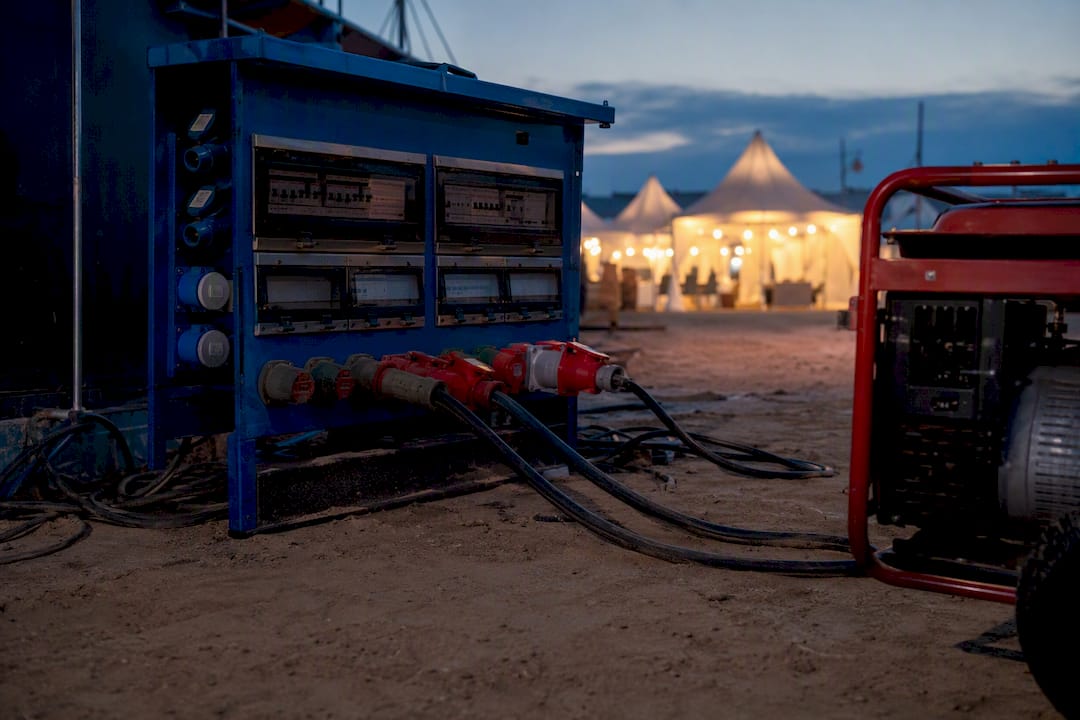
Balancing loads across multiple distribution points, and having standby capacity ready if something trips, is a skill built over decades of contracting work, not something picked up from a manual; hospitality event organisers can find expert operational guidance at Bridge PR’s hospitality PR and influencer management services. Three habits separate smooth events from stressful ones: plan your total load well before the event date, confirm every distribution point on site rather than assuming the venue’s supply will cope, and always arrange standby support so a fault doesn’t become a blackout mid-event.
Get the power right for your next event with a full range of hire equipment, from generators and distribution boards to lighting and standby cover, backed by contractors who’ve handled UK events for decades. Browse generator hire options or check the event equipment hire checklist before your next booking.
Sources
- New electricity connections – what’s involved (UK Power Networks)
- How electricity gets to you (Powerwise)
- What is grid balancing? (Pod Energy)
- Mains electricity (Wikipedia)
FAQ
How do I connect to mains power?
Contact your local DNO for a connection quote and appoint an energy supplier for the meter at the same time. Connection offers are typically valid for 90 days, so accept and schedule promptly once you have one.
Does mains powered mean plug-in?
No. Mains powered covers both plug-in appliances and hardwired fixed installations such as boilers, cookers and ceiling lights, all drawing from the same supply.
What does “mains power” mean?
Mains power is the alternating current supply delivered from the distribution network into a property, typically 230 volts at 50 hertz in the UK, feeding both sockets and fixed wiring.
How much does it cost to connect to mains power?
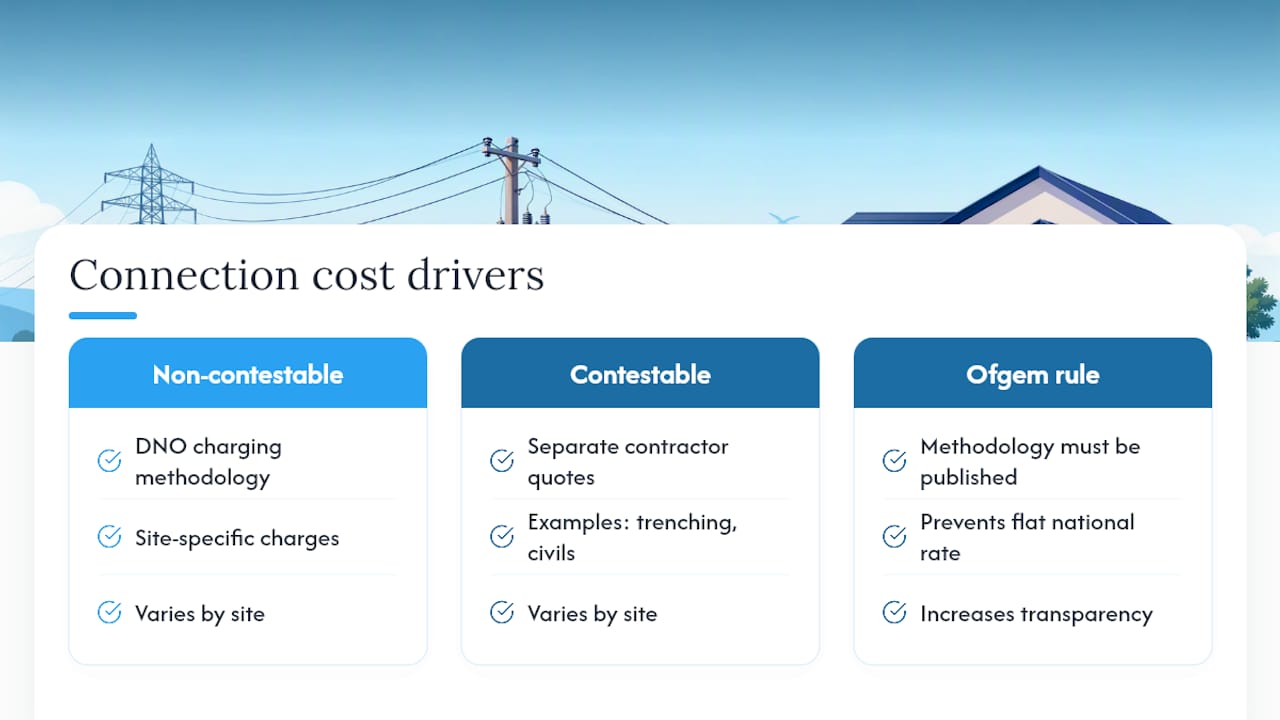
Costs depend on the DNO’s charging methodology for non-contestable work and separate quotes for contestable work like trenching, so figures vary by site; Ofgem requires DNOs to publish this methodology transparently rather than quote a flat national rate.