
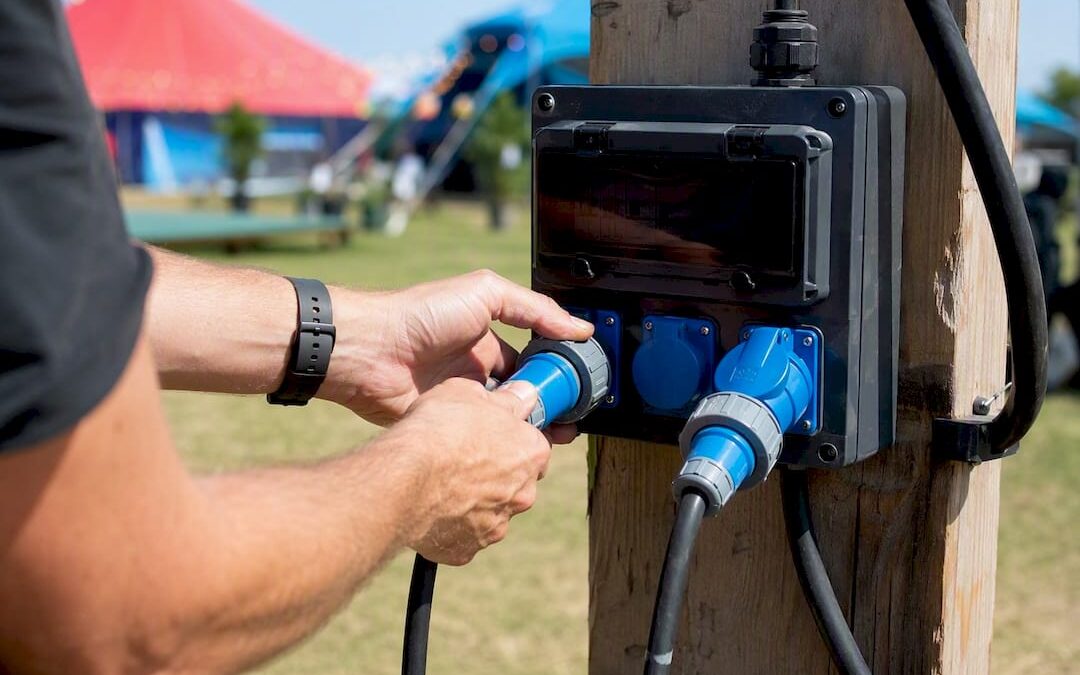
Outdoor lighting distribution is the temporary electrical system that powers and controls event lighting: a generator or mains feed, a distribution board, cabling, connectors and protection devices that get power safely from source to fixture. Every festoon run, uplighter and stage wash on your site depends on this chain working correctly, and it’s the part of the build most likely to trip you up if you skip the planning.
Three things matter before you sign off any installation:
- Standards aren’t optional. BS 7671, BS 7909 and HSE guidance (INDG247) govern how temporary systems must be designed, protected and tested.
- Planning beats troubleshooting. Load calculations, RCD protection, correct earthing and weatherproofing need deciding before cables hit the ground, not after a trip.
- Some jobs need a specialist. Multi-generator sites, large stages or anything with public access usually call for an experienced installer, which is exactly where a supplier like Jakspartypower earns its fee.
Key Takeaways
Safe outdoor lighting distribution depends on correctly sized generators, BS 7671/BS 7909 compliant distribution boards, 30 mA RCD protection and weatherproof BS EN 60309 connectors working together as one system.
| Point | Details |
|---|---|
| Definition | Outdoor lighting distribution means the generator, boards, cabling and protection devices that power event lighting temporarily. |
| Standards to check | BS 7671, BS 7909 and HSE’s INDG247 govern design, RCD protection and documentation for temporary systems. |
| Plan loads with headroom | Calculate running watts per fixture, balance phases, and size generators to around 80% of rated output. |
| Hire with a checklist | Request single-line diagrams, RCD test records and confirm a named SPR before installation day. |
| Work with a specialist | Jakspartypower supplies generators, distribution boards and standby engineers as one coordinated hire for events across Sussex. |
Table of Contents
- Core components of a temporary outdoor lighting distribution system
- Safety standards and regulations you need to check
- Power planning, load calculations and managing LED loads
- On-site best practices for setting up outdoor lighting distribution
- Checklist and supplier questions for hiring distribution and installation
- How Jakspartypower supports your outdoor lighting distribution
- Sources
- FAQ
Core components of a temporary outdoor lighting distribution system
A working system is really a chain of parts, and knowing what each one does helps you ask better questions when you’re hiring.
The generator (or occasionally a mains supply via a marine-style interface) is the prime source. Power runs from there into a main distribution board, which splits the incoming supply into manageable circuits, then out to sub-distribution boards positioned closer to the lighting rigs, bars or stage. This zoning matters more than it sounds: shorter cable runs mean less voltage drop and easier fault isolation if something goes wrong on one circuit.
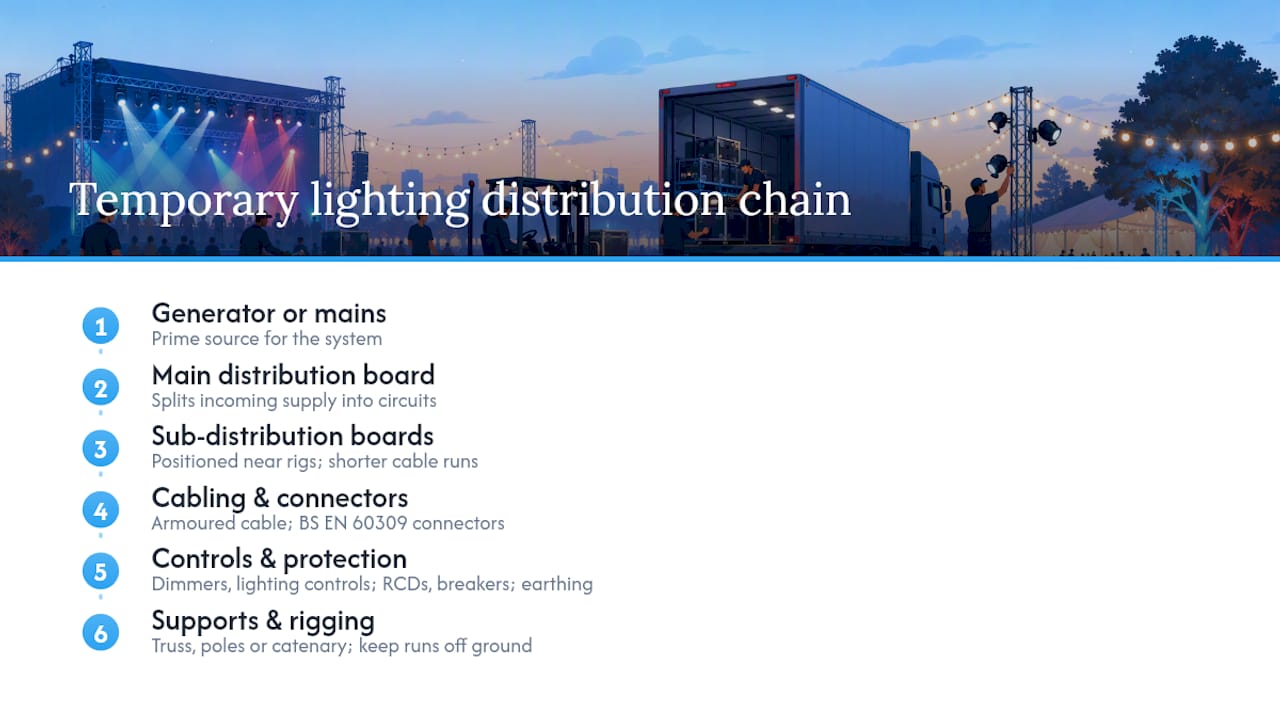
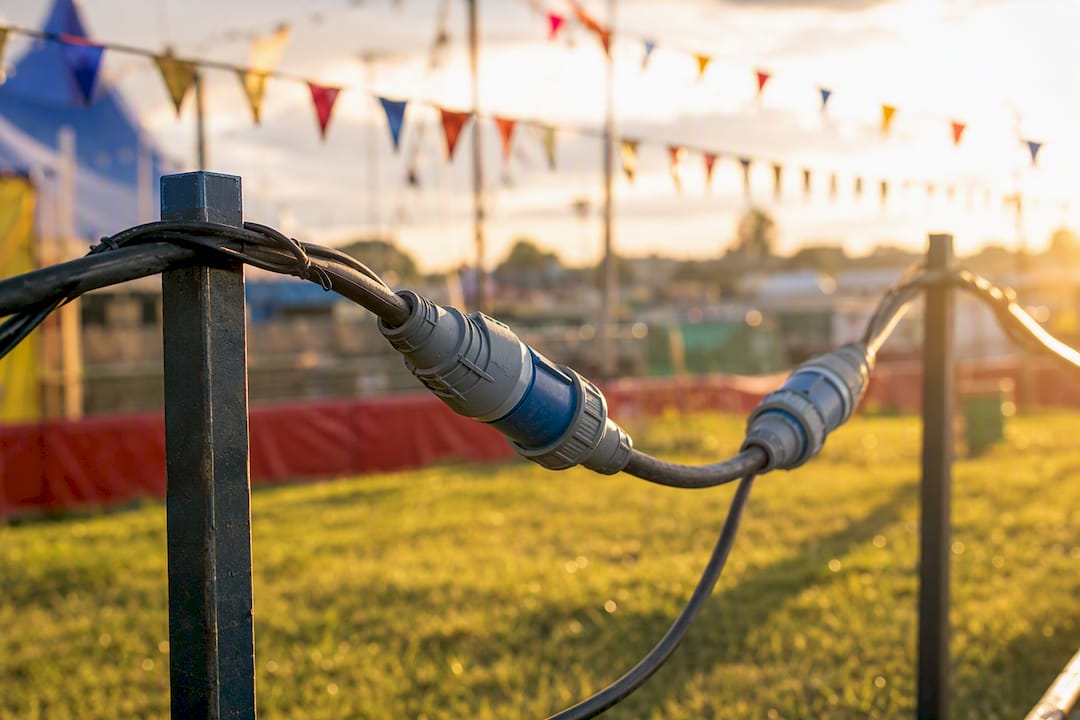
Cabling is typically armoured or heavy-duty flexible cable rated for outdoor use, connected through BS EN 60309 industrial connectors, commonly known as “Commando” connectors. HSE guidance specifically recommends these over older round-pin plugs for outdoor work because their outdoor connector design resists damp and mechanical knocks far better. They come rated from 16A up to 125A, so matching connector rating to circuit load is a basic but easy-to-miss check.
Dimmers and lighting control units sit further down the chain, then RCDs and circuit breakers provide the protection that stops a fault becoming a shock or fire risk. Earthing and bonding tie all exposed metalwork to a safe reference point. Finally, supports and rigging, whether truss, poles or catenary wire, keep overhead runs off the ground and out of the way of vehicles and pedestrians. Every enclosure and connector exposed to weather needs an appropriate IP rating, usually IP44 or higher for outdoor sockets.
Safety standards and regulations you need to check
Compliance here isn’t a box-ticking exercise. It determines whether your lighting rig is safe to plug in.
BS 7671 is the UK Wiring Regulations, the baseline every temporary installation must meet. BS 7909 builds on top of it specifically for temporary systems used in entertainment and events, covering supply sources, load assessment, cable selection, earthing and the documentation, including single-line diagrams, that a competent installer should hand you. The BS 7909 code of practice was revised in 2023 with sharper emphasis on planning and power quality, which reflects how much more complex modern LED and control loads have made event power.
30 mA. That’s the RCD protection level HSE guidance requires for socket outlets rated up to 32A on temporary installations, and it’s non-negotiable for outdoor lighting circuits.
RCDs need testing regularly, not just at commissioning. HSE recommends operating the test button monthly and carrying out a formal test quarterly. One frequent snag: dimmer packs can leak current in ways that trip RCDs even when nothing is genuinely wrong, which is why HSE’s INDG247 guidance recommends separating lighting and audio circuits onto different RCDs, so a lighting fault doesn’t kill your PA mid-set.
On earthing, many experienced planners favour a TT arrangement over PME (TN-C-S) for temporary outdoor supplies, since a lost PEN conductor on a PME system can put exposed metalwork at mains potential. Confirm the incoming supply type with your electrician before committing to a layout. Expect a pre-event inspection, test certificates and a written record of RCD testing as standard deliverables, not optional extras.
Power planning, load calculations and managing LED loads
Get this stage wrong and everything downstream, connectors, RCDs, generators, inherits the problem. Work through it in order:
- List every fixture and device on the lighting plan, including anything likely to be added late (extra festoon runs, a last-minute follow-spot).
- Use running watts, not nameplate maximums, then add a margin for inrush and unplanned extras rather than cutting it fine.
- Balance loads across phases. LED fixtures draw non-linear current, which generates harmonics and can push higher-than-expected current through the neutral conductor, a problem older analogue rigs rarely caused.
- Size the generator with headroom. Practical guidance suggests keeping generators at no more than around 80% of rated running output, leaving room for inrush spikes from moving heads, strobes and haze machines, which can briefly pull 1.5 to 2 times their running wattage.
- Watch for red flags on site: repeated RCD trips, unusually high neutral currents, or voltage drop on long cable runs all point to a design issue, not a faulty component.
Pro Tip: Ask any supplier exactly how they handle inrush and protective device discrimination, meaning whether a fault on one circuit trips only that circuit rather than the whole board. A vague answer here is a warning sign.
On-site best practices for setting up outdoor lighting distribution
Good planning still needs disciplined execution on the day. Generators belong away from public areas, positioned for ventilation so exhaust fumes can’t build up, since carbon monoxide risk from poorly placed units is a genuine and avoidable hazard.
Route cables using ramps or channelling wherever they cross walkways, and support overhead runs on catenary wire rather than letting them sag. Secure every termination with proper cable grips so strain never reaches the connector itself. Check the weather forecast before finalising your layout, and use IP-rated enclosures and protected connectors throughout; a dry forecast on the day you build is no guarantee for the day you run the event.
Label every circuit clearly, keep main isolators accessible without needing a ladder or a key, and mark emergency shutdown points so anyone on the crew can kill power fast if needed. The single-line diagram your installer provides should show generator and supply points, distribution board locations, circuit numbering, cable routes and RCD positions, essentially a map of the whole system anyone could follow in a crisis.
Checklist and supplier questions for hiring distribution and installation
Before you commit to a supplier, get the paperwork and the answers straight.
Documents worth requesting: a single-line diagram, test certificates, RCD test records, PAT and inspection certificates, equipment spec sheets, proof of insurance, and confirmation of who’s acting as Senior Person Responsible (SPR), the named coordinator BS 7909 expects for temporary systems.
- Do you supply BS EN 60309 connectors as standard for outdoor circuits?
- What type and rating of RCDs are fitted, and how often are they tested?
- How do you approach earthing and bonding on a site with unknown incoming supply?
- What headroom do you build in for inrush from moving lights or haze machines?
- Who is the named SPR on site during build, show and strike?
At handover, insist on labelled distribution boards, a written emergency procedure, and a signed safety handover document. If a supplier can’t produce these without hesitation, that tells you something before the event even starts.
A practical view from the field
Experienced installers plan distribution weeks before the load-in, not the morning of. That habit, combined with a named SPR and standby cover on the night, is what actually prevents a small fault becoming a shutdown, and it’s the approach Jakspartypower brings to every generator, board and lighting hire it supplies.
How Jakspartypower supports your outdoor lighting distribution
Getting distribution right takes the right kit and someone who knows how to size it, not just a generator dropped at the gate. Jakspartypower supplies generators, distribution boards, cable protection and standby engineers as a single coordinated package, backed by over 40 years of electrical contracting experience, so you’re not left juggling separate suppliers for power and lighting.

That standby service is the part organisers value most once they’ve been caught out once: an engineer on call through the event who can respond immediately if an RCD trips or a connector fails, rather than you troubleshooting mid-show. Every hire comes with the test certification and RCD records covered in the checklist above, so your SPR paperwork is sorted before the gates open. Start with the range of hireable generators, distribution boards and lighting equipment available, then request a site survey and quotation through Jakspartypower’s hire page to get your distribution plan reviewed before you commit to a layout.
Sources
- HSE — Electrical safety for entertainers (INDG247, PDF)
- Raiden Electric — How to plan temporary power distribution for an outdoor event
FAQ
What is outdoor lighting distribution at an event?
It’s the temporary electrical system, generator or mains feed, distribution boards, cabling, connectors and protection devices, that supplies and controls power to event lighting outdoors.
What standard applies to temporary event lighting power?
BS 7671 sets the baseline wiring regulations, while BS 7909 supplements it specifically for temporary installations used in entertainment and events.
Why do RCDs trip on outdoor lighting circuits?
Dimmer packs can leak small amounts of current that trigger nuisance trips on shared RCDs, which is why HSE recommends separating lighting and audio circuits onto different RCDs.
What connectors should outdoor lighting use?
BS EN 60309 industrial connectors, often called Commando connectors, are recommended for outdoor use because they resist damp and mechanical damage better than older round-pin plugs.
Who should I hire for outdoor lighting distribution?
For anything beyond the smallest setup, use a supplier with a named Senior Person Responsible, proper test certification and standby cover, such as Jakspartypower for events across Sussex.