
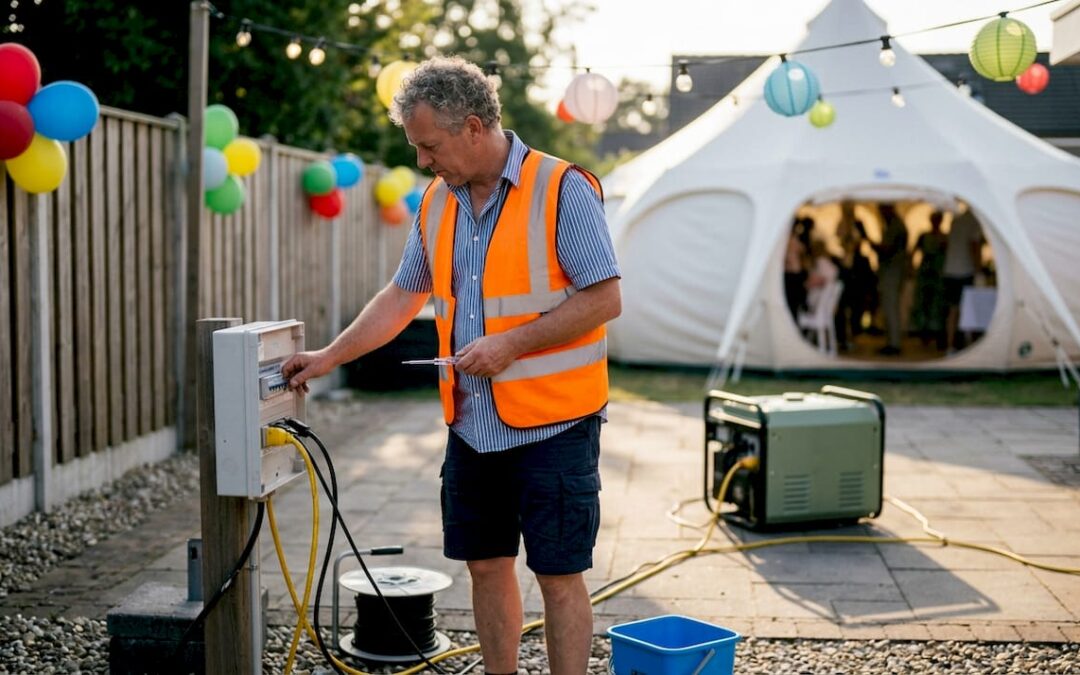
A domestic event power setup is a temporary electrical system arranged to supply safe, reliable electricity for private events such as weddings, garden parties, or milestone celebrations. Unlike permanent household wiring, this type of setup is designed, installed, and removed specifically for the event. Getting it right protects your guests, your equipment, and your peace of mind. The industry term for this practice is temporary power distribution, and understanding its core components is the first step to a successful event.
What is a domestic event power setup and why does it matter?
Temporary power distribution is the process of routing electricity from a source, whether a generator or venue supply, through distribution equipment to every point of use at your event. The source feeds into portable distribution boards, which split the supply into individual circuits. Each circuit serves a specific zone or piece of equipment, such as lighting rigs, sound systems, or catering appliances.
Safety is the primary reason to plan this carefully. Temporary event power lacks the permanent infrastructure protections built into domestic wiring, such as grounded conduit and fixed circuit protection. That gap makes Residual Current Devices (RCDs) the non-negotiable safeguard for every outdoor or temporary setup. Without them, a fault in a cable or appliance can become a serious hazard for guests and crew alike.
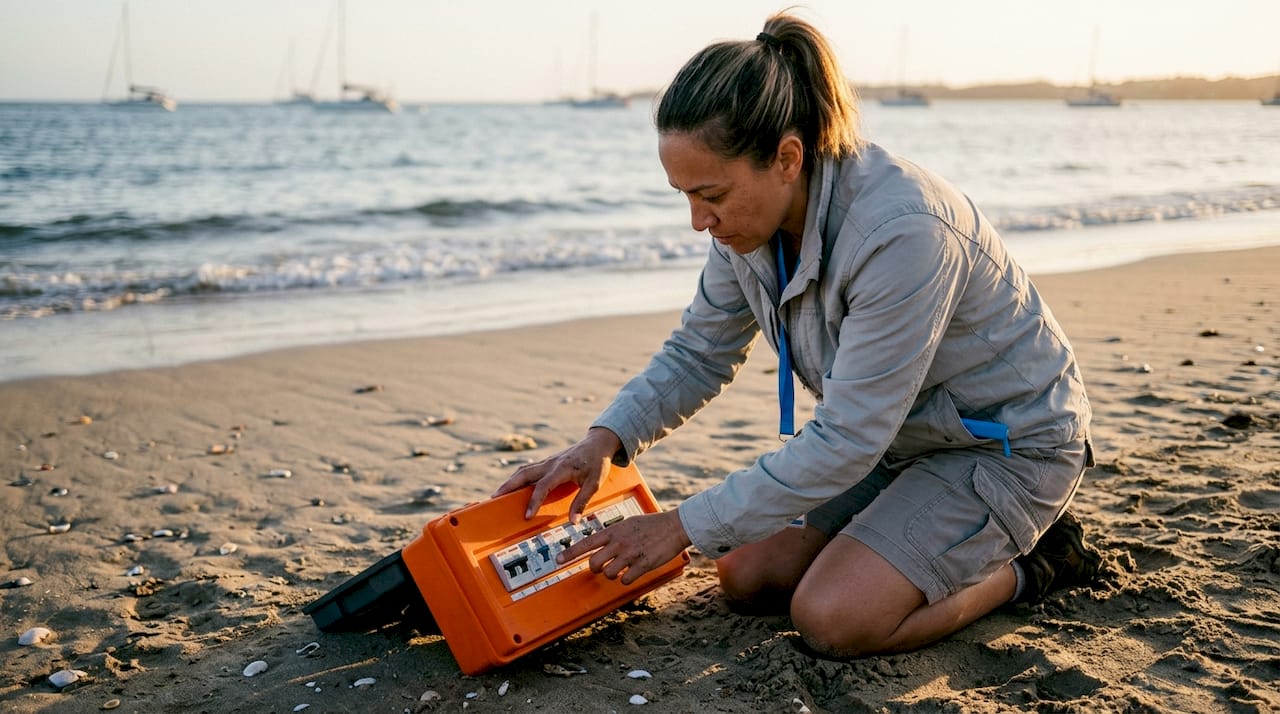
Planning a domestic power setup also means thinking about load, layout, and logistics well before the event day. Leaving these decisions to the last minute is the single most common cause of power failures at private events.
How to calculate your event power requirements
Accurate load calculation is the foundation of any domestic event power setup. Start by listing every piece of electrical equipment you plan to use, then note its wattage or kilowatt (kW) rating. Group equipment into categories to make the process manageable.
Common equipment categories and typical power draws include:
- Lighting: String lights, uplighters, and DJ lighting rigs typically draw between 500W and 3kW depending on quantity and type.
- Sound: PA systems and DJ equipment commonly range from 500W to 2kW for domestic events.
- Catering: Ovens, hot plates, and refrigeration units are often the heaviest loads, sometimes exceeding 5kW per appliance.
- Miscellaneous: Phone charging stations, projectors, and decorative features add smaller but cumulative loads.
Add all individual wattages together to get your base load figure. Then apply the standard 20–25% safety margin on top of that total. This buffer accounts for startup surges, which occur when motors in fridges or amplifiers draw several times their running current at switch-on, and for any equipment added on the day.
Single-phase power, the standard supply in most UK homes, is typically sufficient for smaller domestic events. Larger gatherings with heavy catering or professional lighting may require a three-phase supply, which distributes load more evenly and reduces the risk of overloading any single circuit.
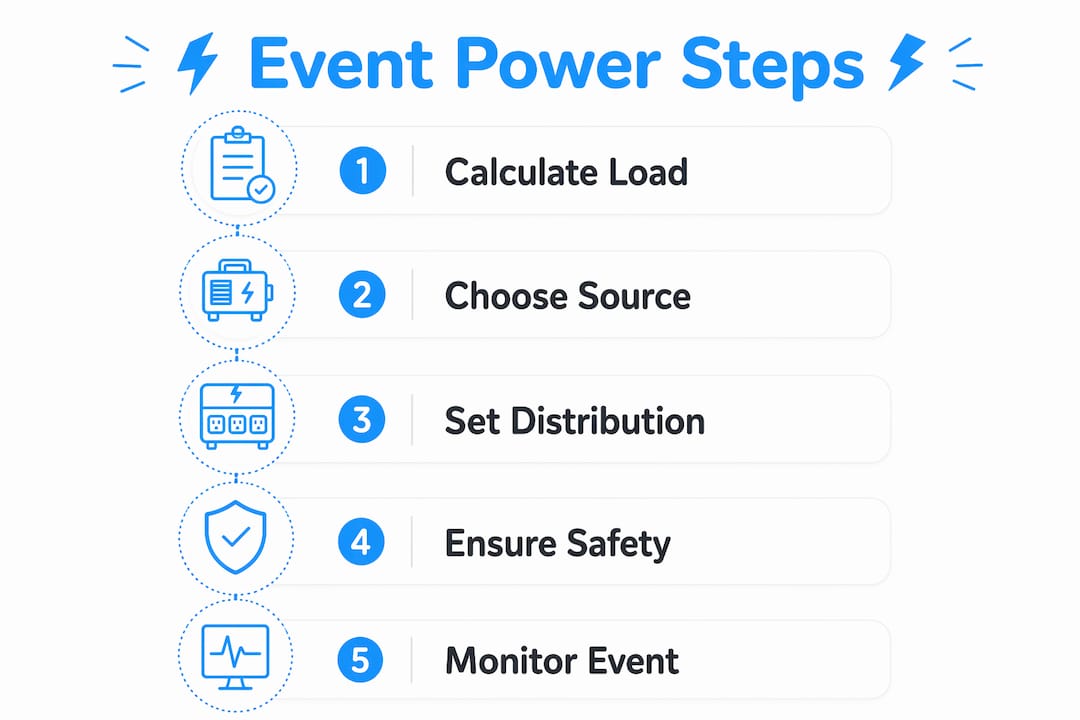
Pro Tip: Build a simple spreadsheet listing every item, its wattage, and the circuit it will connect to. This load list becomes your reference document for the entire event and helps any electrician or hire company give you an accurate quote.
Venue supply or generator: which power source is right for you?
The choice between using existing venue power and hiring a generator depends on three factors: what the venue can provide, the total load you have calculated, and the physical layout of your event.
Venue power is the preferred option when it is available and sufficient. It costs nothing extra, produces no noise or fumes, and eliminates fuel logistics. The key question is whether the venue’s supply can handle your calculated load without tripping the main fuse. Always speak to the venue owner or a qualified electrician before assuming the existing supply is adequate.
When venue power is insufficient or unavailable, a generator is the answer. Sizing a generator correctly is critical. Small domestic events typically require generators in the 15–20 kW range, covering a DJ setup and basic lighting. Mid-sized events with catering and more extensive lighting may need 30–45 kW. Choosing a unit that is too small risks overloads; choosing one that is far too large wastes fuel and money.
A key operational rule: generators should not run above 80% of their rated continuous output. Running at full capacity causes overheating and reduces the unit’s lifespan. A 20 kW generator, for example, should carry no more than 16 kW of actual load.
For events spread across a large garden or field, multiple smaller generators positioned near high-draw zones outperform a single large unit. Shorter cable runs mean less voltage drop and fewer trip hazards across the site.
Pro Tip: Factor in noise when positioning a generator. Diesel units can reach 70–75 decibels at one metre. Place the generator at least 10–15 metres from guest areas and use acoustic barriers or purpose-built generator covers where possible.
What equipment is needed for event power distribution?
Power distribution equipment is what sits between your source and your appliances. Getting this layer right determines whether your event runs without interruption.
The core components of a domestic event power distribution setup are:
- Portable distribution boards (distros): These split a large incoming feed into multiple circuits, each protected by its own breaker and RCD. A typical distro for a domestic event might accept a 63-amp input and provide eight or more 16-amp outputs.
- RCDs: RCD protection is the primary guard against electrocution in temporary setups. Every circuit serving an outdoor area must have RCD protection rated at 30 milliamps or less.
- Outdoor-rated cables: Standard domestic extension leads are not suitable for outdoor events. Use cables rated for outdoor use, with appropriate IP ratings for moisture resistance. Hiring event-grade cables from a specialist supplier removes the guesswork.
- Cable protection ramps: Anywhere a cable crosses a path or driveway, a rubber cable ramp prevents trip hazards and protects the cable from vehicle damage.
- Grounding and bonding: Temporary setups must follow UK electrical standards, including proper earthing of all metalwork connected to the supply. This is not optional and should be verified by a qualified electrician.
Pro Tip: Label every circuit on your distro board before the event starts. When a breaker trips mid-event, you need to identify the affected circuit in seconds, not minutes.
Best practices and safety for domestic event power setups
Safety in a domestic event power setup is not a single action. It is a series of decisions made throughout the planning and execution process.
Hire a qualified electrician or a specialist event power company to design and install the setup. This is the most effective single step you can take to prevent problems. Jakspartypower, for example, brings over 40 years of electrical contracting experience to every event, which means the setup is compliant, tested, and ready before guests arrive.
Key safety practices to follow include:
- Test every RCD before the event begins using the test button on the device. A faulty RCD offers no protection.
- Carry at least one spare RCD. Outdoor moisture causes nuisance tripping, and a spare device restores power in minutes rather than ending the event.
- Avoid running generators at very low loads for extended periods. Wet stacking occurs below 30% capacity, causing unburned fuel to accumulate in the engine and leading to poor performance or damage.
- Keep all cable joints and connectors off the ground using cable hangers or hooks where possible. Ground-level connections are vulnerable to moisture and foot traffic.
- Balance loads across circuits to avoid overloading any single breaker. Catering equipment in particular should have dedicated circuits.
Pro Tip: Assign one person on your team to monitor the generator and distribution boards throughout the event. Early signs of trouble, such as flickering lights or warm cables, are far easier to address before they become failures.
Common challenges in domestic event power and how to solve them
Breaker trips are the most frequent problem at domestic events. They usually result from overloaded circuits, faulty equipment, or moisture entering a connection. The solution is a clear load list and dedicated circuits for high-draw appliances, combined with spare breakers and RCDs on site.
Voltage drop is a less obvious but equally disruptive issue. It occurs when cables are too long or too thin for the current they carry, causing lights to dim and amplifiers to underperform. Zone-based power distribution, where a distro is placed close to each area of the event, keeps cable runs short and voltage stable.
Event layouts often change on the day. A marquee moves, a catering tent shifts, or a band arrives with more equipment than expected. Plan for flexibility by using distro boards with spare outputs and keeping a length of spare cable on site. Communicating your load list to all suppliers in advance reduces last-minute surprises significantly.
For a broader look at avoiding common pitfalls, the guide on event setup mistakes covers the errors that catch even experienced organisers off guard.
Pro Tip: Walk the full cable route at least twice during setup: once when laying cables and once just before guests arrive. This catches exposed connectors, unsecured ramps, and overloaded sockets before they become problems.
Key takeaways
A domestic event power setup requires accurate load calculation, correct source sizing, and properly specified distribution equipment to operate safely and without interruption.
| Point | Details |
|---|---|
| Calculate load accurately | List every appliance’s wattage and add a 20–25% safety margin for surges. |
| Size the generator correctly | Small events need 15–20 kW; mid-sized events need 30–45 kW; never exceed 80% of rated output. |
| Use proper distribution equipment | Portable distro boards with RCDs and outdoor-rated cables are non-negotiable for safe power delivery. |
| Test RCDs and carry spares | Outdoor moisture causes nuisance trips; a spare RCD prevents a minor fault from ending the event. |
| Engage a specialist early | A qualified electrician or specialist hire company removes compliance risk and reduces on-the-day problems. |
What I have learned from years of domestic event power planning
The mistake I see most often is treating power as an afterthought. Couples planning weddings spend months on flowers and menus, then call about power two weeks before the date. By that point, the best generators are already booked, and there is no time to do a proper site survey.
The second most common oversight is underestimating catering loads. A single commercial oven can draw more power than an entire DJ and lighting rig combined. When you add a second oven, a hot plate, and a refrigerated display, you are looking at a load that surprises most first-time event organisers.
My honest view is that the cost of getting this right is always lower than the cost of getting it wrong. A generator hire and a proper distro board for a garden wedding costs a fraction of what you spend on catering. Yet a power failure at the wrong moment affects every single guest and every supplier on site simultaneously.
The events that run without a single power issue are always the ones where the organiser engaged a specialist early, shared a detailed equipment list, and did a site walkthrough before the day. That combination removes almost every variable that causes problems. For private events specifically, the guide on hiring a generator is worth reading before you make any equipment decisions.
— Rob
Power your event with Jakspartypower
Planning the electrical side of a private event does not need to be complicated when you have the right support behind you.

Jakspartypower specialises in event power hire across Sussex, supplying generators, portable distribution boards, outdoor-rated cables, and full installation support for events of every size. With over 40 years of electrical contracting experience, the team handles load calculations, site surveys, and on-the-day standby cover so you can focus on the event itself. Every piece of equipment is tested before it leaves the depot. Browse the full range of event equipment hire or visit Jakspartypower to speak with the team about your specific requirements.
FAQ
What is a domestic event power setup?
A domestic event power setup is a temporary electrical system that supplies safe, reliable power to a private event such as a wedding or garden party. It typically includes a generator or venue supply, portable distribution boards, RCDs, and outdoor-rated cables.
How much power does a typical garden party need?
A small garden party with a DJ and basic lighting generally requires 15–20 kW of generation capacity. Add catering equipment and the requirement can rise to 30–45 kW or more.
Do I need a qualified electrician for a domestic event power setup?
A qualified electrician or specialist event power company should design and install any temporary power setup. This ensures the system meets UK electrical standards and that RCD protection is correctly specified and tested.
Why do RCDs trip at outdoor events?
RCDs trip outdoors primarily because moisture enters cable connections and connectors, triggering the device’s sensitivity to earth leakage current. Carrying spare RCDs and keeping connections off the ground reduces the frequency of nuisance trips.
Can I use my home’s existing electrical supply for an event?
You can use your home supply if it has sufficient capacity for your calculated load. Always have a qualified electrician verify the supply before the event, as overloading the main fuse can cut power to the entire property.