

Event power risk management is the systematic process of identifying, assessing, and controlling electrical hazards to deliver safe, compliant, and uninterrupted power at events. Every temporary electrical installation, from a village fête to a large outdoor festival, carries real risks: electric shock, fire, and total power failure. The industry frameworks that govern this are BS 7909:2011+A1:2020 and BS 7671:2018+A2:2022, enforced by the Health and Safety Executive (HSE) and local authorities. Getting this wrong is not just operationally damaging. Serious safety breaches can result in unlimited fines or up to two years’ imprisonment. Understanding what event power risk management requires is the first step to protecting your event, your audience, and your licence to operate.
What are the main electrical risks at events?
Temporary event power systems face hazards that permanent installations rarely encounter. Identifying them early is the foundation of any credible power supply risk assessment.
The most common electrical risks at events include:
- Electric shock from exposed conductors, damaged cables, or inadequate earthing
- Fire caused by overloaded circuits, coiled cable drums, or undersized cabling
- Circuit overload from underestimating total load across stages, catering, and lighting zones
- Cable damage from vehicle crossings, foot traffic, or wet ground conditions
- Environmental exposure including rain, mud, and condensation affecting outdoor distribution boards
Outdoor events face a compounded risk profile. Rain and mud degrade cable insulation and connector integrity far faster than indoor conditions allow. A cable rated for indoor use can become a shock hazard within hours of exposure to standing water.
UK health and safety law requires event organisers to carry out a “suitable and sufficient” risk assessment before any public gathering. That phrase has legal weight. A generic template does not satisfy it. The assessment must reflect the specific site, load, and environmental conditions of your event.
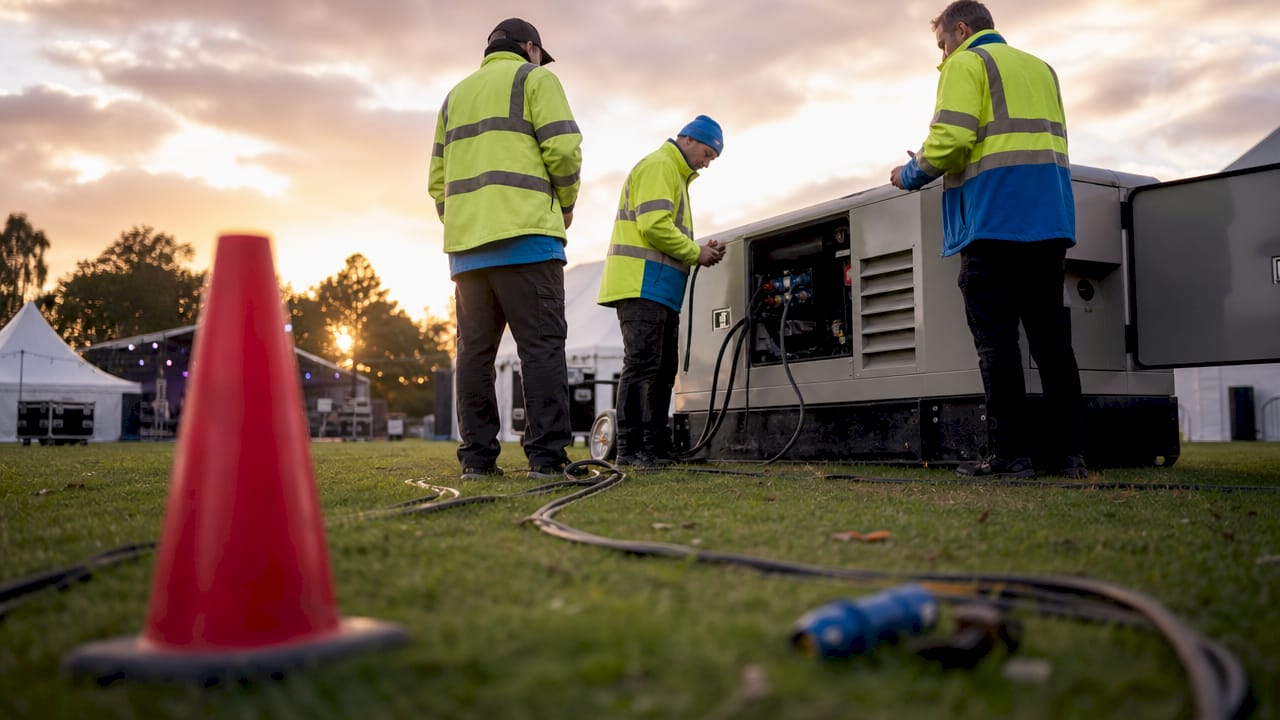
A competent person must lead the hazard identification process. In the context of temporary electrical systems, “competent” means someone with demonstrable training, experience, and knowledge of BS 7909 and BS 7671. This is not a role for a general site manager.
Pro Tip: Walk the full cable route before installation. Identify every point where cables cross pedestrian paths, vehicle access routes, or drainage channels. These are your highest-risk locations and they need armoured cable or proper cable ramps, not gaffer tape.
Which standards and regulations govern temporary event electrics?
Compliance with the correct frameworks is not optional. Temporary power installations face the same strict legal requirements as permanent ones, and environmental factors demand professional-grade equipment and rigorous inspection protocols.
The two primary standards are:
| Standard | Scope | Key Requirement |
|---|---|---|
| BS 7909:2011+A1:2020 | Temporary electrical systems for entertainment | Competent person design, installation, inspection, and TEIC certification |
| BS 7671:2018+A2:2022 | Wiring regulations including outdoor circuits | Minimum 30mA RCD protection; maximum 5% voltage drop |
| Health and Safety at Work etc. Act 1974 | All workplaces including event sites | Duty of care to employees and public; HSE enforcement powers |
BS 7909 is the cornerstone standard for event professionals. Under BS 7909:2011, a competent person must certify all temporary electrical systems before the event opens to the public via a Temporary Electrical Installation Certificate (TEIC). Without a TEIC, your event has no documented proof of electrical safety.
BS 7671 adds specific technical requirements for outdoor circuits. All temporary outdoor circuits must have at least 30mA Residual Current Device (RCD) protection, and voltage drop must not exceed 5% of the nominal supply, which equates to 11.5V on a standard 230V supply. Exceeding that threshold causes equipment malfunction and increases fire risk.
The financial stakes extend beyond fines. Insurance providers may invalidate claims if the electrical setup does not comply with BS 7909, making certification a financial necessity, not just a regulatory formality.
Pro Tip: Request the TEIC from your electrical contractor before the event opens, not after. If they cannot produce it, the installation has not been properly certified and you carry the liability.
How do you design effective event power management strategies?
Good power risk management for corporate events and large public gatherings starts at the design stage, not on the day. The following steps form a practical framework for event professionals.
-
Appoint a competent person early. Your electrical designer must be involved before the site plan is finalised. Power routes, generator placement, and distribution board locations all affect safety and compliance. Retrofitting these decisions costs time and money.
-
Calculate total load by zone. Divide the site into power zones: stage, catering, lighting, production, and public areas. Calculate the maximum simultaneous load for each zone. Add a minimum 20% headroom to account for inrush currents from motors and amplifiers.
-
Select generators with appropriate IP ratings. Outdoor generators must carry an IP rating suitable for the environmental conditions. An IP23-rated generator is the minimum for outdoor use; IP44 or above is preferable for exposed sites in the UK’s unpredictable weather.
-
Specify RCD protection at every distribution point. Every distribution board must include 30mA RCD protection as required by BS 7671. Do not rely on a single RCD at the generator output to protect the entire system.
-
Plan for power failure by zone. Identify which zones are safety-critical: emergency lighting, PA systems for evacuation announcements, and first aid areas. These must have priority supply or independent backup.
-
Write vendor contracts that specify response times. Contract clauses should define power failure response times, coverage scope, and escalation procedures. A contract that simply says “generator hire” without specifying fault response windows leaves you exposed.
-
Test communication systems under realistic load. Real-world communication testing using actual devices and real audience conditions is the only way to expose technical dead zones before the public arrives. A radio that works in an empty field may fail completely when surrounded by metal structures and crowd noise.
Pro Tip: Never daisy-chain domestic extension leads. Fully unwind cable drums before use. A coiled 50-metre drum carrying full load generates enough heat to melt insulation and start a fire, even on a short run.
What are best practices for monitoring and inspection during events?
Designing a safe system is necessary but not sufficient. Power risk management in events requires active monitoring throughout the event duration.
Effective on-site controls include:
- Routine visual inspections every two to four hours, checking for cable damage, connector degradation, water ingress into distribution boards, and signs of overheating
- RCD testing at the start of each event day using the test button on each device, confirming the circuit trips and resets correctly
- Earth electrode resistance testing before the event opens, using a dedicated earth resistance tester to confirm the earthing system is within acceptable limits
- Load monitoring at each distribution board, using clamp meters to verify that no circuit exceeds its rated capacity during peak demand periods such as stage performances
- Documentation of every inspection, test result, and fault found, with the inspector’s name, time, and corrective action recorded
Escalation procedures matter as much as the inspections themselves. Every member of the electrical team must know who to contact, in what order, and what authority they have to isolate a circuit or shut down a zone. A fault found at 10PM during a headline act requires a decision in seconds, not minutes.
Leading event operators treat power, communication, and safety as an integrated system, prioritising resilience and flexibility before faults occur. That means your electrical team and your event operations team share the same incident escalation chart.
Avoid the most common pitfall: running cables under stage matting or carpet without protection. Foot traffic compresses insulation and causes internal conductor damage that is invisible until the cable fails under load.
Key takeaways
Effective event power risk management combines legal compliance, competent design, and active on-site monitoring to prevent electrical failures and protect people.
| Point | Details |
|---|---|
| Compliance is mandatory | BS 7909 and BS 7671 apply to all temporary event electrical systems, with no exemptions for short-duration events. |
| TEIC certification is non-negotiable | A Temporary Electrical Installation Certificate must be issued by a competent person before public access begins. |
| RCD protection at every point | All outdoor circuits require minimum 30mA RCD protection; a single upstream RCD does not satisfy BS 7671. |
| Contracts must specify response times | Vendor agreements should define fault response windows, escalation contacts, and substitution rights. |
| Active monitoring prevents failures | Routine inspections, load checks, and documented escalation procedures are required throughout the event, not just at setup. |
Why power risk management is the part most event plans get wrong
Rob here. After working on events across Sussex for over 40 years, the pattern I see most often is this: event organisers spend months on the programme, the catering, and the ticketing, and then treat the electrical setup as a logistics detail to sort out the week before.
That is the wrong order. Power is the backbone of every other system on site. When it fails, the PA goes down, the lighting goes out, the catering equipment stops, and your evacuation communications may fail at the exact moment you need them most. I have seen events shut down mid-performance because a single overloaded circuit tripped a shared RCD, taking out three zones simultaneously. That outcome was entirely predictable and entirely preventable with proper zone design.
The other mistake I see regularly is treating temporary power as somehow less serious than permanent installation. Temporary event electrics demand professional-level installation and rigorous inspection, identical in standard to a permanent system. The fact that the cables come down on Sunday does not reduce the risk they carry on Saturday night.
My honest advice: appoint your electrical contractor at the same time you book your venue. Get them involved in the site plan. Make sure your vendor checklist includes specific electrical compliance requirements, not just a line that says “power sorted.” And always ask for the TEIC before you open the gates.
— Rob
Jakspartypower: compliant event power, ready when you need it
Event power risk management requires certified equipment, qualified professionals, and a supplier who understands the legal framework as well as the operational reality.

Jakspartypower has over 40 years of electrical contracting experience behind every hire. The team supplies generators, distribution boards, cabling, and lighting systems that meet BS 7909 and BS 7671 requirements, and provides competent professionals for design, installation, and inspection. Whether you need a generator for a private event or a fully managed power solution for a large outdoor show, Jakspartypower covers the full scope. The hire service includes standby support throughout your event, so you have qualified engineers on site when it matters most. Get in touch to discuss your event’s power requirements before your site plan is finalised.
FAQ
What is event power risk management?
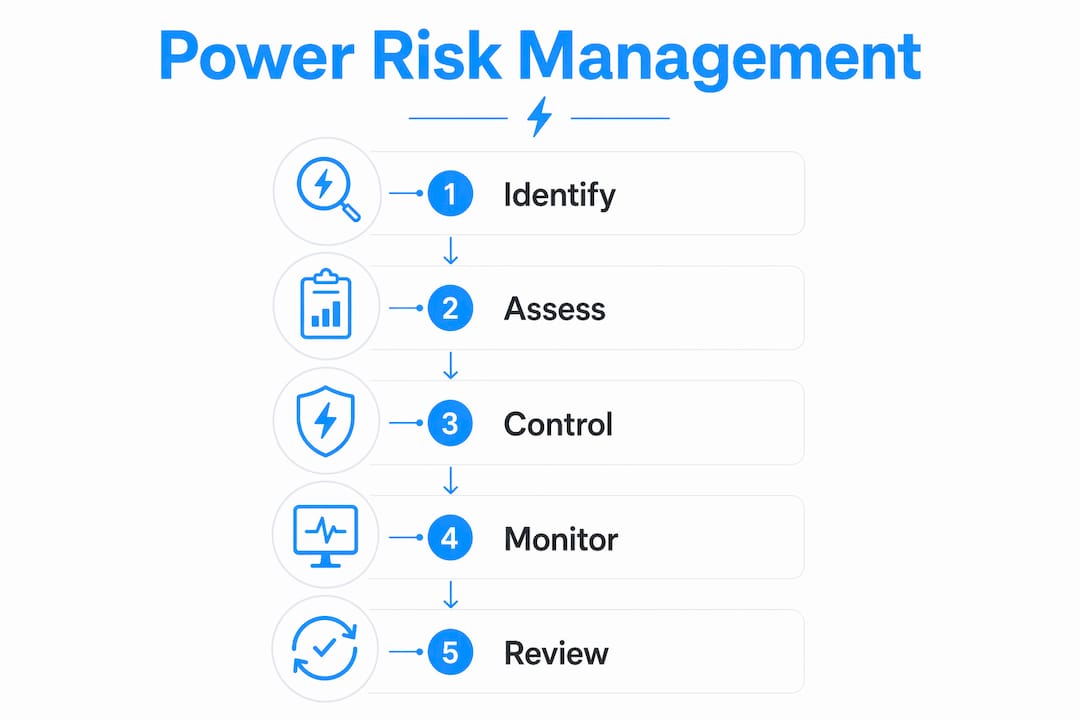
Event power risk management is the process of identifying electrical hazards, assessing their likelihood and impact, and applying controls to deliver safe, compliant, and uninterrupted power at events. It covers design, installation, inspection, and contingency planning for temporary electrical systems.
Is BS 7909 a legal requirement for events?
BS 7909 is the recognised industry standard for temporary electrical systems at entertainment events in the UK. While it is a code of practice rather than statute, compliance is effectively mandatory because HSE enforcement, insurance validity, and licensing decisions all reference it.
What is a Temporary Electrical Installation Certificate?
A Temporary Electrical Installation Certificate (TEIC) is the document issued by a competent person confirming that a temporary electrical system has been designed, installed, and inspected to BS 7909 standards. It must be issued before the event opens to the public.
What RCD protection is required for outdoor event circuits?
All temporary outdoor electrical circuits in the UK require at least 30mA RCD protection at each distribution point, as specified by BS 7671:2018+A2:2022. A single RCD at the generator output does not satisfy this requirement.
Can I use domestic extension leads at an event?
Domestic extension leads are not suitable for event use. Daisy-chaining them risks circuit overload and insulation failure. Professional-grade, IP-rated cables and connectors rated for the expected load are required for any compliant temporary event installation.