
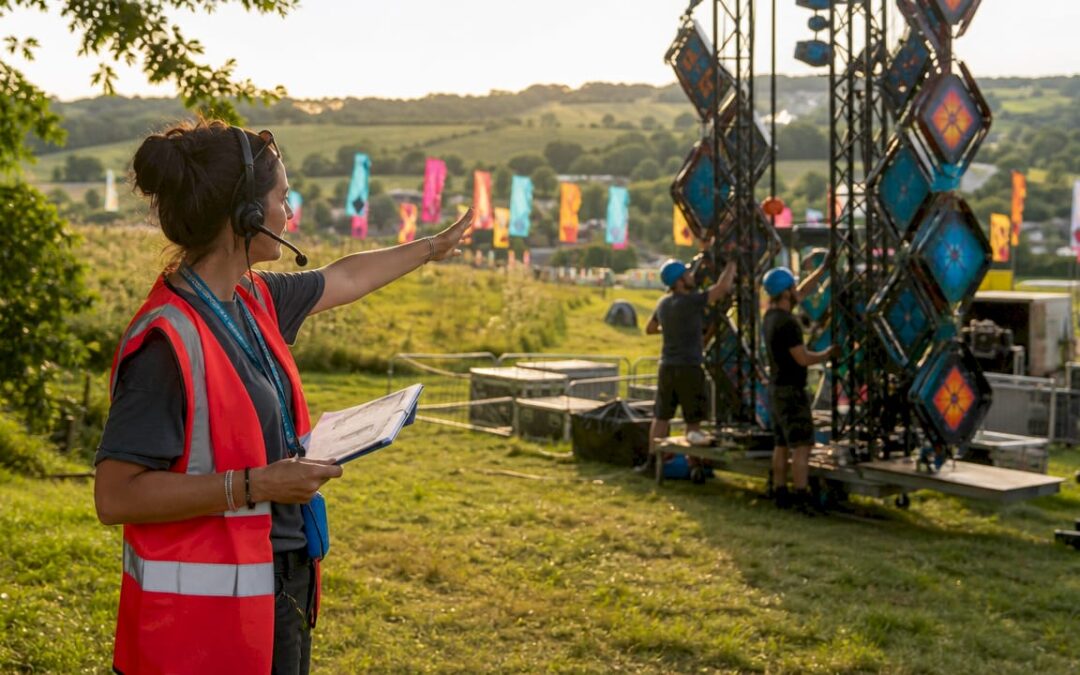
A professional event setup is defined as the planned, compliant installation and management of all physical elements at an event, from power distribution to temporary structures, by competent persons. This is the single most effective way to prevent harm at any gathering, large or small. Under the Health and Safety at Work Act 1974, event organisers carry a direct legal duty to protect both staff and the public. Civil claims from safety failings have exceeded £4.8 million in documented cases. Understanding why professional setup ensures party safety is not just about compliance. It is about protecting your guests, your reputation, and your finances from the moment planning begins.
What are the main risks professional setups prevent at parties?
Professional event planning eliminates hazards that most hosts do not see until something goes wrong. The risks fall into four clear categories, and each one demands a specific technical response.
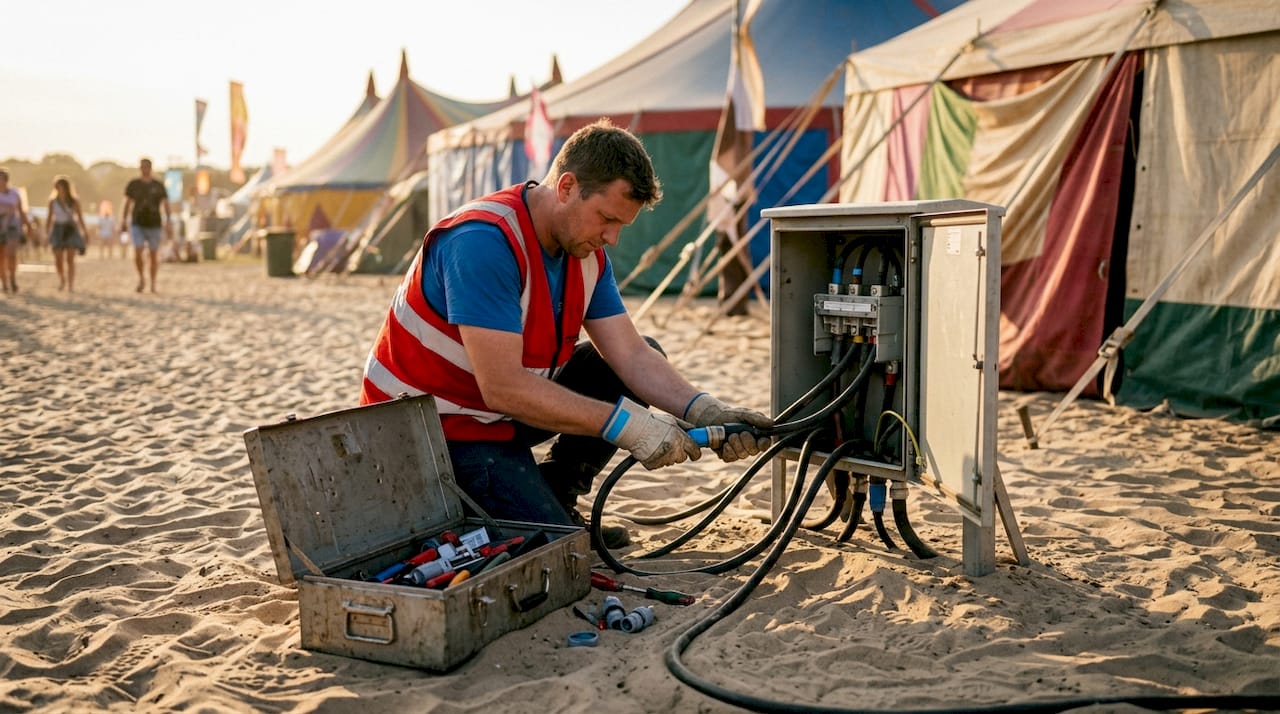
Electrical hazards are the most common cause of serious incidents at events. Temporary electrical systems must comply with BS 7909:2011+A1:2020, the British Standard governing all temporary electrical installations at events. A competent electrician designs, installs, inspects, and tests every circuit. Without that process, you are relying on equipment that may overheat, arc, or fail under load.
Structural failures in marquees, staging, and temporary demountable structures cause injuries that are entirely preventable. Professional suppliers carry out engineering assessments that account for vertical loads, uplift forces, and lateral slide resistance, all calculated to BS EN 13782. Anchoring is verified on site, not estimated.
Environmental and weather risks are underestimated at outdoor events. Marquees must be dismantled or closed when wind speeds reach 35–40 mph, and inflatables at 24 mph. Professional suppliers provide site-specific Wind Management Plans that define monitoring responsibilities and trigger points for closure. Without a plan, the decision falls to whoever happens to be on site.
Crowd safety and access control require deliberate design. Clear egress routes, accessible emergency exits, and controlled crowd flow are not afterthoughts. They are built into the site layout from the first planning meeting.
One risk that most hosts overlook entirely is the setup and breakdown phase. Setup and teardown carry the highest risk of any event delivery. A generic risk assessment that covers only the event day leaves a critical gap. Professional organisers include both phases explicitly in their safety management documentation.
Pro Tip: Ask any supplier whether their risk assessment covers the build and breakdown phases separately. If it does not, that is a warning sign worth taking seriously.
How do legal and industry standards shape safe event setups?
The regulatory framework for events in the UK is specific, and the consequences of misreading it are severe. Three pieces of legislation govern the majority of event setups.
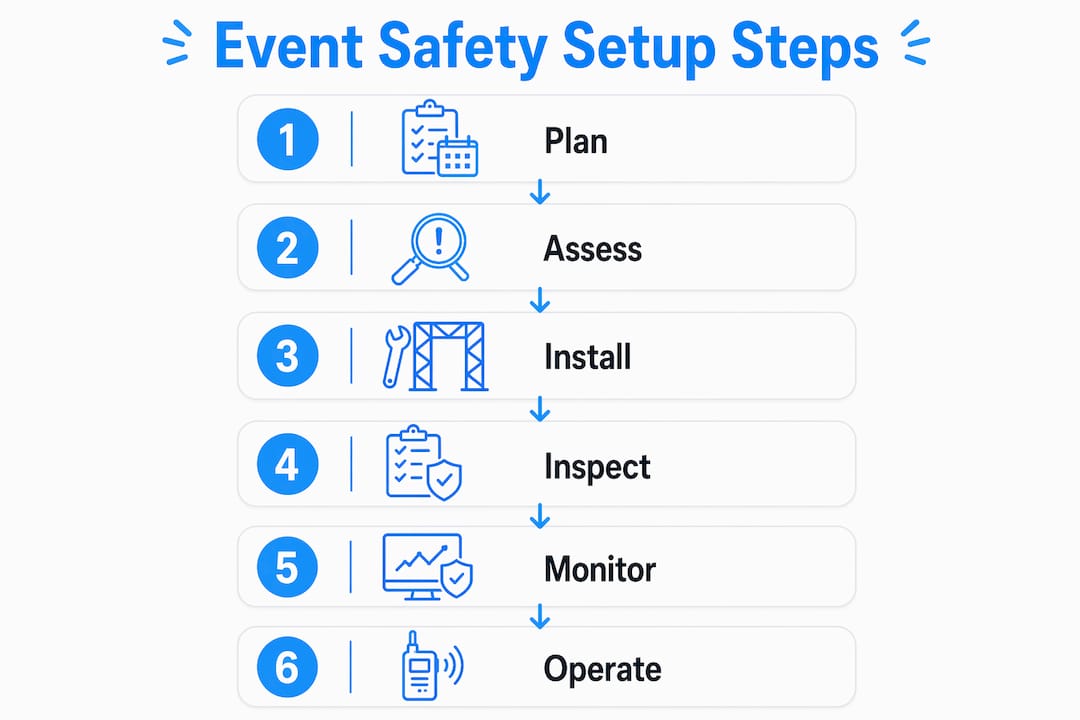
The Health and Safety at Work etc. Act 1974 places the primary duty of care on the organiser. The Construction (Design and Management) Regulations 2015 (CDM 2015) apply to temporary structures regardless of how long the event runs. Over 60% of event organisers mistakenly believe that events lasting fewer than 30 days require less rigorous inspection. That belief is legally incorrect and has led to prosecutions. The Regulatory Reform (Fire Safety) Order 2005 adds a further layer, requiring a fire risk assessment for any venue where the public gathers.
Beyond legislation, documented Event Management Plans (EMPs) connect all delivery partners and signal professionalism to licensing authorities. EMPs are industry best practice even when not legally mandated. They cover emergency procedures, communication chains, and site-specific risk assessments for every contractor on site.
Licensing timelines matter too. Temporary Event Notices (TENs) require at least 10 working days’ notice, and premises licences typically take 8–12 weeks to process. Missing those windows does not just create a legal problem. It forces last-minute decisions that compromise safety.
| Regulation | Applies to | Key requirement |
|---|---|---|
| Health and Safety at Work Act 1974 | All events | Duty of care to employees and public |
| CDM Regulations 2015 | Temporary structures | Full compliance regardless of event duration |
| Fire Safety Order 2005 | Public gatherings | Documented fire risk assessment |
| BS 7909:2011+A1:2020 | Electrical installations | Design and verification by competent persons |
| BS EN 13782 | Temporary demountable structures | Engineering calculations and verified anchoring |
Pro Tip: Build your licensing timeline backwards from the event date. If you need a premises licence, start the application at least 12 weeks out. TENs need 10 working days minimum, and that clock does not include weekends.
For a detailed breakdown of what to check before signing any supplier contract, the vendor checklist for corporate events covers legal obligations and safety standards in practical terms.
Why is specialised expertise critical in temporary electrical setups?
Temporary electrical systems at events are not domestic installations scaled up. They operate in outdoor or semi-outdoor environments, under variable load, with multiple users connecting equipment simultaneously. The gap between a competent installation and an improvised one is the gap between a safe event and a fire.
The most common errors in amateur setups include:
- Daisy-chaining domestic extension leads, which overheats cables and bypasses the protection built into a properly rated distribution system
- Failing to provide RCD (Residual Current Device) protection on every circuit, leaving guests and crew exposed to electrocution risk
- Using equipment without the correct IP rating for outdoor use, where moisture ingress causes faults
- Connecting loads that exceed the rated capacity of the supply, which trips circuits at the worst possible moment
BS 7909 mandates that every temporary electrical system is designed, installed, inspected, and tested by a competent person. That is not a recommendation. It is the standard against which any incident will be judged. Dry hire of electrical equipment without a qualified electrician on site transfers the risk entirely to the organiser, with no professional backstop if something fails.
Structural expertise follows the same logic. Professional suppliers provide documented load calculations, verified anchoring methods, and Wind Management Plans that define who monitors conditions and what action to take at each wind speed threshold. Once a structure is in use, responsibility for monitoring shifts from the supplier to the organiser. That makes the handover briefing one of the most important moments in any event delivery.
The role of electrical contractors at events goes well beyond plugging in cables. They assess the site, calculate demand, specify the correct generator and distribution equipment, and verify the installation before a single guest arrives.
For outdoor events specifically, understanding outdoor festival power setup requirements helps planners ask the right questions and avoid the most costly mistakes.
How does professional setup enhance the guest experience?
Safe party organisation and guest enjoyment are not competing priorities. They reinforce each other. When the physical environment is set up correctly, guests relax. When it is not, they sense it, even if they cannot name the specific hazard.
- Clear signage and accessible exits remove anxiety from the guest experience. People do not consciously notice good wayfinding. They notice its absence when they need it.
- Effective staff briefings mean that every team member knows the emergency procedure, the assembly point, and who holds the communication lead. Documented EMPs make those briefings consistent and auditable.
- Weather contingency plans protect the programme without disrupting the atmosphere. A professional supplier who has already defined the wind threshold for your marquee can act quickly and calmly when conditions change.
- Reliable power and lighting remove the disruptions that derail events. A generator that trips mid-reception or lighting that fails during a first dance does not just inconvenience guests. It damages the organiser’s reputation.
- Reduced insurance risk follows from documented compliance. Insurers assess risk based on the quality of planning. Events with verified risk assessments, competent contractors, and documented EMPs attract better terms.
Reliable, professional setups are valued for predictable schedules and adaptability, not just equipment lists. The best suppliers bring a site-specific approach that accounts for ground conditions, access constraints, and load requirements before the first vehicle arrives.
Pro Tip: Brief your guests on the emergency assembly point at the start of any large outdoor event. It takes 30 seconds and removes the single biggest source of confusion if something does go wrong.
Key takeaways
Professional setup ensures party safety by combining legal compliance, competent technical installation, and documented risk management across every phase of event delivery.
| Point | Details |
|---|---|
| Legal duty is non-negotiable | The Health and Safety at Work Act 1974 places direct liability on the organiser, with civil claims exceeding £4.8 million. |
| Electrical compliance is mandatory | BS 7909 requires all temporary electrical systems to be designed and verified by a competent person, not improvised on site. |
| Setup and breakdown carry the highest risk | Safety plans must cover build and teardown phases explicitly, not just the event day itself. |
| Wind thresholds must be engineered | Marquees require closure above 35–40 mph; inflatables above 24 mph. A Wind Management Plan defines who acts and when. |
| Professional suppliers add measurable value | Documented EMPs, verified anchoring, and reliable schedules reduce insurance risk and protect event reputation. |
What I have learned from watching setups go wrong
The events where things go wrong almost always share one characteristic: the organiser treated safety as a checklist to complete rather than a process to manage. I have seen marquees erected without a single anchor point verified by a structural engineer. I have seen distribution boards fed by domestic extension leads because the hire company dropped off equipment and left. In both cases, the organiser believed the supplier had covered it. The supplier believed the organiser had.
That gap is where incidents happen. The most effective thing a planner can do is appoint one person, with authority, to own the safety documentation from the first site visit to the final breakdown. Not a committee. One person who has read the risk assessment, spoken to every contractor, and knows the emergency procedure.
The cost argument for professional setup is straightforward. The upfront cost of a competent electrician, a verified structural assessment, and a documented EMP is a fraction of the legal and reputational cost of a single serious incident. The £4.8 million figure in civil claims is not a worst-case scenario. It is a documented outcome from events where those costs were avoided.
Selecting contractors based on price alone is the most common mistake I see among first-time organisers. The right question is not “What does it cost?” The right question is “Can you show me your risk assessment, your method statement, and your BS 7909 compliance documentation?” Any professional supplier answers that question without hesitation.
— Rob
How Jakspartypower supports safe event power in Sussex
Jakspartypower brings over 40 years of electrical contracting experience to every event it supports in Sussex. The team supplies compliant generator hire, distribution boards, lighting, and cabling, all installed and verified by competent persons in line with BS 7909 standards. Every setup includes a standby service, so if something changes on the day, there is a qualified team on hand to respond.
For event hosts and planners who want a single, accountable supplier for power and lighting, Jakspartypower provides the documentation, the expertise, and the equipment to meet your legal obligations and deliver a safe, reliable event. Visit jakspartypower.com to discuss your event requirements and get a quote tailored to your site.
FAQ
What does professional event setup mean in practice?
Professional event setup means that all physical installations, including electrical systems, temporary structures, and lighting, are designed, installed, and verified by competent persons who carry documented risk assessments and comply with relevant UK standards such as BS 7909 and BS EN 13782.
Is a risk assessment legally required for a private party?
Under the Health and Safety at Work etc. Act 1974 and CDM Regulations 2015, any event where the public or employees are present requires a risk assessment. This applies to private parties with hired staff or public access, not just commercial events.
What wind speed should close a marquee?
Marquees should be closed or dismantled when wind speeds reach 35–40 mph. Inflatables must come down above 24 mph. A site-specific Wind Management Plan defines who monitors conditions and who makes the call to act.
Why is dry hire of electrical equipment risky?
Dry hire provides equipment without a competent electrician to install and verify it. BS 7909 requires design, installation, inspection, and testing by a qualified person. Without that, the organiser carries full liability for any electrical fault or fire.
How far in advance should event safety planning begin?
Premises licences take 8–12 weeks to process, and Temporary Event Notices require at least 10 working days’ notice. Safety planning, including contractor appointments and risk assessments, should begin at the same time as licensing applications to avoid last-minute compromises.