
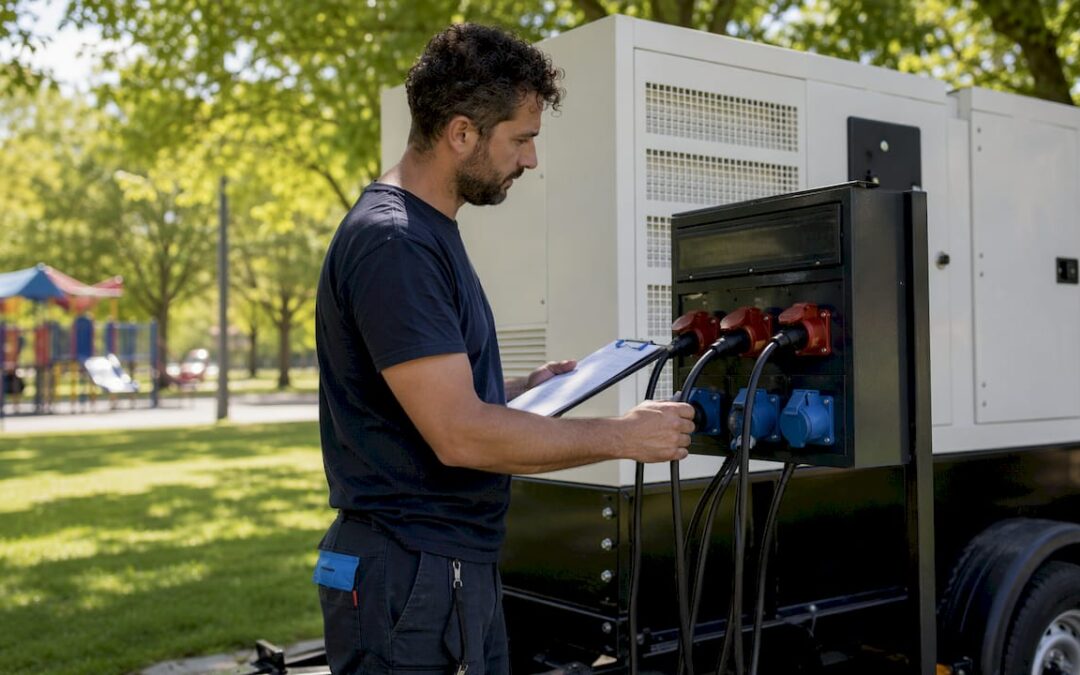
A solid event equipment hire checklist covers six core areas: power supply, audio-visual gear, furniture and staging, catering setup, signage, and safety compliance. Get those right and the rest falls into place. Miss one and you are solving problems in front of guests.
Here is what a complete checklist looks like in practice:
- Power supply: generators, distribution boards, cabling, extension leads, fuel plans
- Audio-visual: sound systems, microphones, projectors, screens, mixing desks
- Furniture and staging: seating, tables, staging platforms, lecterns, backdrops
- Catering setup: serving tables, chafing dishes, tableware, bar equipment
- Lighting: uplighters, festoon lighting, floodlights, stage lighting rigs
- Signage: directional signs, safety signs, branded displays, digital boards
- Safety and compliance: risk assessments, PAT certificates, contractor coordination, insurance
Jakspartypower brings over 40 years of electrical contracting experience to every hire, which means the power side of this checklist, often the most technically demanding part, is handled by people who have done it at scale.
Table of Contents
- What does your event equipment setup actually need to include?
- What are your health and safety responsibilities as an event organiser?
- How do you match hired equipment to your venue’s technical requirements?
- Why Jakspartypower is trusted for event equipment hire in Sussex
- Equipment inspection and testing: what to check before the event
- How to plan your equipment hire budget accurately
- How to choose a reliable equipment hire supplier
- Getting your delivery and setup timeline right
- What to check in your equipment hire contracts
- Jakspartypower: event power hire built on 40 years of expertise
- Key takeaways
- FAQ
What does your event equipment setup actually need to include?
The categories above are the skeleton. The detail is what separates a smooth event from a stressful one.
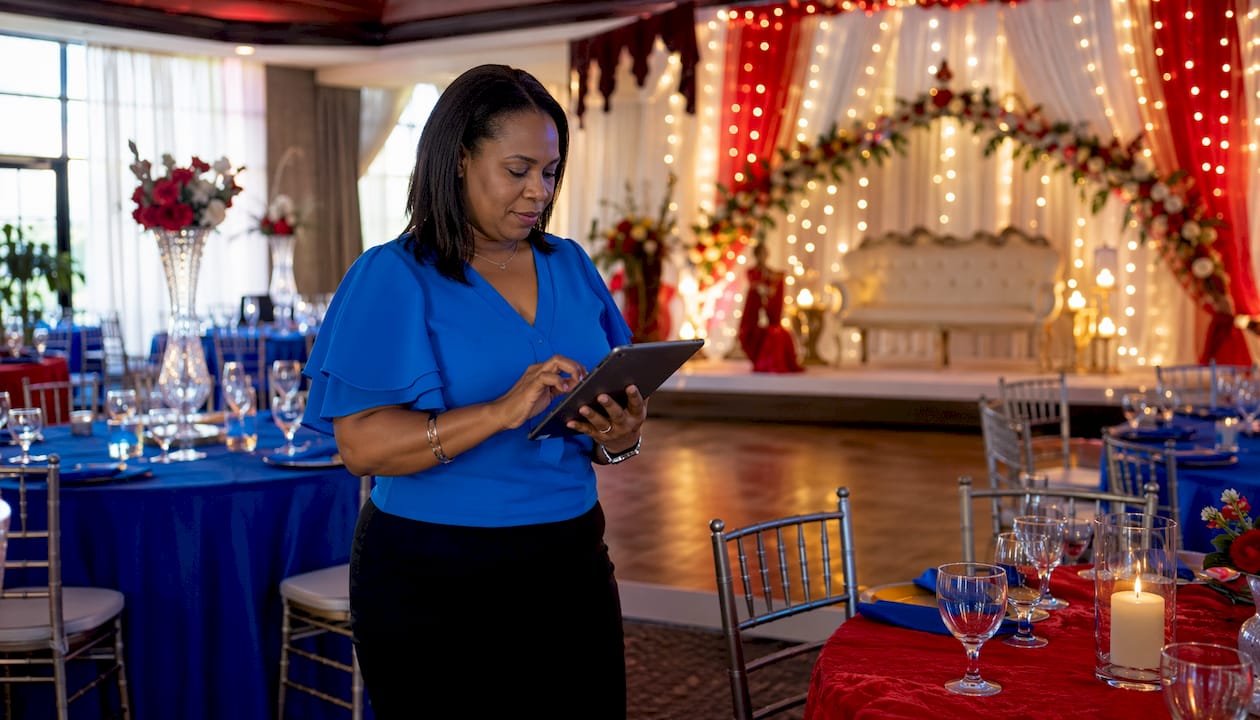
Audio-visual gear is where most planners underestimate complexity. A 5,000-lumen projector suits a moderately lit room; go brighter for daylight-flooded spaces. Sound systems for small to medium audiences typically need active speakers and a mixing desk sized appropriately to the venue. Microphones, confidence monitors, and a backup cable run are not optional extras.
Furniture shapes how guests experience the space. Poseur tables with stools encourage networking; Chiavari chairs signal formality. Outdoor events need weatherproof rattan or equivalent, not the indoor stock dragged outside. Leave adequate circulation space in high-traffic zones to ensure guest comfort and safety.
Power equipment is the category most likely to cause day-of failures. Distribution boards, cabling, and generators need to be sized against your full equipment list, not estimated. Catering trailers alone often need a 16A or 32A supply.
Signage is frequently the last thing booked and the first thing guests notice. Directional signs, safety signs, and branded displays all need consistent placement. Larger events benefit from digital signage for live updates.
What are your health and safety responsibilities as an event organiser?
UK event organisers carry legal responsibility for coordinating safety across every supplier on site. The Health and Safety Executive is clear: you must collect risk assessments from all contractors, communicate site-specific hazards to everyone working on site, and have management systems in place for every phase of the event.
That last point catches planners out. Build-up and load-out phases carry the highest accident risk, not the public-facing show. Fewer people, heavier equipment, more moving parts. The HSE treats these phases as equivalent to a construction site, and your safety protocols should reflect that.
Key insight from the HSE Event Safety Guide: “The need for safety management during build up, load-in, breakdown and load-out is just as important [as during the public period]. There may be fewer people, but this is likely to be when the highest-risk work activities are carried out.”
Practically, this means:
- Obtain health and safety policies and risk assessments from every contractor before build-up begins
- Brief all site workers on hazards including buried services, speed limits, and emergency arrangements
- Control access during load-in and load-out, keeping non-essential personnel clear
- Confirm insurance coverage for equipment hire, public liability, and employer liability
- Review contractual terms with each supplier for damage liability and cancellation conditions
How do you match hired equipment to your venue’s technical requirements?
Technical integration is where most equipment hire decisions go wrong. Booking a sound system or generator without checking venue specifics is how you end up with a power failure at 8PM or a projector nobody can see.
Start with a master site plan that cross-references your supplier technical riders and any underground service maps. Staking a marquee into a hidden cable is a real and avoidable accident. Planners who skip this step create problems that no amount of on-the-day improvisation can fix.
For power, calculate total load across every supplier, then size your generator with headroom. Multi-day events need an agreed refuelling schedule written into the hire contract. Fuel depletion mid-event is entirely preventable and entirely common. Generators should be positioned away from dining and performance areas due to noise.
For AV, match projector lumens to ambient light, speaker wattage to room size, and confirm whether the venue’s Wi-Fi can handle your attendee count. An event with 200 guests and multiple devices each may need a dedicated high-capacity network rather than the venue’s standard provision.
Pro Tip: Cross-reference your master site plan with every supplier’s technical rider at least two weeks before the event. Discrepancies found then cost a phone call. Discrepancies found on build-up day cost far more.
Arrange on-site technical support throughout the event for AV and power. Minor connectivity issues and small power interruptions are fixable in seconds with the right person present, and catastrophic without one.
Why Jakspartypower is trusted for event equipment hire in Sussex
Jakspartypower’s reputation rests on something specific: over 40 years of electrical contracting expertise applied directly to event power. That is not a marketing claim. It means the team understands load calculations, distribution board installation, and generator sizing at a level most hire companies do not.
Their hire range covers generators, lighting products, distribution boards, cabling, and accessories, with solutions tailored to events from private weddings to large outdoor shows. The standby service is particularly valued by organisers running high-stakes events where a power interruption is not an option.
Safety compliance is built into every hire. Equipment meets current electrical safety standards, and the team coordinates with organisers on site-specific requirements rather than simply dropping kit and leaving.
Equipment inspection and testing: what to check before the event
Every piece of hired electrical equipment should carry current PAT certification before it arrives on site. Portable Appliance Testing confirms that leads, connectors, and equipment are safe to use. Ask suppliers for certificates and check they are in date.
Beyond PAT, inspect physical condition on delivery: check cables for damage, connectors for corrosion, and structural equipment for cracks or missing fixings. Temporary structures such as staging and marquees need a pre-use checklist covering anchorages, bracing wires, emergency exits, and flooring for trip hazards. The MUTA Best Practice Guide sets out a minimum assembled-structure checklist that covers all of these points.
Test all AV and power equipment before guests arrive. A full technical run-through, not just a quick power-on, catches problems while there is still time to fix them.
How to plan your equipment hire budget accurately
Budget planning for equipment hire works best when you build from the equipment list outward, not from a round number downward. Price each category separately: power, AV, furniture, lighting, catering equipment, and signage. Then add delivery, collection, and any installation fees, which are often quoted separately.
Get at least two quotes per category. Good suppliers are in demand, particularly for summer weekends, so book early and confirm costs in writing. Factor in contingency for last-minute additions, because there are always last-minute additions.
Generator hire for private events is a good example of where costs vary widely based on size and duration. A small trolley generator for a garden party sits at a very different price point from a road-tow genset for a multi-day festival. Knowing your power requirements precisely before requesting quotes saves time and avoids being oversold capacity you do not need.
How to choose a reliable equipment hire supplier
The clearest indicator of a reliable supplier is transparency before you book. They should provide itemised quotes, confirm availability in writing, and supply safety documentation without being asked.
Red flags to watch for:
- No PAT certificates or risk assessments available
- Vague delivery windows with no tracking or ETA confirmation
- Contracts that place all damage liability on the hirer regardless of pre-existing condition
- No named contact for day-of technical issues
For electrical equipment specifically, check that the supplier’s installation team holds relevant competence certification, such as NICEIC or ECA registration. For corporate event generator hire, confirm the hire process includes a site assessment, not just an online booking.
Check the wedding venue amenities list requirements for your venue before finalising supplier choices, as some venues specify approved contractors or restrict generator placement.
Getting your delivery and setup timeline right
Work backwards from your event start time. Most equipment needs to be in place and tested before guests arrive, which means build-up often starts the day before. Marquees typically go up at least 24 hours ahead. Staging and AV follow once the structure is secure.
Confirm delivery windows with every supplier in writing and share a site plan showing each supplier’s designated setup location and access route. Overlapping deliveries in a confined site cause delays and safety risks. Stagger arrival times where possible.
For outdoor festival setups, clear vegetation from generator areas before equipment arrives. This reduces fire risk and is a condition some suppliers include in their hire terms.
What to check in your equipment hire contracts
Read the contract before signing, not after a problem occurs. Key clauses to review:
- Damage liability: who is responsible for pre-existing damage versus damage during hire
- Cancellation terms: notice periods and refund conditions
- Delivery and collection: confirmed times, not estimated windows
- Fuel and consumables: who supplies and who pays for refuelling
- Insurance requirements: what coverage the hirer must hold
- Force majeure: what happens if weather or access prevents delivery
Contracts that are vague on damage liability or cancellation are a warning sign. A reputable supplier will have clear, fair terms and will explain them if asked.
Jakspartypower: event power hire built on 40 years of expertise
When the power side of your event needs to be right first time, Jakspartypower is the specialist hire partner built for that job. With over four decades of electrical contracting experience behind every hire, they cover generators, distribution boards, lighting, and cabling for events across Sussex, from private parties to large outdoor shows.
Their standby service means a qualified engineer is available throughout your event, not just for delivery and collection. For organisers who have worked through this checklist and know exactly what their power setup requires, Jakspartypower makes the next step straightforward. Browse their generator hire options or visit Jakspartypower to discuss your event requirements directly.
Key takeaways
A complete event equipment hire checklist combines the right kit, verified safety compliance, and a supplier who understands the technical demands of your specific event.
| Point | Details |
|---|---|
| Cover all six equipment categories | Power, AV, furniture, staging, catering, and signage all need to be on your hire list. |
| Treat build-up as a construction site | HSE guidance requires the same safety management during load-in and load-out as during the public event. |
| Size power from your full equipment list | Calculate total load across every supplier before choosing a generator; add headroom for safety. |
| Inspect and test before guests arrive | Confirm PAT certification, check physical condition on delivery, and run a full technical test before doors open. |
| Jakspartypower for event power hire | Over 40 years of electrical contracting expertise, with generators, distribution boards, and a standby service for events in Sussex. |
FAQ
What should an event equipment hire checklist include?
A complete checklist covers power supply (generators, distribution boards, cabling), audio-visual equipment, furniture, staging, catering setup, lighting, and signage, alongside safety documentation such as PAT certificates and contractor risk assessments.
How far in advance should I book event equipment hire?
Book as early as possible, particularly for summer weekends when good suppliers fill quickly. Confirm all bookings in writing and share your site plan with each supplier at least two weeks before the event.
Who is responsible for health and safety when hiring event equipment?
The event organiser holds overall responsibility for coordinating safety on site, including collecting risk assessments from all equipment suppliers and communicating site hazards to everyone working there, as set out by the Health and Safety Executive.
Do I need a generator if the venue has mains power?
Not always, but check the available amperage first. A standard domestic power socket cannot run a catering trailer, lighting rig, and PA system simultaneously. Many venues with mains power still require a supplementary generator for large or complex setups.
What makes Jakspartypower a reliable choice for event power hire?
Jakspartypower combines over 40 years of electrical contracting experience with a full hire range covering generators, distribution boards, lighting, and cabling, plus a standby service that keeps a qualified engineer available throughout your event.