
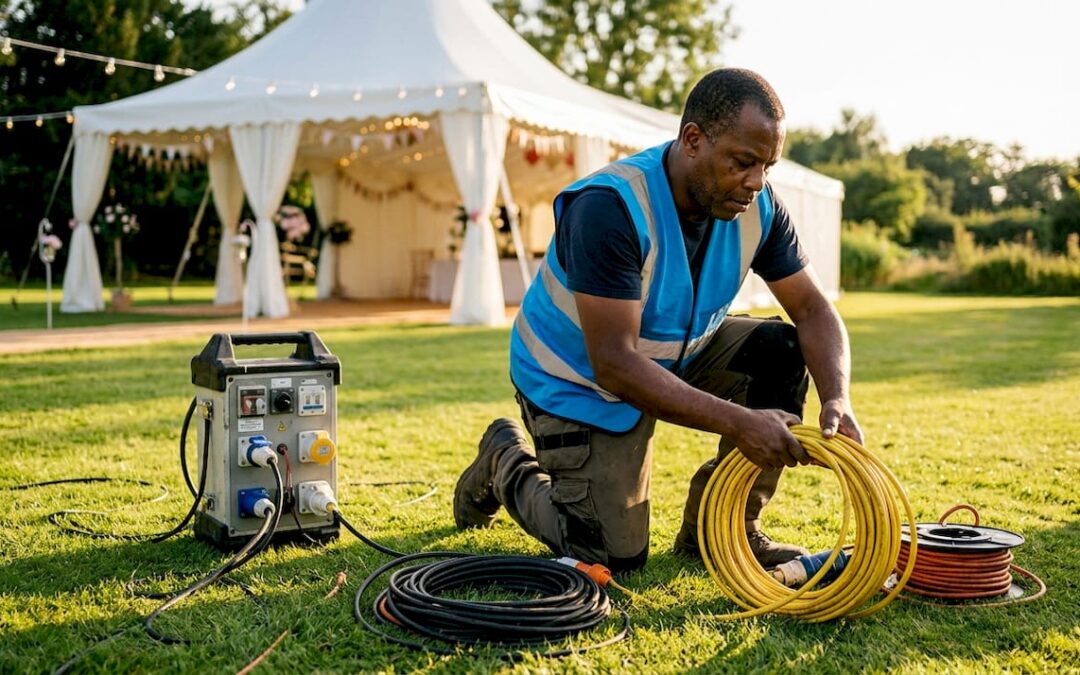
Event electricians at weddings are specialists responsible for installing, managing, and maintaining temporary electrical systems that power lighting, sound, catering equipment, and other critical kit throughout your celebration. The industry term for this work is “temporary electrical installation,” governed in the UK by BS 7909:2011+A1:2020 and BS 7671 wiring regulations. Getting this right is not optional. Poor electrical setup causes fire risks, electrical shocks, and trip hazards from badly managed cabling, and a single tripped circuit can silence your band mid-song or plunge your reception into darkness. The role of event electricians at weddings is one of the most consequential decisions you will make during planning, yet most couples leave it far too late.
What duties do event electricians perform during wedding setups?
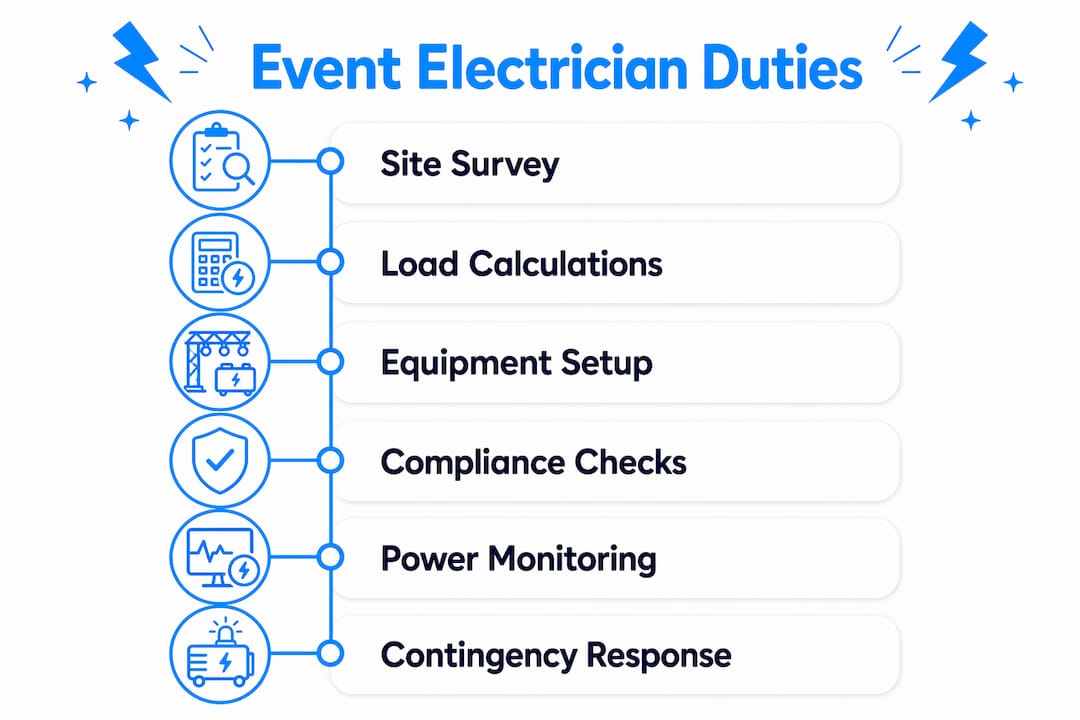
Event electricians carry out a structured sequence of tasks before and during your wedding, not just “plug things in.” Their work begins days or even weeks before the event itself.
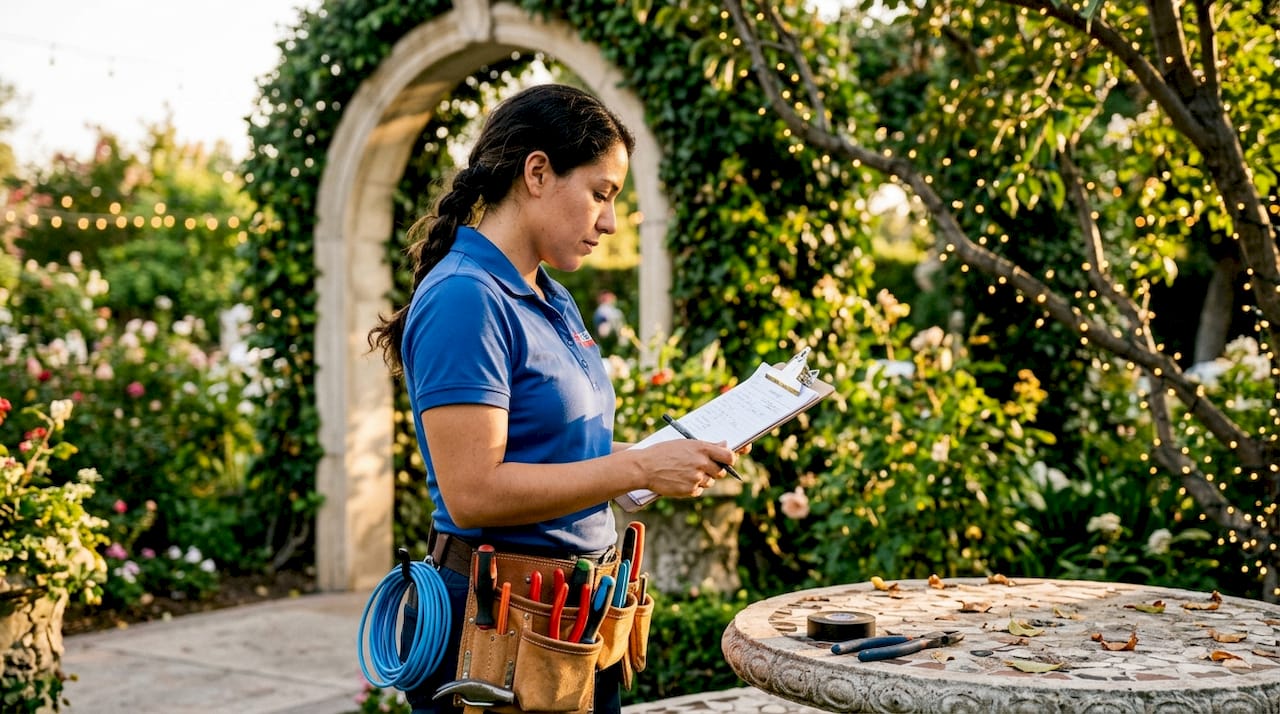
Site survey and power planning is the starting point. A qualified electrician visits your venue to assess the existing electrical infrastructure, measure distances between power sources and equipment positions, and calculate the total electrical load your wedding will demand. This load calculation covers everything: the DJ rig, band amplifiers, catering warmers, festoon lighting, uplighters, and any outdoor marquee equipment. Without this survey, you are guessing, and guessing with electricity is dangerous.
The core installation tasks include:
- Installing distribution boards and splitters to route power safely to each area of the venue
- Fitting RCD (Residual Current Device) protection on every circuit, with a minimum 30mA sensitivity for outdoor and temporary circuits, as required by BS 7909
- Running industrial-grade, IP-rated cables rather than domestic extension leads, which are prohibited under official codes for event use
- Securing and routing cables to eliminate trip hazards for guests
- Testing every circuit before guests arrive and issuing a completion certificate
Collaboration is a significant part of the role. Event electricians liaise with your venue manager, caterers, DJ, band, and lighting suppliers to understand each supplier’s power requirements. This coordination prevents two suppliers from accidentally overloading the same circuit.
Pro Tip: Ask your electrician to produce a written power plan showing which circuits serve which suppliers. Share this document with every vendor at your wedding. It prevents arguments on the day and makes fault-finding much faster if something trips.
Why is compliance with electrical standards crucial for weddings?
Compliance with electrical standards is not bureaucracy. It is the difference between a safe wedding and a catastrophic one, and it directly affects your insurance.
BS 7909:2011+A1:2020 is the UK code of practice for temporary electrical systems at events. It requires a formal written scheme of work before any installation begins, and a completion certificate issued by a competent person after testing. Many wedding venue insurers now require this certificate before granting permission for temporary electrical installations on their grounds. Without it, your venue’s public liability cover may be void.
| Standard | What it covers | Why it matters for your wedding |
|---|---|---|
| BS 7909:2011+A1:2020 | Temporary electrical systems at events | Governs the entire installation from design to sign-off |
| BS 7671 | UK wiring regulations | Sets minimum safety requirements for all electrical work |
| RCD protection (30mA) | Outdoor and temporary circuits | Cuts power within milliseconds of a fault, preventing electrocution |
| PAT testing | Portable electrical appliances | Confirms each piece of equipment is safe before use |
| HSE HSG107 | Outdoor event risk assessment | Covers generator placement, fuel storage, and cable routing |
PAT testing deserves specific attention. Approximately 25% of electrical accidents involve portable equipment. PAT testing is not legally mandatory in the UK, but most wedding venues require annual PAT certificates for all portable electrical equipment brought onto their premises. Your DJ, band, and caterers should all hold current certificates.
The key compliance requirements your electrician must satisfy include:
- Producing a written scheme of work before installation begins
- Using correctly sized cables with overcurrent protection on every circuit
- Limiting voltage drop to no more than 5% on 230V supplies (11.5V maximum), as daisy-chaining domestic cables causes dangerous voltage drop and is prohibited
- Issuing a signed completion certificate after testing
- Conducting a full risk assessment covering fire, shock, and trip hazards in line with HSE HSG107 guidance
Compliance documentation also signals professionalism. Suppliers who provide risk assessments and electrical certificates proactively make venue approvals faster and give you, as the couple, genuine peace of mind.
How do event electricians prepare for power contingencies during weddings?
Power failures at weddings happen more often than venues admit. The causes are predictable: overloaded circuits, a supplier plugging in equipment without telling the electrician, a generator running low on fuel, or a faulty cable developing a fault under load.
A professional event electrician prepares for these scenarios before the day begins. Their contingency planning follows a clear sequence:
- Identify all potential failure points during the site survey and document them in the risk assessment
- Label every circuit on the distribution board so any fault can be traced within seconds, not minutes
- Establish a single point of contact protocol: if any supplier loses power, they contact the electrician first, not the venue manager, not the DJ, and not the couple
- Pre-position backup equipment including spare RCDs, fuses, and cable sections at the distribution board
- Confirm generator fuel levels at the start of the event and schedule a mid-event check if the reception runs beyond four hours
When a fault does occur, the event electrician or venue manager must be the first point of contact to determine quickly whether the outage is a tripped circuit or a total supply failure. A tripped circuit is resolved in minutes. A total supply failure requires generator intervention or a call to the network operator, and can take 30–60 minutes to restore. That distinction changes everything about how the rest of your suppliers respond.
Pro Tip: Ask your electrician to walk your DJ and band through the location of the distribution board and the emergency isolation switch before guests arrive. If the electrician is briefly unavailable, your entertainment suppliers can at least identify the problem and call for help accurately.
When and why should couples engage event electricians in wedding planning?
Early engagement with a qualified electrician is the single most effective step you can take to avoid electrical problems on your wedding day. The industry consensus is clear: waiting until the final weeks of planning is a costly mistake.
The benefits of booking your event electrician at the same time as your venue include:
- Accurate generator sizing. A site survey early in planning allows the electrician to calculate the exact generator capacity your wedding needs, preventing both underpowered setups and unnecessary overspend on oversized equipment. You can read more about generator sizing for private events to understand the variables involved.
- Tailored distribution board configuration. Every wedding venue has a different layout. Early planning means the distribution board is designed around your specific floor plan, not retrofitted awkwardly on the day.
- Vendor coordination time. Your electrician needs power specifications from every supplier. Gathering these takes time, and late bookings compress this process dangerously.
- Paperwork completed in advance. Written schemes of work, risk assessments, and completion certificates cannot be produced on the morning of your wedding. Venues and insurers need these documents in advance.
- No last-minute surprises. An early power risk assessment identifies problems such as insufficient mains supply at the venue, the need for a generator, or cable runs that require special permissions, while there is still time to solve them.
The practical rule is straightforward. Book your event electrician within four weeks of confirming your venue. Treat electrical planning as a core element of your wedding, not an afterthought.
Key takeaways
A professional event electrician is the single most important safety appointment you will make for your wedding, covering compliance, contingency planning, and reliable power delivery from setup to close.
| Point | Details |
|---|---|
| Book early | Engage your event electrician within four weeks of confirming the venue to allow proper planning. |
| Compliance is mandatory | BS 7909 and BS 7671 require written schemes of work, RCD protection, and signed completion certificates. |
| PAT testing matters | Most UK wedding venues require current PAT certificates for all portable equipment brought on site. |
| Contingency planning saves the day | A labelled distribution board and clear fault protocol can resolve a tripped circuit in minutes, not hours. |
| Documentation protects you | Risk assessments and compliance certificates protect your insurance cover and ease venue approvals. |
What I have learned watching weddings go wrong with power
Weddings have become significantly more electrically complex over the past decade. Couples now expect festoon lighting across entire gardens, multiple sound zones, LED uplighting on every wall, and live streaming equipment running simultaneously. The electrical load at a modern wedding reception can rival a small corporate event.
What I have observed consistently is that the couples who have the smoothest days are not the ones with the biggest budgets. They are the ones whose electrician was involved from the start. When the role of electrical contractors at events is treated as a planning priority rather than a last-minute logistics task, problems get solved on paper rather than on the dance floor.
The paperwork question is where I see the most avoidable stress. Couples assume their venue has sorted the electrical compliance. Venues assume the couple’s suppliers have sorted it. Nobody has sorted it. A written scheme of work and a completion certificate are not optional extras. They are the evidence that your wedding is safe and that your insurance is valid.
My honest advice: ask every electrical supplier you consider for their compliance documentation before you sign anything. A supplier who cannot produce a risk assessment and PAT certificates is a supplier who is not ready for your wedding.
— Rob
How Jakspartypower supports weddings with professional electrical services
Jakspartypower brings over 40 years of electrical contracting experience to weddings across Sussex, providing generators, distribution boards, lighting, and cabling tailored to each event’s specific needs.

Every wedding package from Jakspartypower includes a site survey, load calculation, and full compliance documentation, covering BS 7909 requirements and risk assessments. The standby service means a qualified electrician remains available throughout your event, ready to resolve any fault immediately. Whether you need a generator for your outdoor reception or a complete power and lighting hire package, Jakspartypower builds the solution around your venue and your day. Contact the team early in your planning to book a site survey and get your power plan in place before the rest of your suppliers are confirmed.
FAQ
What does an event electrician do at a wedding?
An event electrician installs and manages the temporary electrical systems that power lighting, sound, and catering equipment at your wedding. Their duties include site surveys, distribution board installation, RCD protection, cable routing, and issuing a compliance certificate after testing.
Is BS 7909 compliance required for wedding electrical installations?
Yes. BS 7909:2011+A1:2020 is the UK code of practice for temporary electrical systems at events, and most wedding venues and insurers require a written scheme of work and completion certificate before permitting any temporary installation.
Do wedding suppliers need PAT testing certificates?
Most UK wedding venues require current PAT certificates for all portable electrical equipment brought on site. While PAT testing is not a legal requirement, around 25% of electrical accidents involve portable appliances, making it a standard venue condition.
When should I book an event electrician for my wedding?
Book your event electrician within four weeks of confirming your venue. Early engagement allows accurate generator sizing, tailored distribution planning, and time to complete all compliance paperwork before your wedding day.
What happens if the power fails during my wedding reception?
The event electrician is the first point of contact for any power failure. A tripped circuit can typically be resolved within minutes, while a total supply failure may take 30–60 minutes to restore, which is why having a qualified electrician on standby throughout your reception is strongly recommended.