
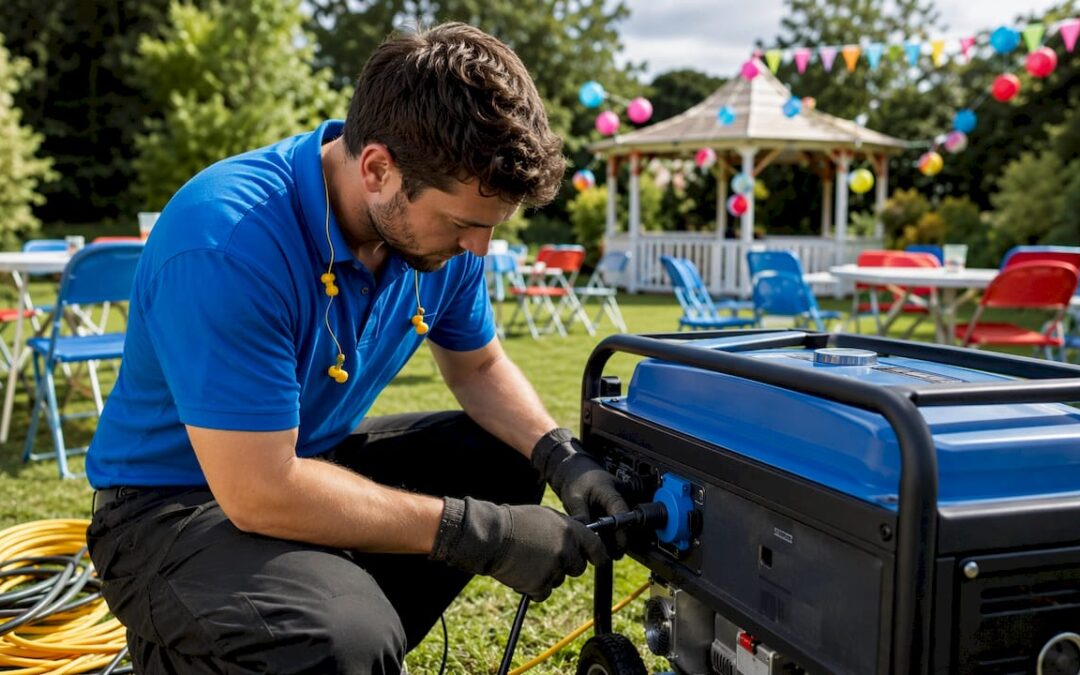
A party generator is a portable or standby electrical generator used to supply temporary, reliable power at events and parties where mains electricity is unavailable or insufficient. In practical terms, it keeps your lighting rigs, PA systems, catering equipment, and bar refrigeration running without interruption. The term “party generator” is an informal description; the industry standard phrase is temporary event generator or event power generator, and you will encounter both when speaking to hire companies or reading compliance guidance.
For UK event organisers, compliance with electrical safety standards is essential to ensure safety and legal adherence. The Health and Safety Executive requires that all electrical equipment at events, including generators, is suitable, sufficient, and safe, with site-specific risk assessments completed before a single cable is laid. Getting that wrong is not just a safety risk; it is a legal one.
Key equipment a party generator typically powers:
- Stage and ambient lighting
- PA systems and DJ equipment
- Catering appliances and refrigeration
- Bar equipment and point-of-sale terminals
- Marquee heating and ventilation
Table of Contents
- 1. What types of party generators are available for UK events?
- 2. What are your legal and safety responsibilities as a UK event organiser?
- 3. How do you choose and use a party generator safely?
- 4. Why Jakspartypower is trusted by UK event organisers
- Reliable event power, sorted before the day
- FAQ
- Key takeaways
1. What types of party generators are available for UK events?
Knowing the main types of generators helps in selecting appropriate equipment for your event’s power needs.
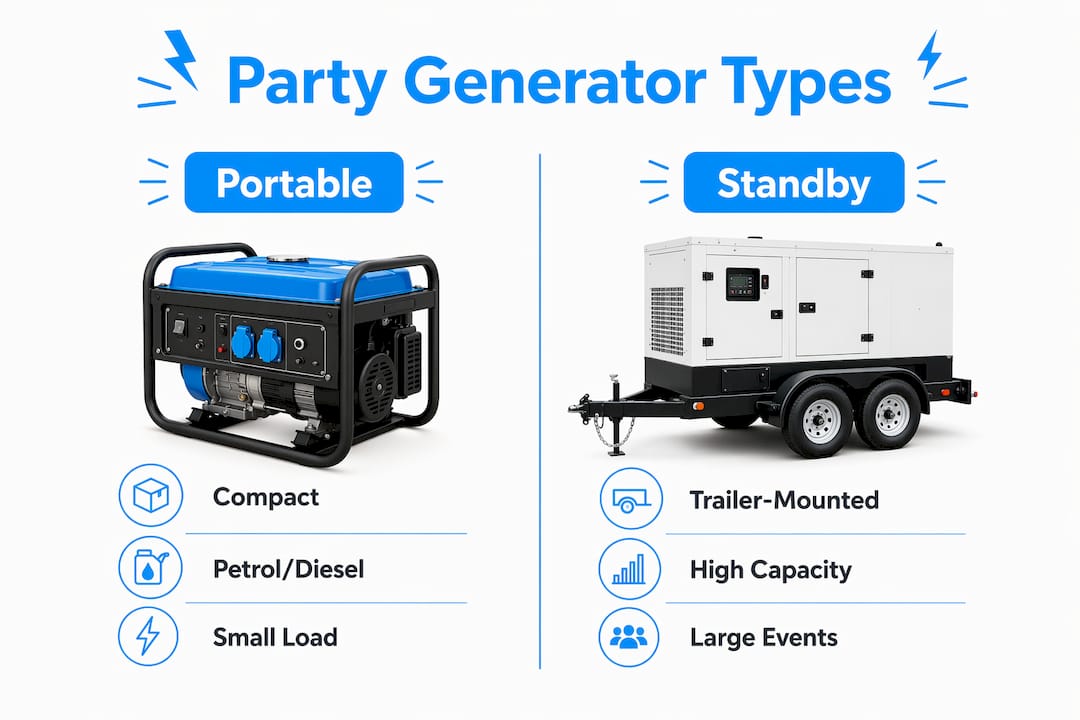
Portable generators are compact, petrol or diesel-powered units suited to smaller, distributed power needs such as individual vendor stalls, garden parties, or pop-up bars. They are easy to move between locations on site and typically suit small to moderate power needs. The trade-off is noise: a petrol unit running near guests requires careful positioning or acoustic screening.
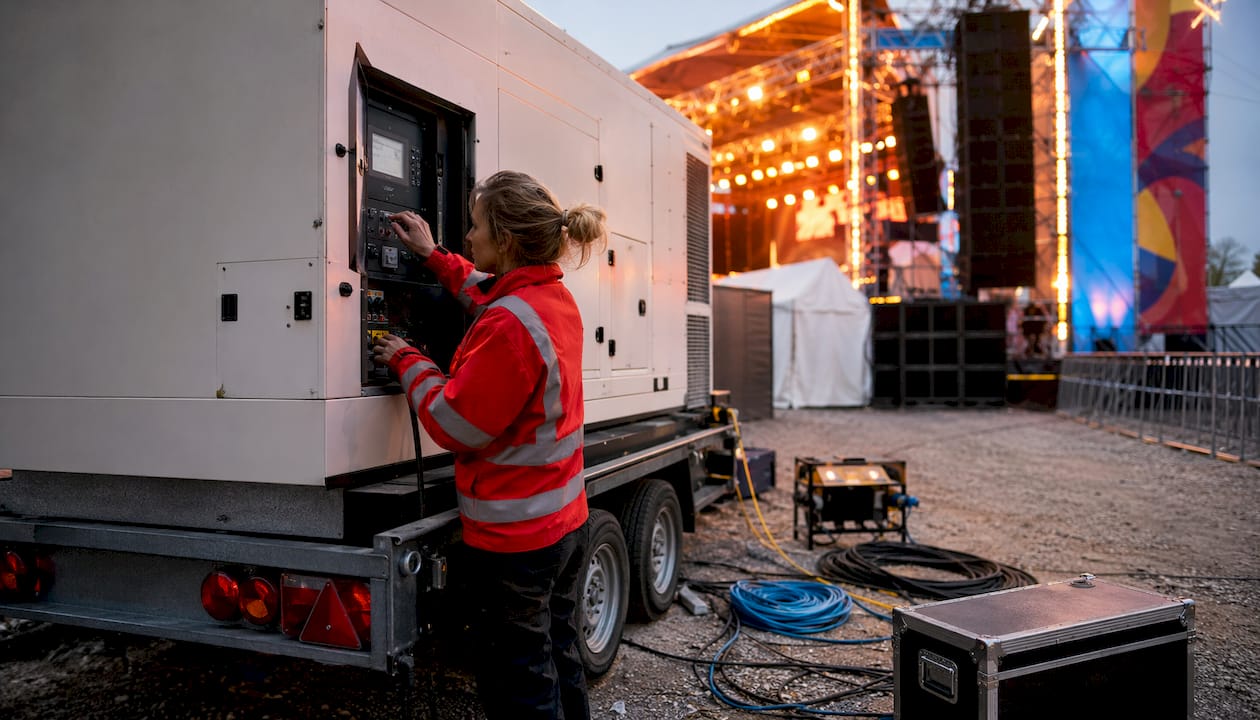
Standby generators are the workhorses of large-scale events. These are trailer-mounted, high-capacity units capable of sustaining the continuous heavy loads demanded by main stages, large marquees, or multi-zone festival sites. Outputs commonly cover a broad range suitable for main stages, large marquees, or multi-zone festival sites. They run on diesel and are designed for extended runtime with a fuel capacity sufficient for long event periods.
Hybrid generators combine a conventional diesel or petrol engine with battery storage or renewable energy input. They reduce fuel consumption and noise by drawing from the battery bank during lower-demand periods and only firing the engine when loads spike. For events with sustainability targets, hybrid units running on HVO (hydrotreated vegetable oil) offer a meaningful reduction in carbon emissions without sacrificing reliability.
Common fuel types and their event implications:
- Diesel: Most widely used; efficient for sustained loads, widely available
- Petrol: Lighter units, better for short-duration or low-load applications
- HVO: Drop-in diesel replacement with significantly lower lifecycle emissions; increasingly specified for sustainable corporate events
- LPG: Cleaner burning but less common for large event generators in the UK
2. What are your legal and safety responsibilities as a UK event organiser?
The legal framework here is not optional, and it is more detailed than most planners expect.
As a dutyholder, you are responsible for ensuring your generator installation is correctly installed, earthed, and maintained by a competent person, as set out in HSE Guidance Note GS50 and the requirements of BS 7909. That means you cannot simply hire a generator, drop it in a field, and run extension leads to your marquee.
BS 7909:2023+A1:2024 is the code of practice for temporary electrical systems in entertainment. It covers design, setup, and operation of low-voltage AC systems, including mobile and transportable generators. Compliance with BS 7909 is widely regarded as the gold standard for temporary electrical safety at UK events.
One earthing point catches planners out repeatedly. PME earthing is actively discouraged for outdoor temporary events because it can cause conductive metalwork to become live under fault conditions. The preferred system is TT earthing, with an independent earth electrode tested before the event opens to the public. The NADJ Power Planner guidance reinforces that a safe generator installation requires this independent earthing to be verified, not assumed.
- Conduct a site-specific electrical risk assessment before the event
- Appoint a competent person to design, install, and inspect the temporary electrical system
- Specify TT earthing for outdoor generator installations
- Install RCD (residual current device) protection throughout the distribution system
- Carry out pre-event electrical safety checks on all equipment, per BBC Safety guidance on temporary electrical systems
Understanding event power risk management before you book your generator hire is the difference between a compliant event and a serious incident.
3. How do you choose and use a party generator safely?
Sizing is where most planners go wrong first. The rule of thumb from the NADJ Power Planner is to choose a generator rated at least double your expected peak load. Motor start-up surges, power factor losses, and harmonic distortion from LED lighting all push real-world demand well above the nameplate wattage of your equipment. A generator that looks adequate on paper will trip under load if you have not built in that headroom.
Cabling is the second common failure point. Industrial-grade cabling with IP-rated CEE connectors is non-negotiable for outdoor events. Cable drums must be fully unwound before use; a coiled drum carrying significant current will overheat and can cause a fire. The role of cabling in event reliability is something experienced suppliers will discuss with you at the planning stage, not as an afterthought on the day.
Pro Tip: Never daisy-chain domestic extension leads to reach a distant stall or stage. Voltage drop across long runs of underrated cable causes equipment to malfunction and creates a genuine fire risk. Use properly rated distribution boards and run dedicated feeds instead.
Maintenance and troubleshooting essentials:
- Check fuel levels and coolant before the event and at regular intervals during
- Confirm the generator has warmed up and stabilised before connecting loads
- Keep a spare set of fuses and know where the circuit breakers are located
- Have a contingency plan if the primary generator fails; a power contingency plan is part of responsible event management
4. Why Jakspartypower is trusted by UK event organisers
Jakspartypower brings over 40 years of electrical contracting experience to every event power project, which is a meaningful distinction in a sector where the consequences of poor installation are immediate and serious. That depth of experience informs how they approach site surveys, risk assessments, and equipment specification, not just which generator they put on a trailer.
Their hire range covers generators from compact units for private garden parties through to high-capacity packages for corporate shows and large outdoor events. Alongside generators, Jakspartypower supplies lighting products, distribution boards, and cabling, so planners can source a complete, compatible power system from a single supplier rather than trying to integrate kit from multiple sources.
The standby service is what sets them apart for high-stakes events. Having a qualified engineer on call during the event, rather than a phone number to ring if something goes wrong, is the kind of provision that professional setup ensures and that clients consistently highlight in feedback.
Clients praise Jakspartypower for exactly this combination: equipment quality and reliable support during events, from weddings to large commercial shows. Rob, the expert behind Jakspartypower’s guidance, draws on decades of hands-on electrical contracting to advise planners on the right solution for their specific site and load requirements.
Reliable event power, sorted before the day
When you are planning an event in Sussex or the surrounding area, the generator decision shapes everything else. Get it right and your lighting, sound, and catering run without a hitch. Get it wrong and you are troubleshooting in the dark, literally.
Jakspartypower offers the practical alternative to piecing together a power solution from multiple suppliers: a single point of contact with the electrical expertise to size, install, and support your generator setup correctly. Whether you need a compact unit for a private event or a full distribution system for a corporate show, their team handles the compliance, the cabling, and the on-site standby cover. Browse the generator hire range or get in touch directly to discuss your event’s power requirements.
FAQ
What is a party generator used for?
A party generator supplies temporary electrical power to events where mains supply is unavailable or insufficient, powering lighting, sound systems, catering equipment, and other event infrastructure.
How do I know what size generator I need for my event?
Calculate your total expected load, then choose a generator rated at least double that figure to accommodate motor start-up surges and power factor losses, as recommended by the NADJ Power Planner.
Is BS 7909 compliance mandatory for UK events?
BS 7909 is a code of practice rather than a statutory instrument, but the HSE expects competent installation and site-specific risk assessments; following BS 7909 is the accepted way to demonstrate compliance with those duties.
What fuel type is best for an outdoor party generator?
Diesel is the most practical choice for sustained event loads; HVO is an increasingly popular alternative that significantly reduces emissions without requiring any modification to standard diesel generators.
Can Jakspartypower supply generators and lighting together?
Yes. Jakspartypower provides generators, distribution boards, cabling, and lighting as a complete package, which means all equipment is specified to work together and installed by a single competent team.
Key takeaways
A party generator sized to at least double your peak load, installed with TT earthing and RCD protection by a competent person, is the foundation of safe and compliant event power in the UK.
| Point | Details |
|---|---|
| Size for peak load | Choose a generator rated at least double your expected peak load to handle start-up surges and power factor losses. |
| TT earthing is required | Outdoor temporary installations should use TT earthing, not PME, to prevent metalwork becoming live under fault conditions. |
| Industrial cabling only | Use IP-rated CEE connectors and fully unwound cable drums; domestic extension leads are a fire risk at events. |
| BS 7909 sets the standard | Following BS 7909 is the accepted way to demonstrate HSE compliance for temporary electrical systems at UK events. |
| Jakspartypower | Offers generator hire, distribution, cabling, and on-site standby support backed by 40+ years of electrical contracting experience. |